Master Cylinder Reservoir
REMOVAL1. Remove master cylinder.
2. Wipe reservoir cap clean, remove cap, and inspect reservoir cap and diaphragm for cuts, cracks, nicks, or deformation. Replace damaged parts.
3. Empty brake fluid from reservoir.
4. For vehicles equipped with antilock brake system, remove modulator and motor pack from master cylinder.
5. Remove brake fluid level sensor.
Fig. 5 Master Cylinder Reservoir Spring Pin Removal:
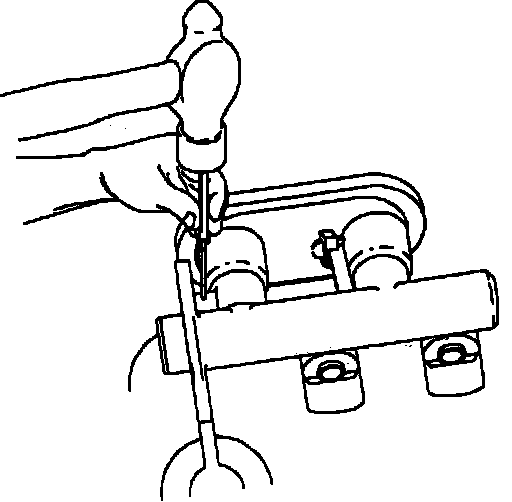
6. Place master cylinder in vise as shown in illustration.
CAUTION: Do not clamp on master cylinder body.
7. Drive out spring pins, using a suitable 1/8 in. punch.
8. Pull reservoir out of cylinder body.
Fig. 6 Removing Reservoir & O-rings From Cylinder Body:
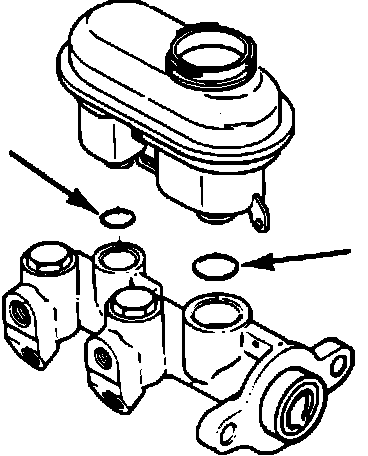
9. Remove 0-rings from grooves in reservoir bayonets.
10. Clean reservoir with clean denatured alcohol and inspect reservoir for cracks or deformation. Replace if damaged. Reservoir can be blown dry with non-lubricated, low-pressure air hose.
INSTALLATION
1. Lubricate new 0-rings and bayonets with clean brake fluid and install 0-rings into bayonet grooves.
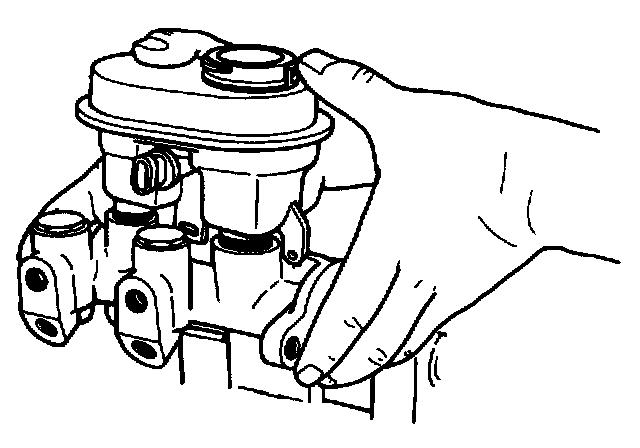
2. Install reservoir into master cylinder body by pressing reservoir straight into cylinder body by hand.
3. Drive in reservoir retention spring pins.
CAUTION: Use care not to damage reservoir or cylinder body when driving in pins.
4. Install brake fluid level sensor.
5. Install antilock brake system modulator and motor pack, if equipped, to master cylinder.
6. Install master cylinder.