EGR Valve: Testing and Inspection
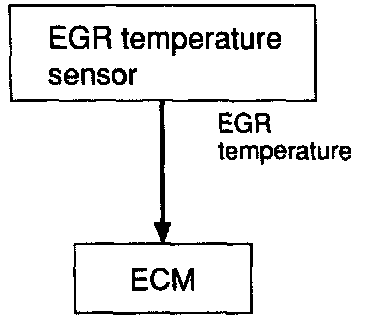
ON-BOARD DIAGNOSIS LOGIC
If the absence of EGR flow is detected by EGR temperature sensor under the condition that calls for EGR, a low-flow malfunction is diagnosed.
If EGR temperature sensor detects EGR flow under the condition that does not call for EGR, a high-flow malfunction is diagnosed.
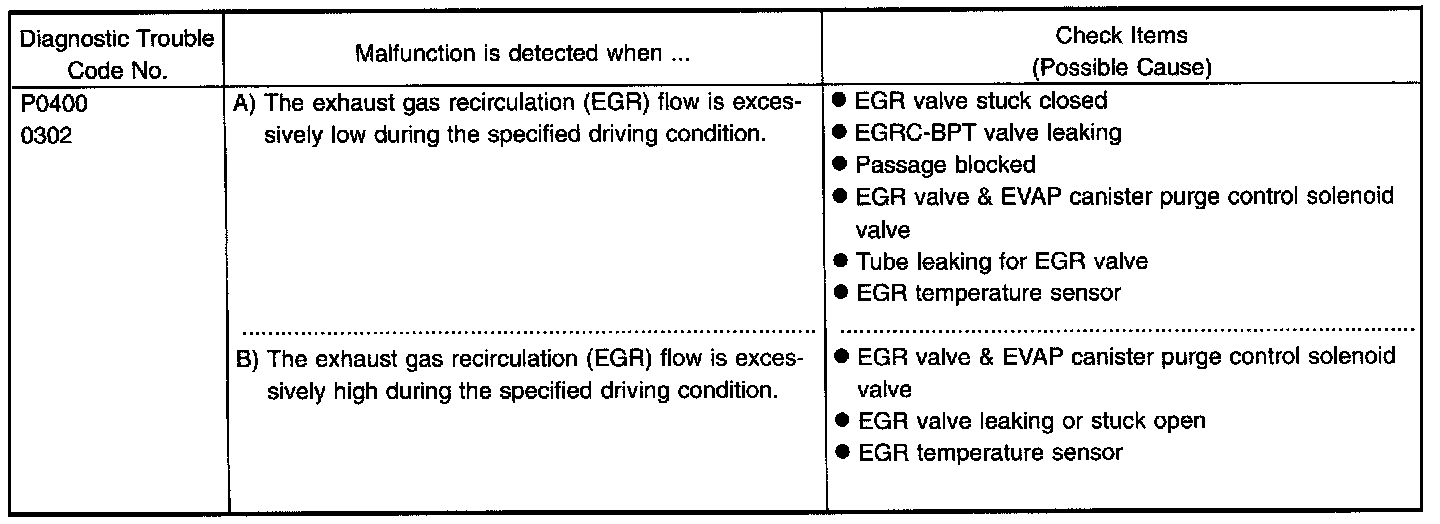
DIAGNOSTIC TROUBLE CODE CONFIRMATION PROCEDURE
OVERALL FUNCTION CHECK
Use this procedure to check the overall EGR function. During this check, a DTC might not be confirmed.
Before starting with the following procedure, check the engine coolant temperature of the freeze frame data with CONSULT or Generic Scan Tool.
If the engine coolant temperature is higher than or equal to 71°C (160°F), perform only "Procedure for malfunction A".
If the engine coolant temperature is lower than 71°C (160°F), perform both "Procedure for malfunction A" and "Procedure for malfunction B".
Procedure for malfunction A
1) Start engine and warm it up sufficiently.
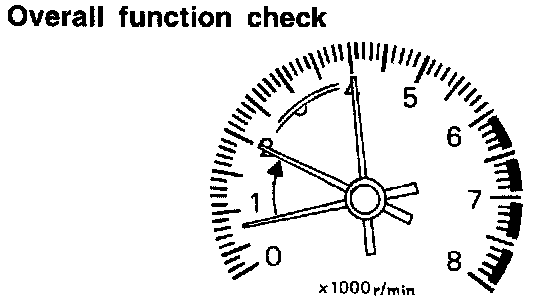
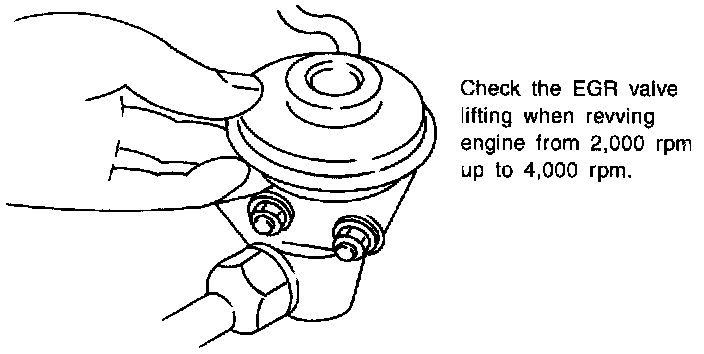
2) Check the EGR valve lifting when revving from 2,000 rpm up to 4,000 rpm under no load.
EGR valve should lift up and down without sticking.
If EGR valve does not lift up and down, try again with either of the following methods:
WITH CONSULT
- Select "EGRC SOLENOID VALVE" in "ACTIVE TEST" mode with CONSULT and turn the solenoid valve "OFF".
WITH NO TOOLS
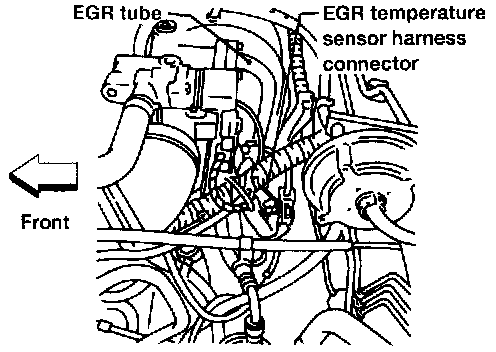
- Disconnect EGR valve & EVAP canister purge control solenoid valve harness connector.
(The DTC for EGR valve & EVAP canister purge control solenoid valve will be displayed, however, ignore it.)
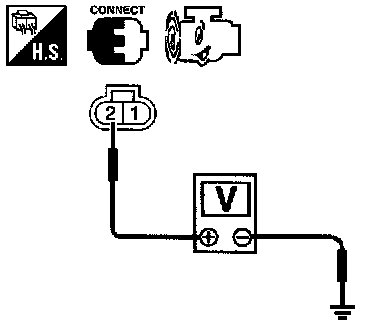
3) Check voltage between EGR temperature sensor harness connector terminal (2) and ground at idle speed. Less than 4.5V should exist.
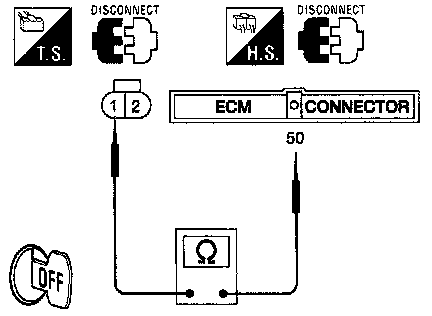
4) Turn ignition switch "OFF".
Check harness continuity between EGR temperature sensor harness connector terminal (1) and ECM terminal (50). Continuity should exist.
5) Perform "COMPONENT INSPECTION", "EGR temperature sensor".
Procedure for malfunction B
WITH CONSULT
1) Start engine.
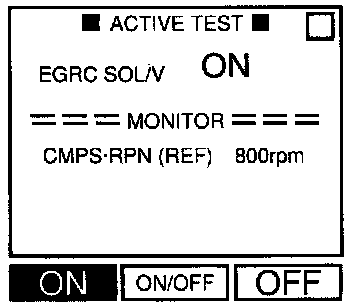
2) Select "EGRC SOLENOID VALVE" in "ACTIVE TEST" mode with CONSULT and turn the solenoid valve "ON".
3) Check for the EGR valve lifting when revving from 2,000 rpm up to 4,000 rpm under no load.
EGR valve should be closed and should not lift up.
OR
WITH GST
1) Confirm the engine coolant temperature is lower than 71°C (160°F) in "Mode 1" with generic scan tool.
Perform the following steps before its temperature becomes higher than 71°C (160°F).
2) Start engine.
3) Check for the EGR valve lifting when revving from 2,000 rpm up to 4,000 rpm under no load.
EGR valve should be closed and should not lift up.
OR
WITH NO TOOLS
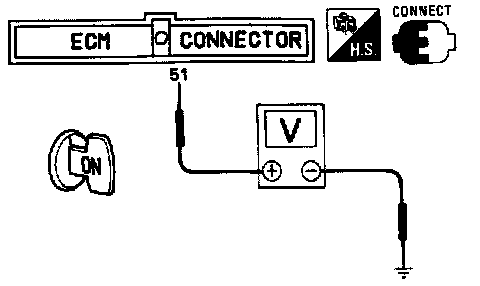
1) Confirm the voltage between ECM terminal (51) and ground is higher than 1.48V.
Perform the following steps before the voltage becomes lower than 1.48V.
2) Start engine.
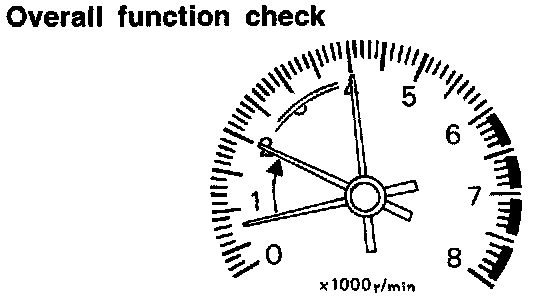
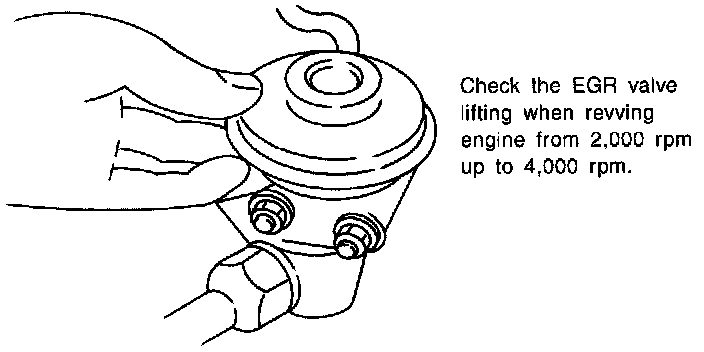
3) Check for the EGR valve lifting when revving from 2,000 rpm up to 4,000 rpm under no load.
EGR valve should be closed and should not lift up.
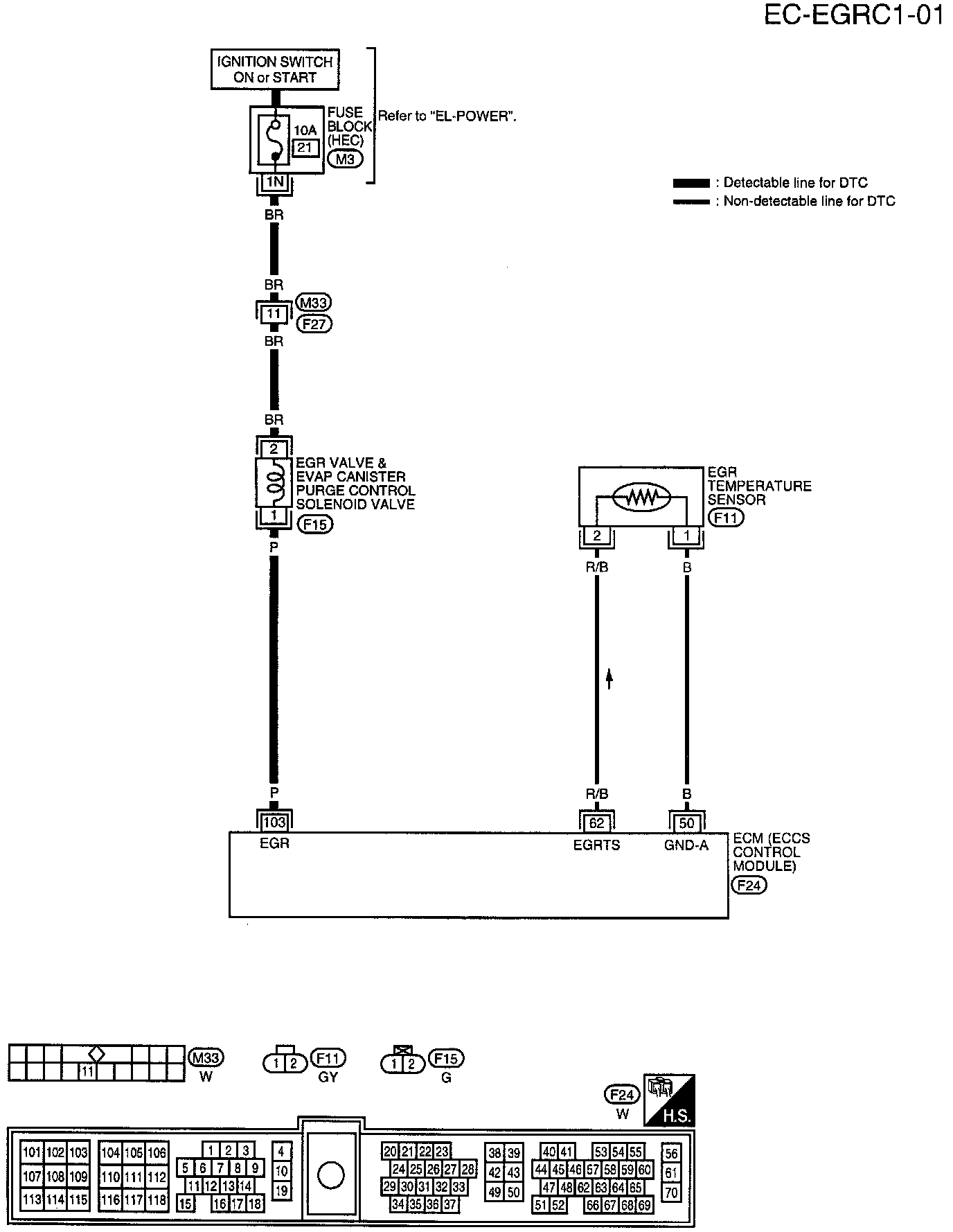
WIRING DIAGRAM
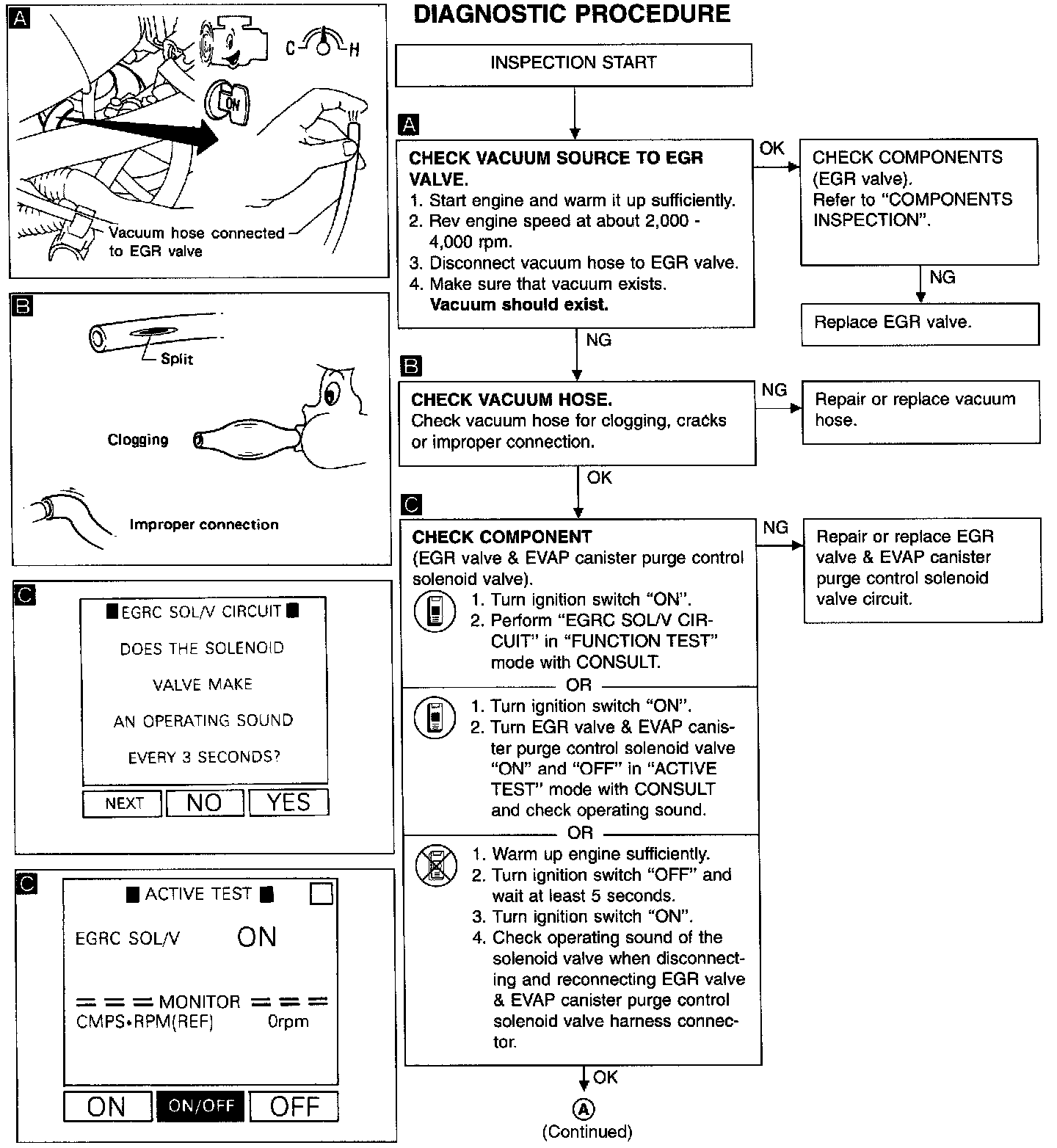
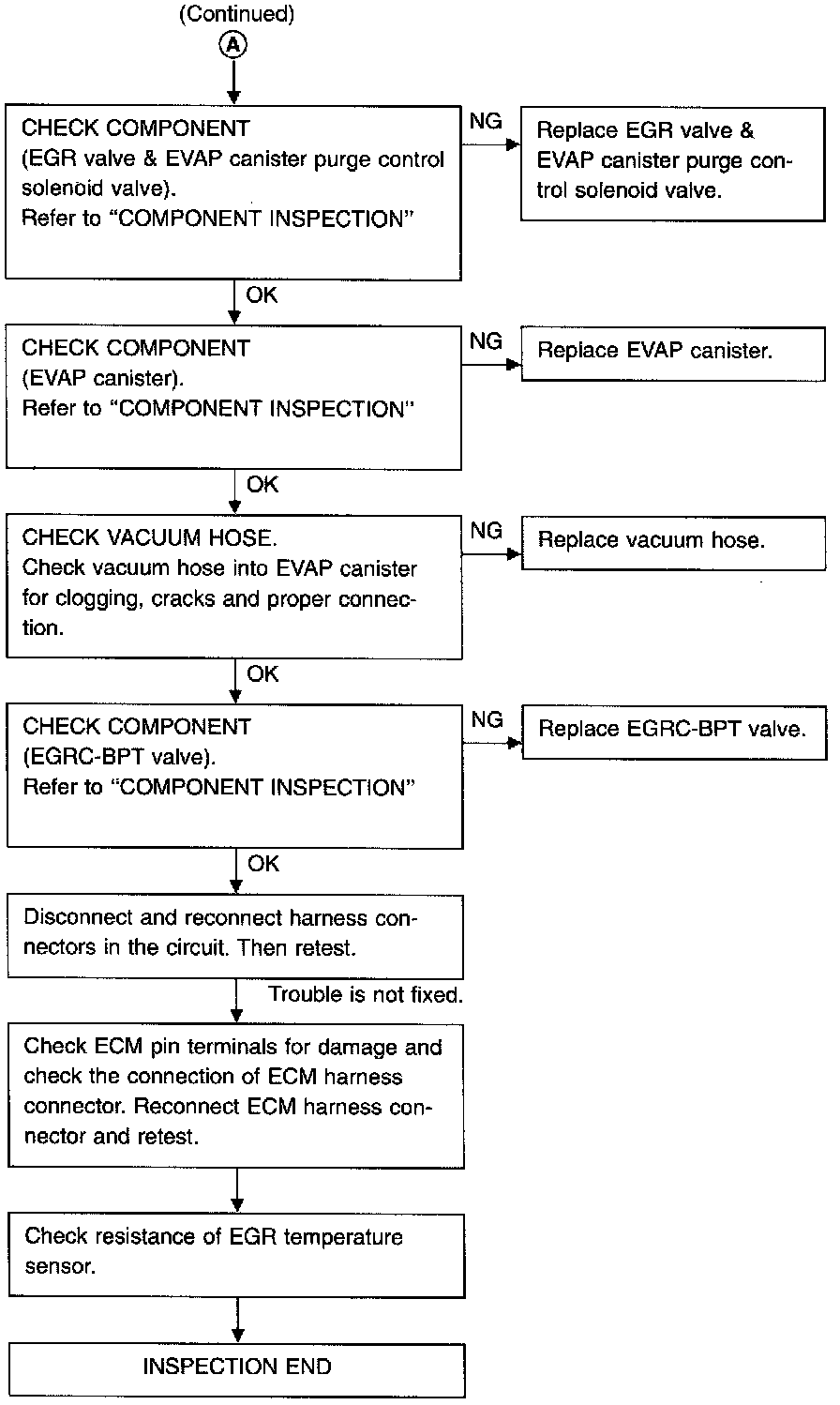
DIAGNOSTIC PROCEDURE
COMPONENT INSPECTION
EGR Valve
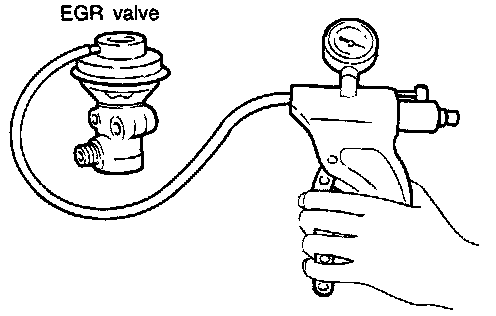
Apply vacuum to EGR vacuum port with a hand vacuum pump.
EGR valve spring should lift.
If NG, replace EGR valve.