MIL ON - DTC P1110 (VTC Solenoid Valve)
Classification:EC96-008a
Reference:
NTB96-067a
Date:
November 20, 1996
1996 SENTRA/200SX MIL LIGHT "ON" DIAGNOSTIC TROUBLE CODE DTC Pub
This bulletin contains revised Service and Parts information and replaces NTB96-067. Refer to the end of this bulletin for details. Please discard all copies of NTB96-067.
APPLIED VEHICLE:
1996 Sentra / 200SX (B14) with GA16DE engine
SERVICE INFORMATION
If the Malfunction Indicator Lamp (MIL) is "ON", and DTC P1110 (VTC Solenoid Valve) is found stored in the ECM memory, use the following procedure to repair the vehicle.
SERVICE PROCEDURE
1. Connect CONSULT. Turn ignition key "ON", do not start the engine.
2. Using CONSULT:
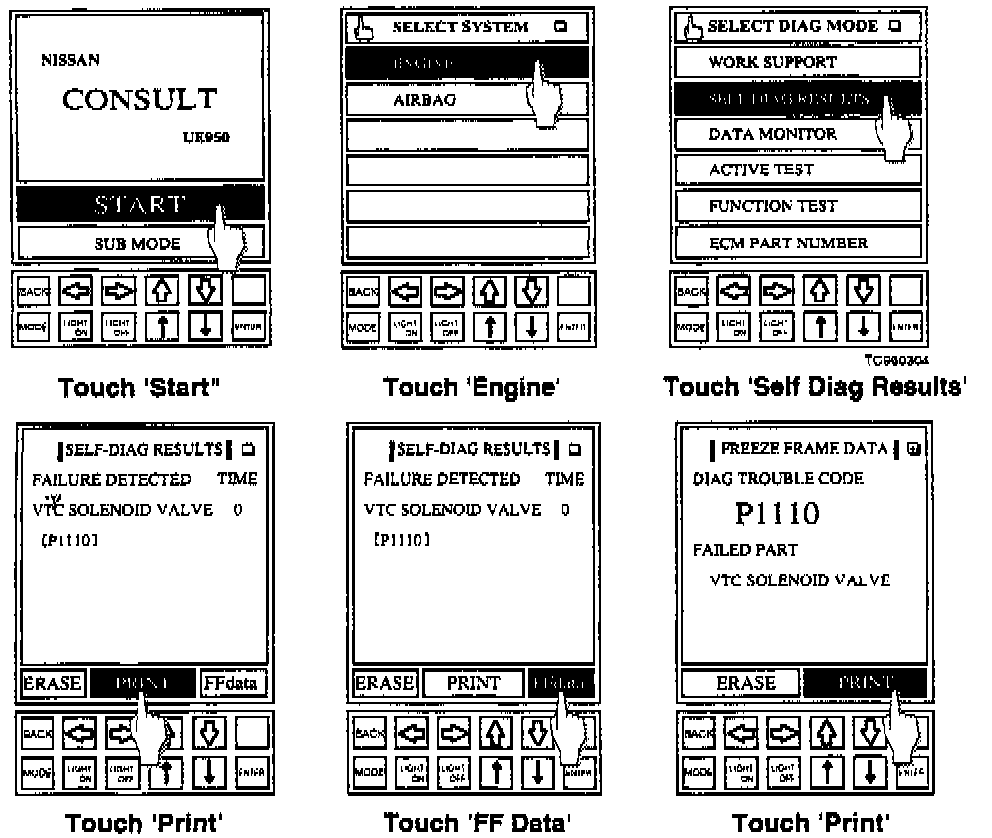
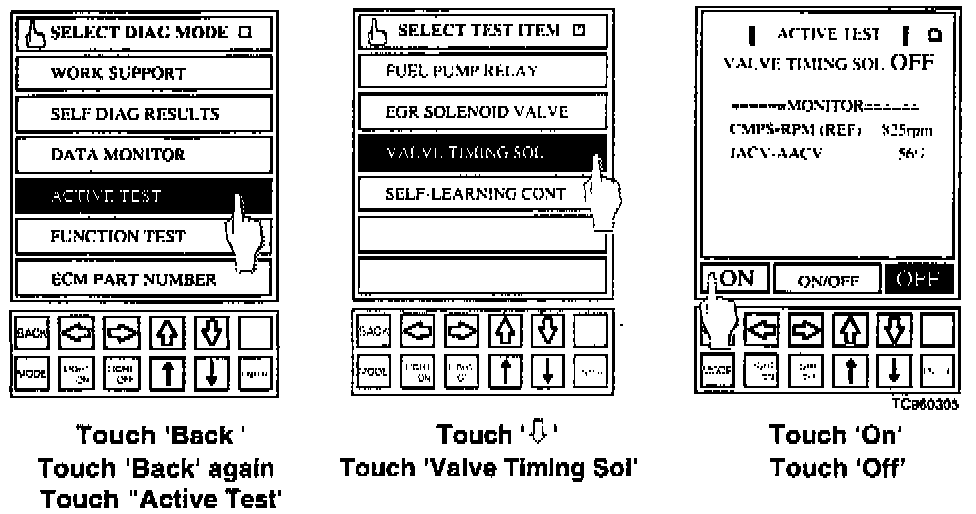
3. If "VEHICLE SPEED" (from the "FF Data") indicates less than 70 km/h (44 mph), the cause of the incident is the electrical circuit for the VTC solenoid valve, or the VTC solenoid valve itself. Check the VTC solenoid valve and circuit using the following procedure:
A. Touch "ON" and "OFF" (using CONSULT) alternately while listening for the operating ("click") sound from the actuation of the VTC solenoid valve. If no "click" sound is heard, check the following:
- Fuse 21 (10 amp)
- The VTC circuit (refer to the circuit diagnostic procedure and diagram in the service manual)
- The VTC solenoid valve itself (refer to the component inspection procedure in the service manual)
B. If the VTC solenoid valve "clicks" during the check, the cause may be an intermittent circuit problem. Wiggle the harness, while listening for the "click" sound. Inspect harness and connector carefully.
4. If "VEHICLE SPEED" (from FF Data) indicates more than 70km/h (44 mph), the cause of the incident may involve improper diagnosis of the intake camshaft sprocket (VTC) by the ECM. For these incidents perform the following procedure:
A. Disconnect the vacuum hose to the fuel pressure regulator and connect the hose to a vacuum gauge.
B. Start the engine and warm to operating temperature. Increase engine speed to 3000 rpm and hold steady.
C. Alternately touch "ON" and "OFF" (on CONSULT screen). Take note of the change of manifold vacuum on the gauge. Do this several times to become accustomed to the manifold vacuum changes each time, (0.4 - 0.5 inch Hg).
D. While watching the vacuum change, observe the length of time required for the vacuum gauge reading to change after the intake camshaft sprocket (VTC) is switched from "ON" to "OFF".
5. Based on the results of Step 4, use the table to determine which parts should be replaced to repair the vehicle:
Elapsed time for Vacuum Change Parts to be Replaced
More than 2.5 seconds ECM and Intake Camshaft Sprocket
Less than 2.5 seconds ECM only
6. If the intake camshaft sprocket (VTC) is replaced during the repair, perform the procedure in Step 4 again after the new pant is installed to ensure that it is properly functioning.
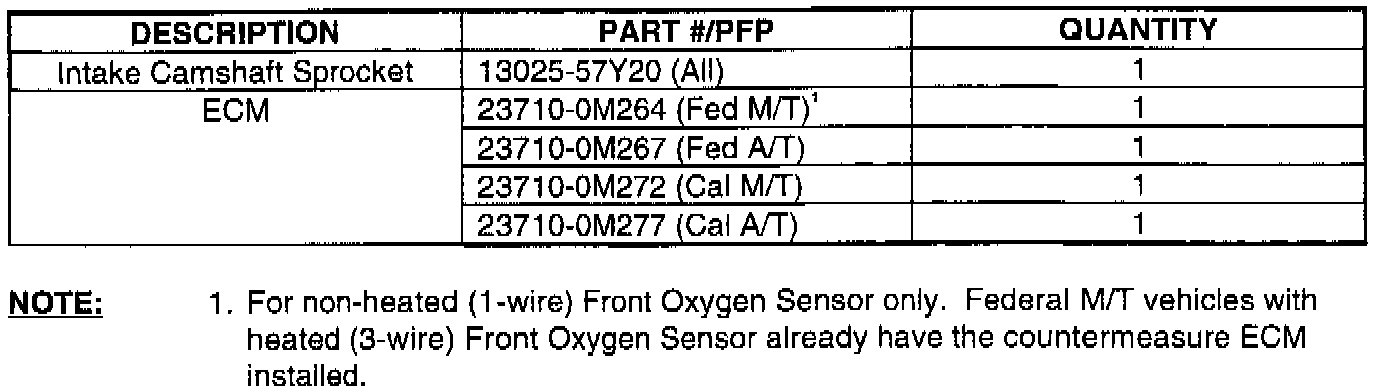
PARTS INFORMATION
CLAIMS INFORMATION
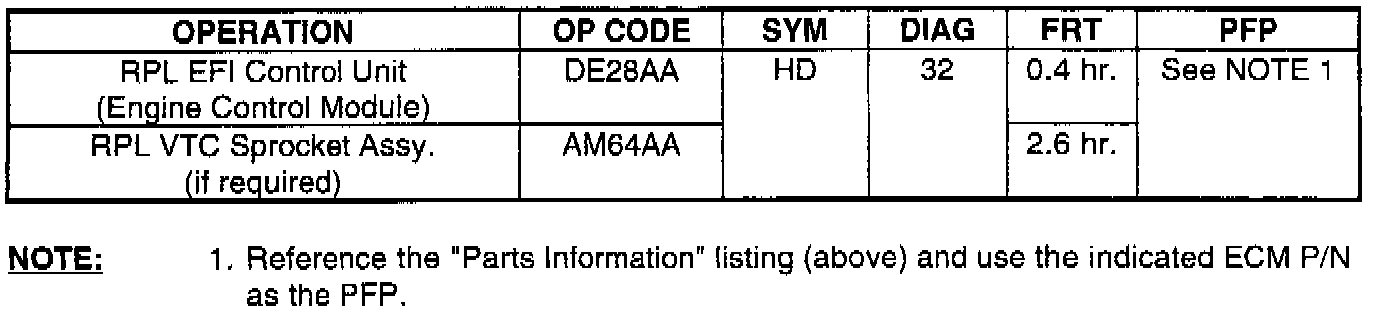
Submit a Primary Failed Part claim using the coding as shown.