Electronic Ignition Control
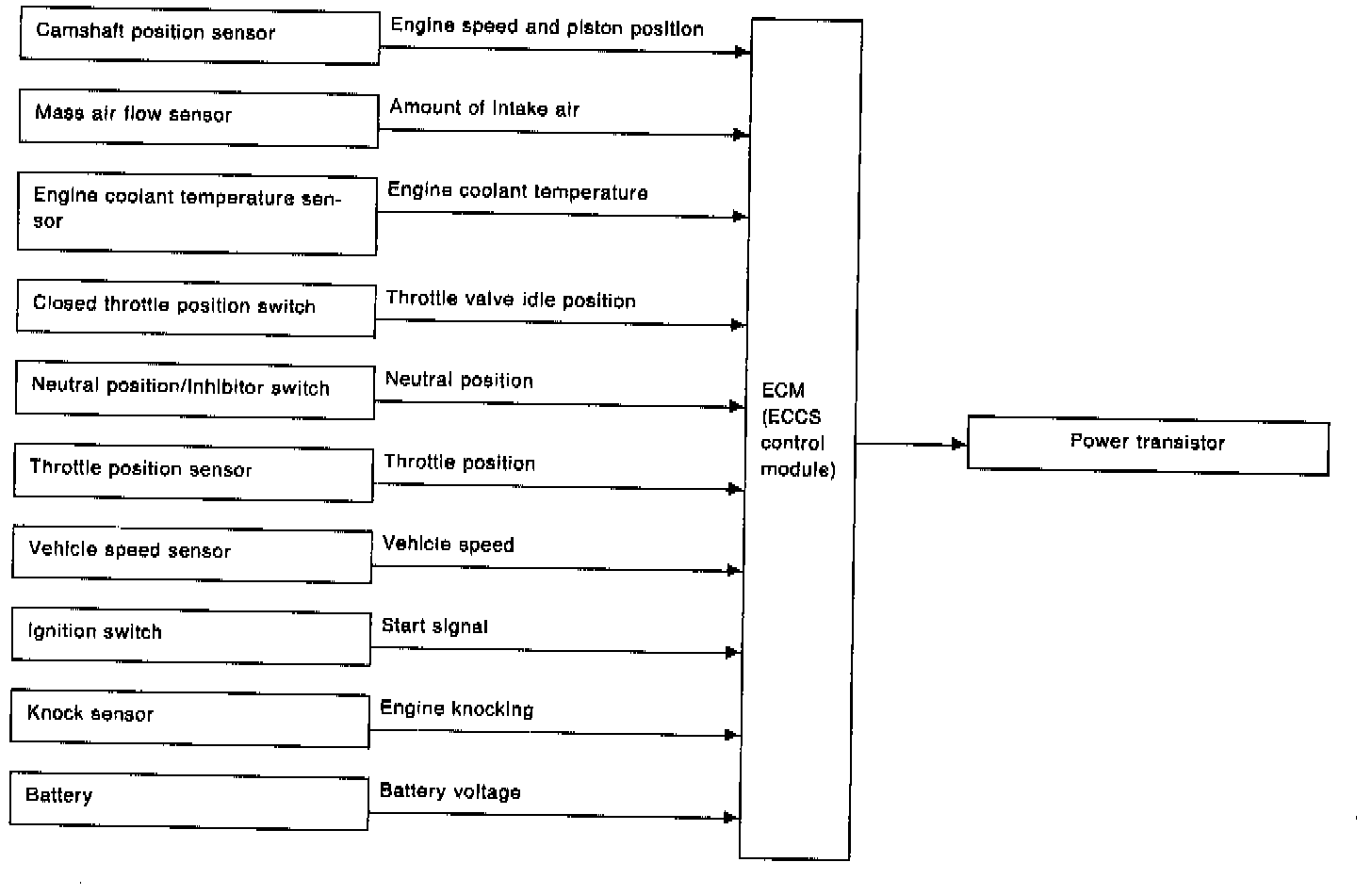
INPUT/OUTPUT SIGNAL LINE
SYSTEM DESCRIPTION
The ignition timing is controlled by the ECM in order to maintain the best air-fuel ratio in response to every running condition of the engine.
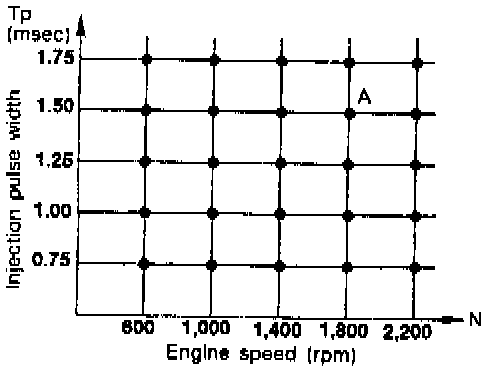
The ignition timing data is stored in the ECM located in the ECM, in the form of the map shown below.
The ECM detects information such as the injection pulse width and camshaft position sensor signal which varies every moment. Then
responding to this information, ignition signals are transmitted to the power transistor.
e.g. N: 1,800 rpm, Tp: 1.50 msec
A °BTDC
In addition to this,
1) At starting
2) During warm-up
3) At idle
4) At low battery voltage the ignition timing is revised by the ECM according to the other data stored in the ECM.
The retard system by knock sensor is designed only for emergencies. The basic ignition timing is pre-programmed within the anti-knocking zone, even if recommended fuel is used under dry conditions. Consequently, the retard system does not operate under normal driving conditions.
However, if engine knocking occurs, the knock sensor monitors the condition and the signal is transmitted to the ECM (ECCS control module). After receiving it, the ECM retards the ignition timing to avoid the knocking condition.