A/C - Description of R-134A System
Models: 1993 Truck/PathfinderSection: Heater & Air Conditioner
Classification: HA92-003
Bulletin No.: NTB92-055
Date: July 2, 1992
D21/WD21 A/C CHANGES FOR R-134a REFRIGERANT
APPLIED MODELS:
1993 Truck, 1993 Pathfinder
SERVICE INFORMATION:
As part of Nissan's ongoing concern for the environment, the A/C systems in the 1993 Truck and Pathfinder models are designed for the use of R-134a refrigerant. This new refrigerant does not deplete the ozone in the upper atmosphere.
Nissan Technical Service Bulletin NTB92-001 (HA92-001), entitled "A/C System Changes for R-134a Refrigerant (All Models)" includes general information about R-134a A/C systems. This Bulletin describes the specific details of the Truck/Pathfinder R-134a systems. Use this Bulletin together with NTB92-001 (HA92-001) for complete information regarding Truck/Pathfinder R-134a A/C systems.
Important points:
^ The R-134a systems have no sight glass, because R-134a and the PAG lubricants do not exhibit "clear sight glass" characteristics even when properly charged.
^ When charging R-134a systems, use the ACR(4) (J-39500) to ensure accurate charging.
^ If an R-134a system is suspected to below on refrigerant charge, first perform a system leak check using the R-134a leak detector (J-39400). After repairing any leaks found, use the ACR(4) equipment to charge the system.
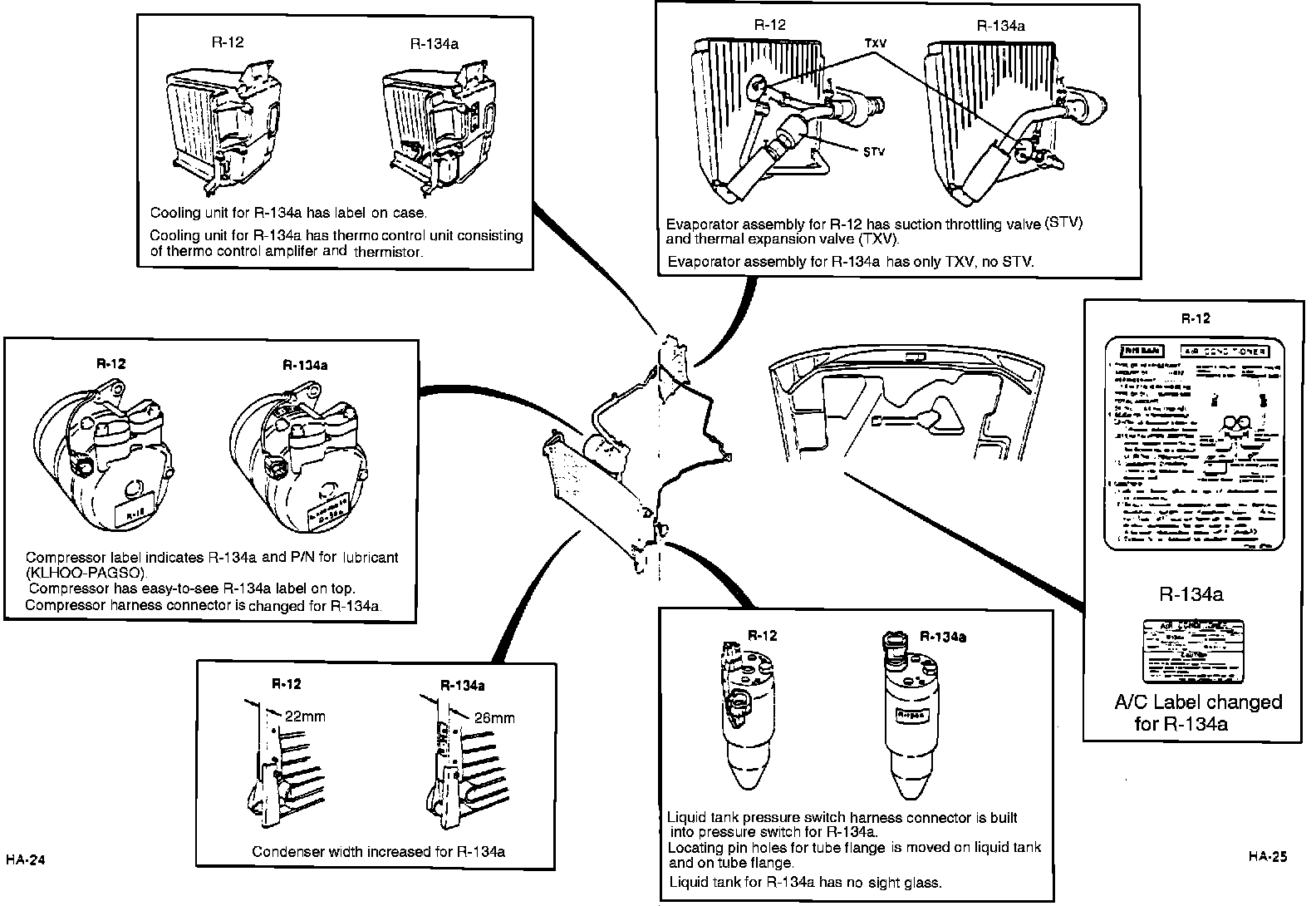
^ The information shown identifies the differences between R-12, and R-134a, systems for the D21/WD21 models.
Component Identification:
The following components are changed for R-134a and identified as indicated:
COMPONENT IDENTIFICATION
Condenser Label at top right
Compressor Label at top mounting tab
Cooling Unit Label on bottom of case
Expansion Valve R-134a stamp on diaphragm housing
Low Tube Label near end of tube
High Hose Label near service valve
Low Hose Label near service valve
Liquid Tank Label on tank
General Precautions:
^ R-12 refrigerant and R-134a refrigerant must never be mixed, even in the smallest amounts, as they are incompatible with each other. If the refrigerants are mixed, compressor failure is likely to occur.
^ Use only Nissan A/C System Oil, Type R (Part No.: KLH00-PAGRO) for the D21/WD21R-134a A/C system and R-134a components. If another lubricant is used, compressor failure is likely to occur.
^ The R-134a lubricant absorbs moisture from the air at a rapid rate if the container or system is unsealed, therefore the following handling precautions must be observed:
-When removing A/C components from a vehicle, immediately cap (seal) each component to minimize the entry of moisture.
-When installing A/C components into a vehicle, do not remove the seal caps until just before connecting each component. Also, complete the connection of all refrigerant tubes and hoses without delay to minimize the entry of moisture into the system.
-Use the specified lubricant from a sealed container only. Containers must be re-sealed immediately after dispensing the lubricant. Lubricant in containers which are not properly sealed will become moisture saturated. Such lubricant is no longer suitable for use and should be properly disposed of.
^ Avoid breathing A/C refrigerant and lubricant vapor or mist. Exposure may irritate the eyes, nose, and throat. To remove R-134a front the A/C system, use service equipment certified to meet the requirements of SAE J2210 (R-134a recycling equipment).
^ If accidental system discharge occurs, ventilate the work area before resuming service. Additional health and safety information may be obtained from the refrigerant and lubricant manufacturers.
^ Always wear eye and hand protection (goggles and gloves) when working with any refrigerant or air conditioning system.
^ Do not introduce compressed air to any refrigerant container or A/C component, because contamination will occur.
^ R-134a in the presence of oxygen and under pressure may form a combustible mixture. Therefore, never introduce compressed air into any R-134a container, cylinder, A/C component, recovery/recycling equipment, or other service equipment. This includes "empty" containers.