Drivetrain - Vibration/Buzz Noise Above 45 MPH
Classification:GI93-006
Section:
Maintenance
Reference:
TECHNICAL BULLETIN NTB93-108
Models:
1990-91 Trucks
Date:
July 15, 1993
TRUCK HIGH SPEED VIBRATION
APPLIED MODELS:
1990-91 2WD/4WD Trucks
SERVICE INFORMATION
Some 1990-91 Trucks may exhibit a vibration at speeds above 45 mph. The majority of such customer complaints may be resolved by correcting wheel/tire or propshaft imbalances.
Propshaft imbalances can be described as a continuous buzz in the seat, steering wheel or floor, and may be accompanied by a booming or drone noise. A rapidly vibrating shifter lever may also indicate a driveline imbalance. Driveline imbalance usually occurs at constant speeds around 40-55 mph.
Wheel and tire vibrations are felt as a shaking sensation. This type of vibration may also shake the seats, steering wheel and shifter lever. Wheel/tire imbalance incidents usually occur at speeds above 55 mph. Tires that may be properly balanced on an "off-the-vehicle" balance machine may exhibit an imbalance when reinstalled on the vehicle due to tire radial force variation or improper centering of the wheel on the hub.
Note:
Radial force variation occurs as a result of non-uniform rigidity in the sidewall of the tire and only occurs when the tire is loaded to normal weight conditions. Radial force variation cannot be detected in an unloaded condition that would be experienced on an off-the-car balancer.
If a vehicle exhibits either type of vibration described above, follow the procedure below.
SERVICE PROCEDURE
1. Test drive vehicle at 45-65 mph to determine the speed at which the vibration is most noticeable. Record this speed. Also note the type and location of the vibration.
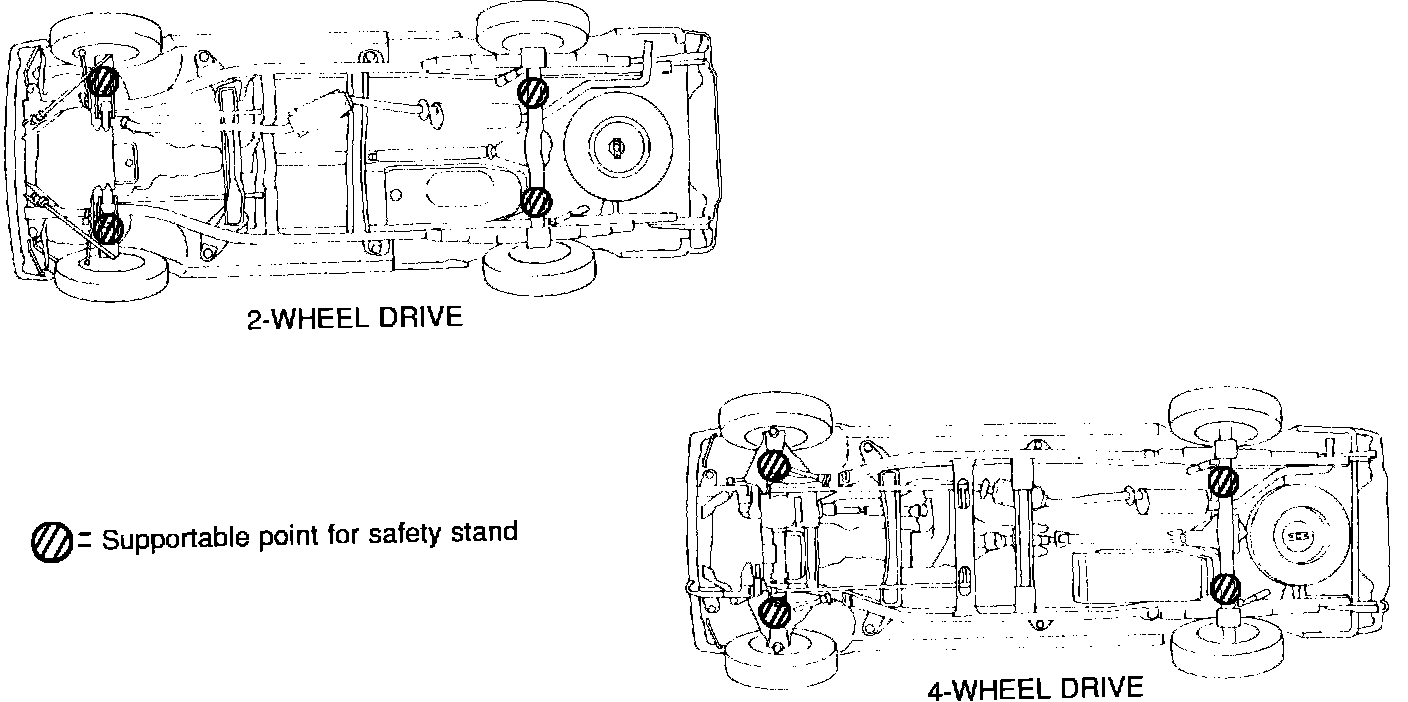
2. Raise the vehicle on a hoist and place on safety stands at the four points illustrated. This will load the suspension and restore driveline angles.
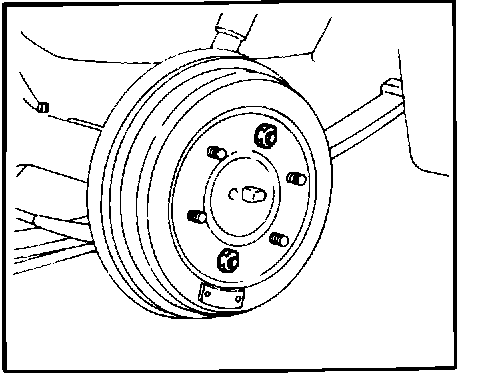
3. Remove both rear tire/wheel assemblies and securely install two lug nuts on each brake drum (opposite studs) to hold brake drums onto the axle while testing.
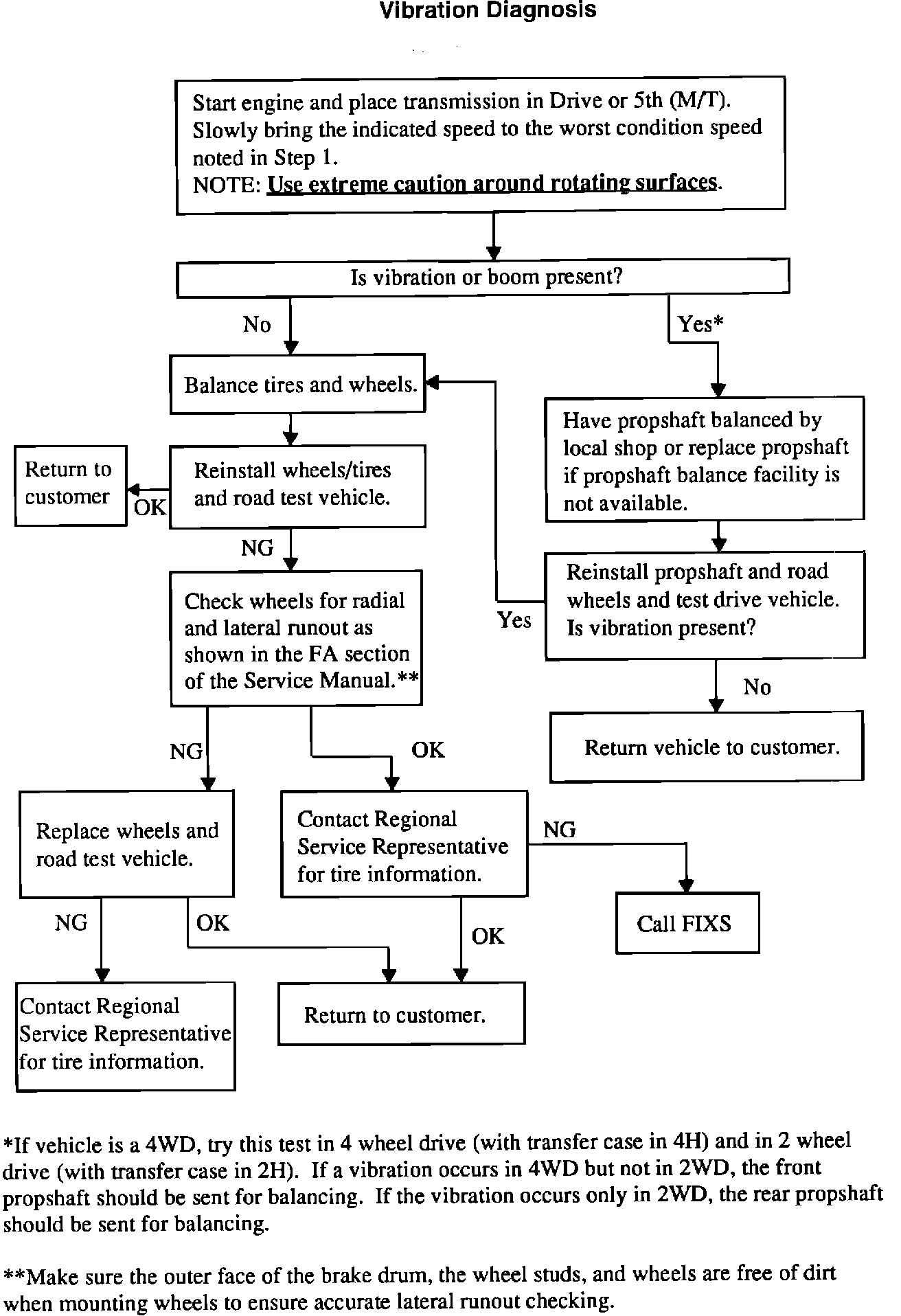
4. Follow the flowchart in this bulletin to isolate the type of vibration.