Exhaust Smoke (VIN Y): Outline
WARNING: This page is about a different variant/trim than selected.
EXHAUST SMOKE (VIN Y) DESCRIPTION AND POSSIBLE CAUSE
| Troubleshooting item |
Exhaust smoke |
| Description |
- Blue, black, or white smoke from exhaust system.
|
| Possible cause |
Blue smoke (Burning oil):
- PCV valve malfunction
- Dynamic pressure turbo malfunction
- Engine internal oil leakage
- Oil leakage at the compressor or turbine end of the dynamic pressure turbo
White smoke (Water in combustion):
- Cooling system malfunction
- Engine internal coolant leakage
- Coolant leakage at the compressor or the turbine end of the dynamic pressure turbo
Black smoke (Rich fuel mixture):
- PCM input signal error
- APP sensor or related wiring harness malfunction
- ECT sensor No. 1 or related wiring harness malfunction
- ECT sensor No. 2 or related wiring harness malfunction
- IAT sensor No. 1 or related wiring harness malfunction
- MAF sensor or related wiring harness malfunction
- MAP sensor or related wiring harness malfunction
- A/F sensor or related wiring harness malfunction
- HO2S or related wiring harness malfunction
- TP sensor or related wiring harness malfunction
- Boost pressure sensor or related wiring harness malfunction
- Boost air temperature sensor or related wiring harness malfunction
- Fuel injector injection timing and fuel injection amount malfunction
- Air cleaner restriction
- Intake-air system is collapsed or restricted
- Leakage at engine intake manifold and/or exhaust manifold
- Inadequate fuel pressure (high or low pressure side)
- High fuel pressure sensor malfunction
- High pressure fuel pump malfunction
- Spill valve control solenoid valve control circuit malfunction (damage to driver in PCM caused by short circuit to ground system)
- Spill valve control solenoid valve malfunction (built-into high pressure fuel pump)
- Relief valve (built-into high pressure fuel pump) malfunction
- Fuel line restriction
- Fuel pump unit malfunction
- Ignition system malfunction
- Ignition coil malfunction
- Spark plug malfunction
- Low engine compression
- Improper intake valve timing
- Improper exhaust valve timing
- Injector driver (built-into PCM) malfunction
|
| Possible cause |
WARNING:
- The following troubleshooting flow chart contains the fuel system diagnosis and repair procedures. Read the following warnings before performing the fuel system services:
- Fuel vapor is hazardous. It can easily ignite, causing serious injury and damage. Always keep sparks and flames away from fuel.
- Highly pressurized fuel may spray out if the fuel line is cut. Due to the following dangers occurring with a fuel spray, always complete the [Fuel Line Safety Procedure] to prevent the fuel from spraying. (Refer to BEFORE SERVICE PRECAUTION (VIN Y)
.)
- Fuel may cause irritation if it comes in contact with skin and eyes.
- If fuel ignites and causes a fire, it may lead to serious injury or death, and damage to property and facilities.
- Fuel is highly flammable and dangerous. Fuel line spills and leakage can cause serious injury or death, and damage to equipment. Always refer to the [Quick Release Connector Removal/Installation (fuel system)] before performing the fuel hose installation, and execute the [Fuel Leakage Inspection] after installation. (Refer to QUICK RELEASE CONNECTOR (FUEL SYSTEM) REMOVAL/INSTALLATION (VIN Y)
.) (Refer to AFTER SERVICE PRECAUTION (VIN Y)
.)
CAUTION:
- Disconnecting/connecting the quick release connector without cleaning it may possibly cause damage to the fuel pipe and quick release connector. Always clean the quick release connector joint area before disconnecting/connecting, and make sure that it is free of foreign material.
|
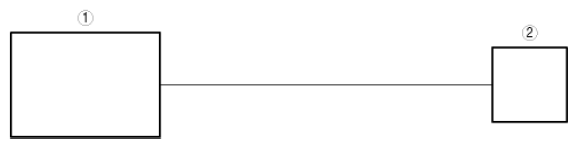 Courtesy of MAZDA MOTORS CORP. Courtesy of MAZDA MOTORS CORP.
|
| 1 |
PCM |
| 2 |
Spill valve control solenoid valve (High pressure fuel pump) |