B2909
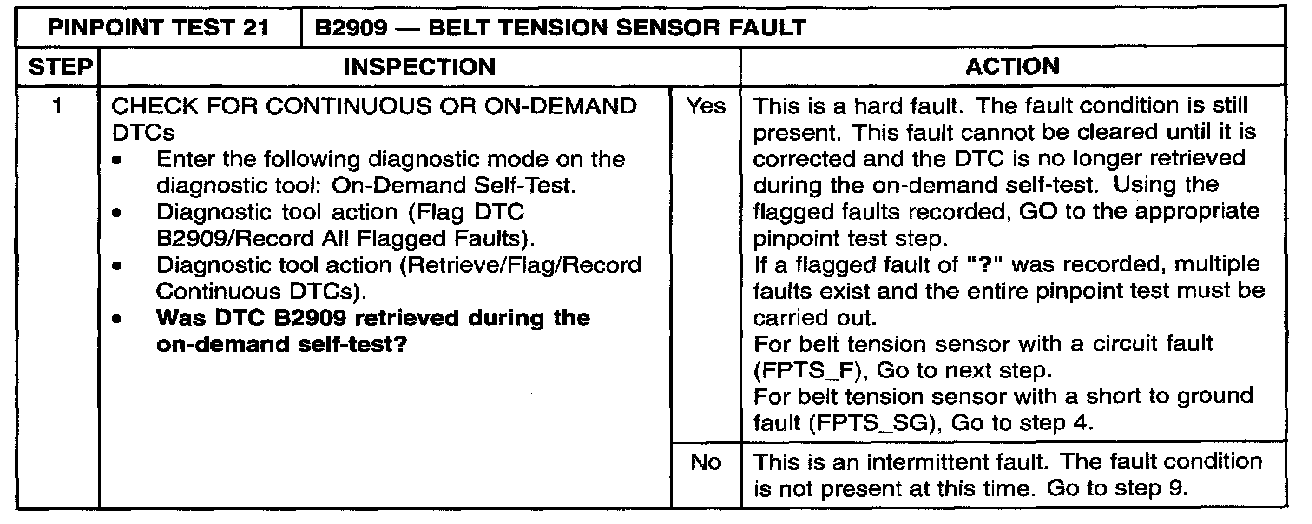
B2909 - BELT TENSION SENSOR FAULTStep 1:
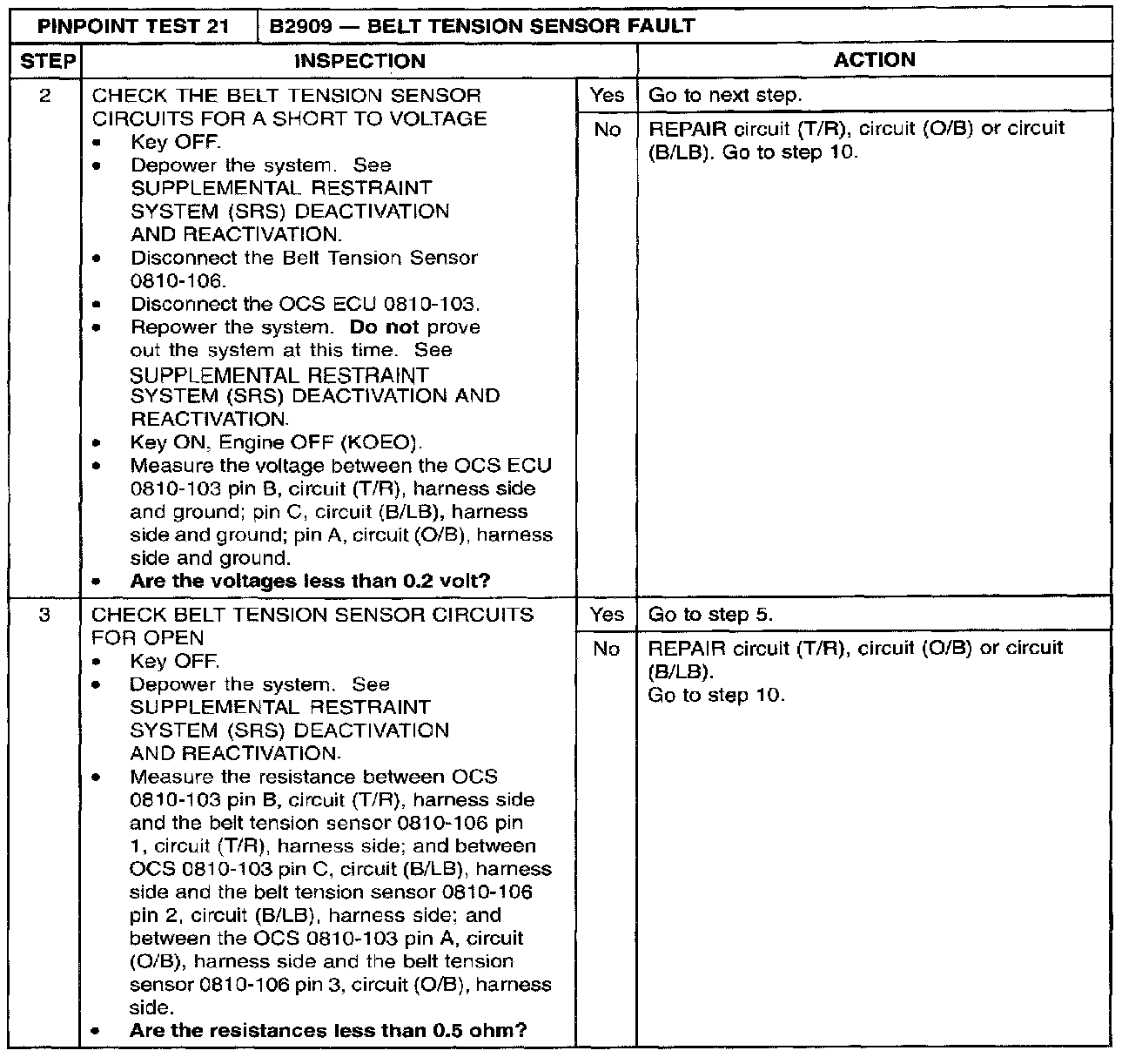
Step 2 - 3:
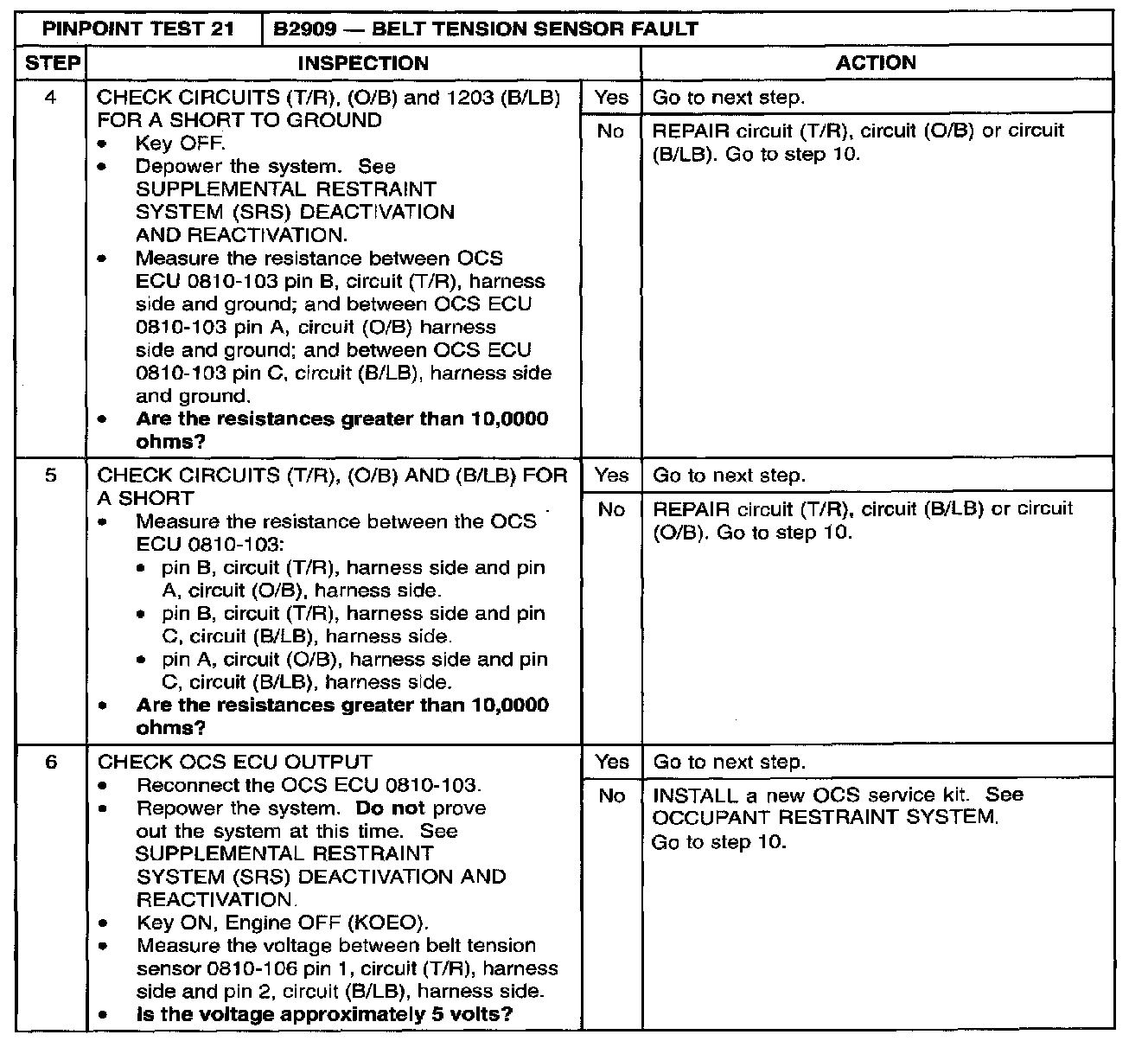
Step 4 - 6:
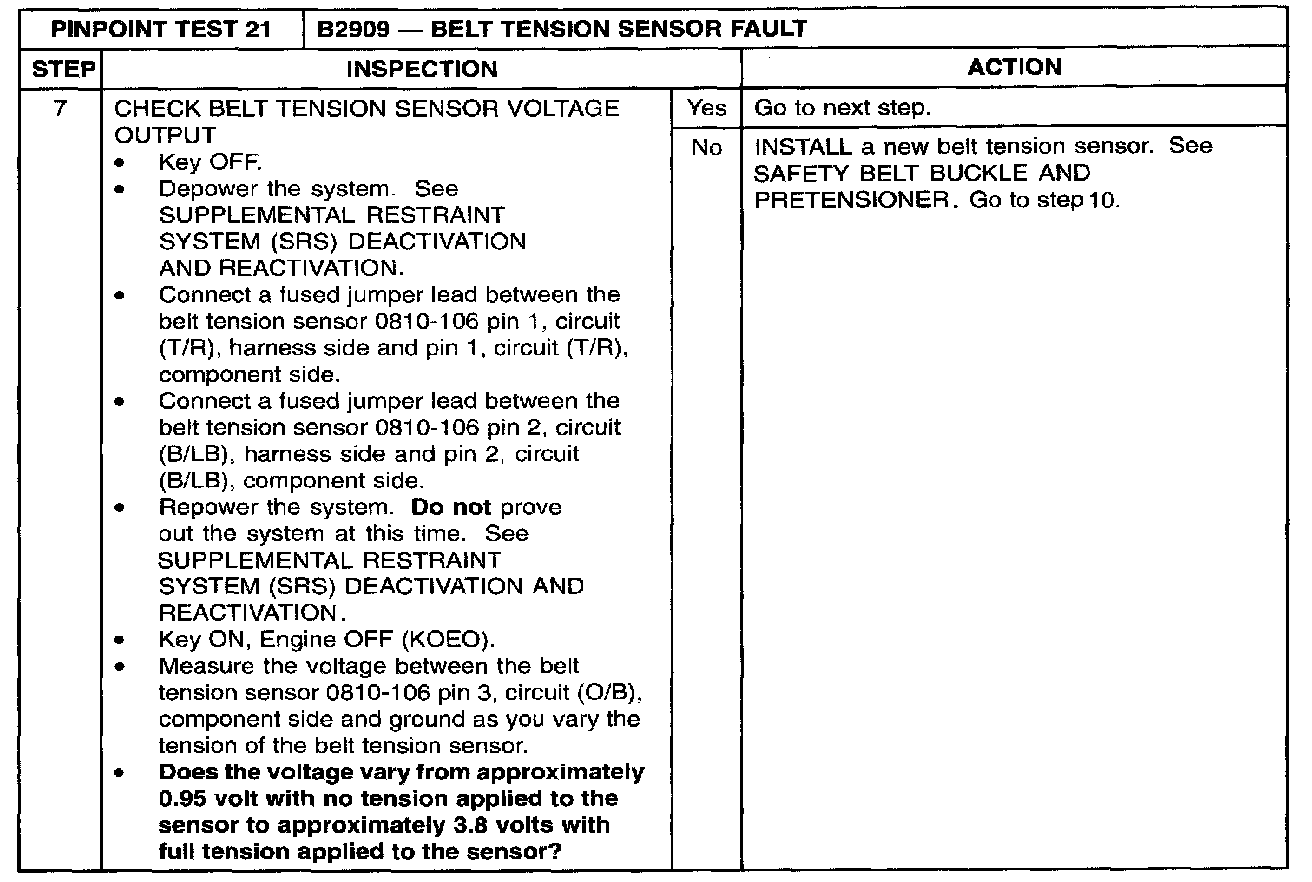
Step 7:
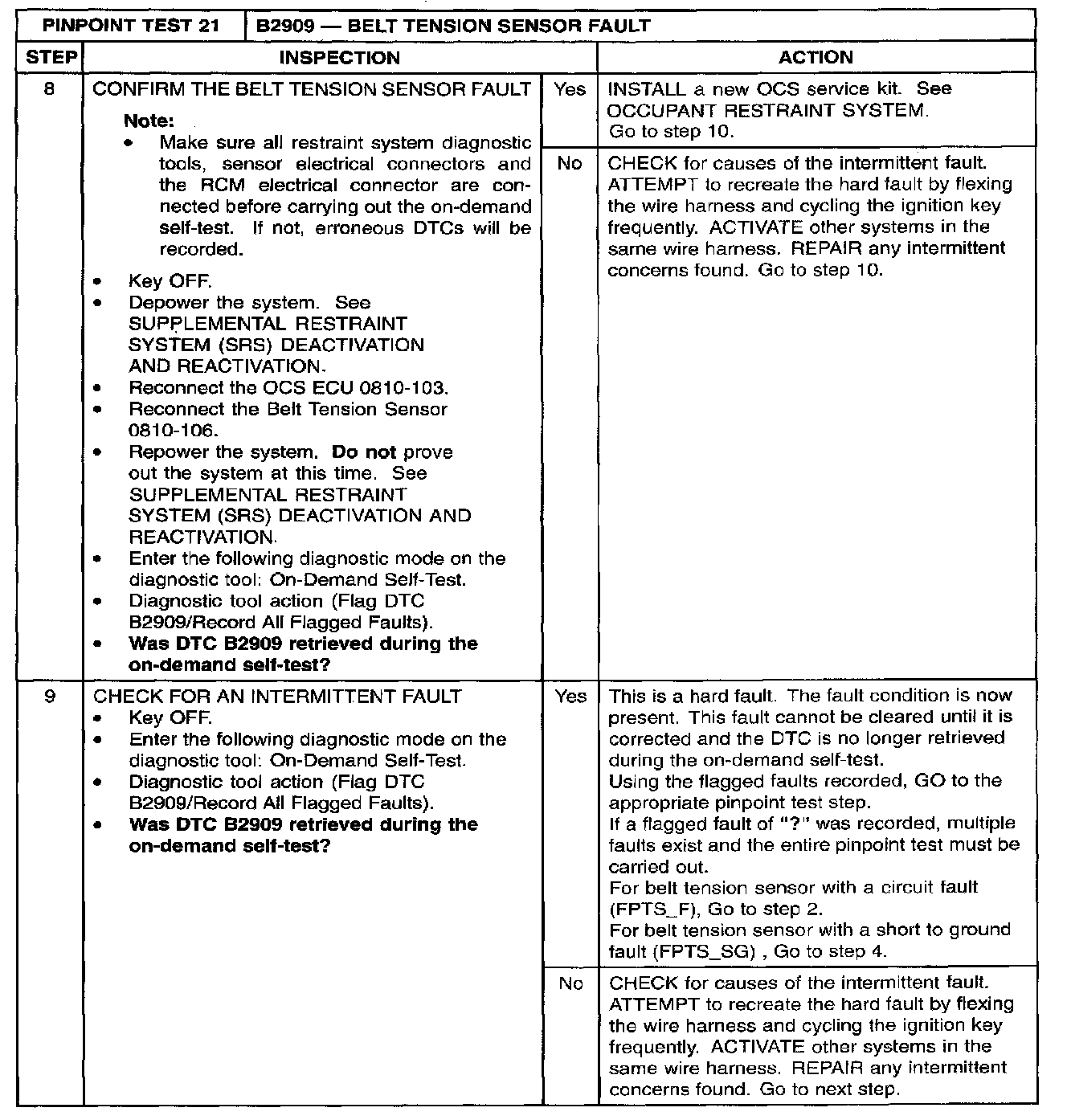
Step 8 - 9:
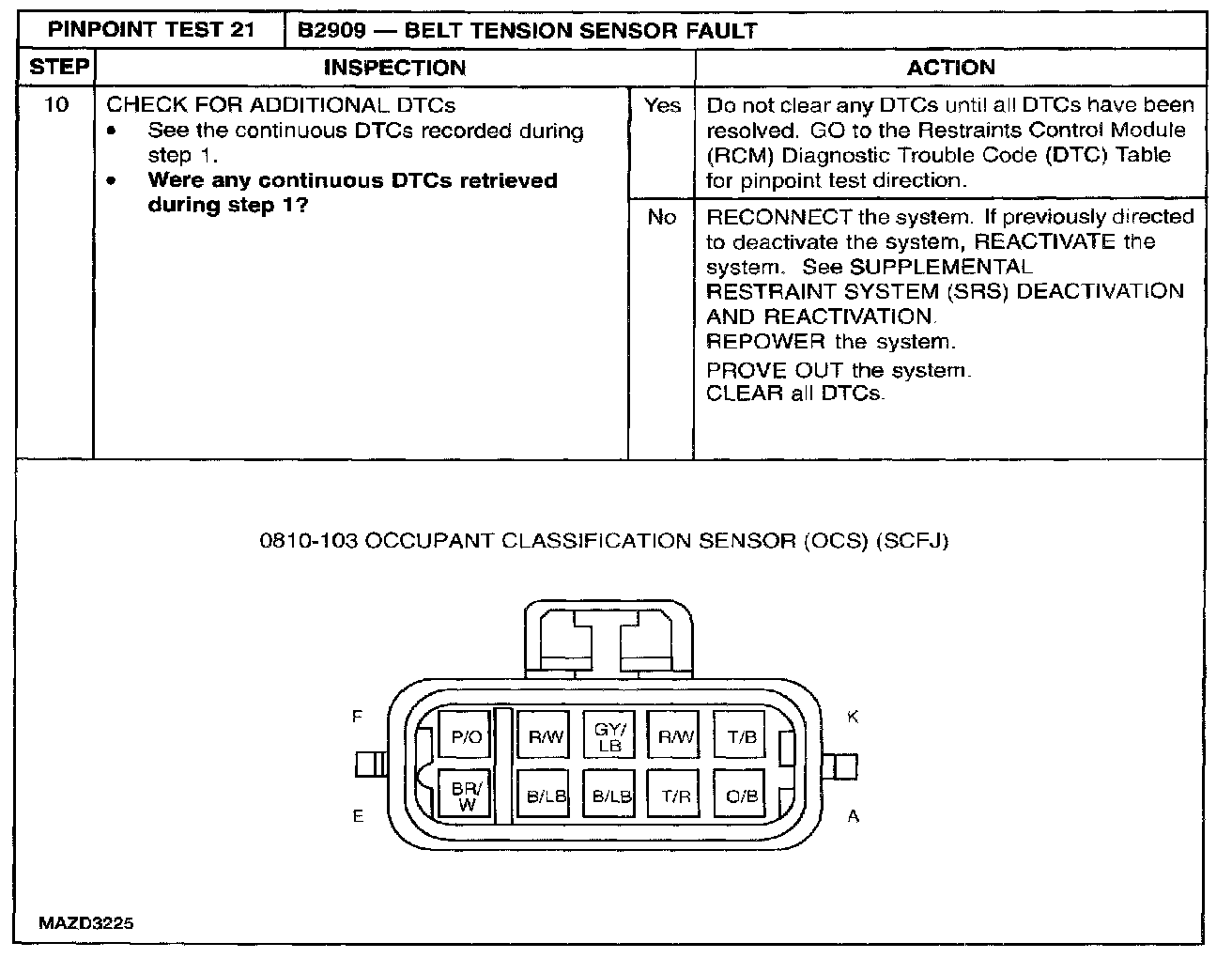
Step 10:
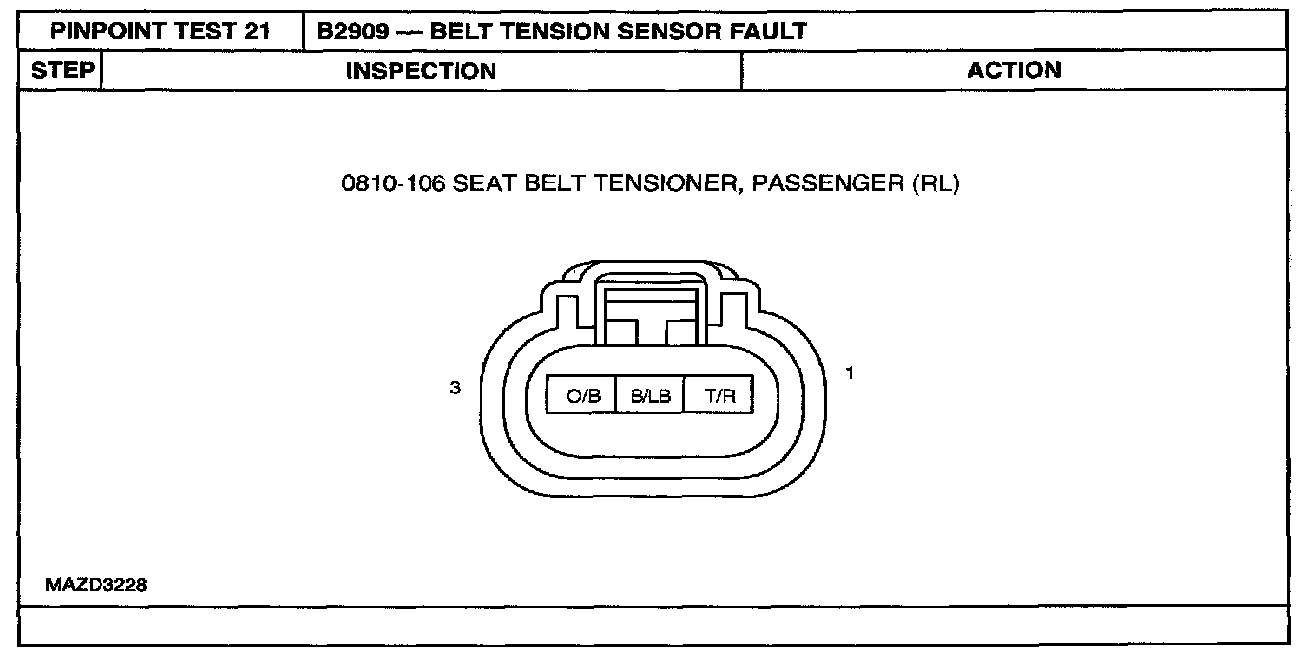
Normal Operation
NOTE: LFC 16 is shared between DTC B2290 and DTC B2909.
The belt tension sensor is part of the occupant classification sensor (OCS) system. The OCS system interprets a variable voltage signal provided by the safety belt tension sensor to identify the possible presence of a child safety seat in the front passenger seat. The voltage output of the belt tension sensor is proportional to the amount of tension applied to the sensor by the belt, no tension low voltage (approximately 0.95 volt), high tension high voltage (approximately 3.8 volts).
The occupant classification sensor (OCS) system checks the belt tension sensor circuits for faults. If the OCS detects one of the following faults on any of the belt tension sensor circuits, it will report the failure to the RCM. The RCM will store diagnostic trouble code (DTC) B2909 in memory and flash either lamp fault code (LFC) 16 (or higher priority code if one exists) on the air bag indicator.
The occupant classification sensor (OCS) system components (seat cushion foam pad, bladder with pressure sensor and electronic control unit) are calibrated to each other and are serviced as an assembly. The OCS system components are not to be installed separately with the exception of the belt tension sensor. If a new OCS system, OCS system component or seat cushion foam pad are needed, a new OCS system service kit (seat cushion foam pad, bladder with pressure sensor and electronic control unit) must be installed as an assembly.
Possible Causes
A belt tension sensor circuit fault can be caused by one of the following:
- damaged wiring, terminals or connectors.
- a faulted belt tension sensor.
- a faulted OCS ECU.
WARNING: Restraint system diagnostic tools are for service only. Tools must be removed prior to operating the vehicle over the road. Failure to remove restraint system diagnostic tools could result in injury and possible violation of vehicle safety standards.
WARNING: Do not handle, move or change the original horizontal mounting position of the restraints control module (RCM) while the RCM is connected and the ignition switch is ON. Failure to follow these instructions may result in the inadvertent deployment of the safety canopy and risk of personal injury.
WARNING: Never probe the connectors on the air bag module. Doing so can result in air bag deployment, which can result in personal injury.
WARNING: The safety belt pretensioner is a pyrotechnic device. Always wear safety glasses when repairing an air bag equipped vehicle and when handling a safety belt buckle pretensioner or safety belt retractor pretensioner. Never probe a pretensioner electrical connector. Doing so could result in pretensioner or air bag deployment and could result in personal injury.
WARNING: Never probe the electrical connector on a safety canopy module. Doing so can result in safety canopy deployment and could result in personal injury.
NOTE: After diagnosing or repairing an SRS, the restraint system diagnostic tools must be removed before operating the vehicle over the road.
NOTE: The SRS must be fully operational and free of faults before releasing the vehicle to the customer.
NOTE: Most faults are due to connector and/or wiring concerns. Carry out a thorough Inspection and Verification before proceeding with the Pinpoint Test.