Propeller Shaft RUNOUT And Balance
- Use a twin post axle contact hoist to raise and support the vehicle. See LIFTING
.
- Remove the rear wheels and tires. See WHEEL AND TIRE REMOVAL/INSTALLATION
. Install the lug nuts to retain the brake drums.
CAUTION:
- To prevent overheating, do not run the vehicle on the hoist for an extended period.
- Note and record baseline speed.
- With the transmission in gear, increase vehicle speed to the maximum vibration level. Note and record the speed of this vibration period as a baseline speed.
- Check the attachment of the propeller shaft to the rear companion flange. Replace any worn parts.
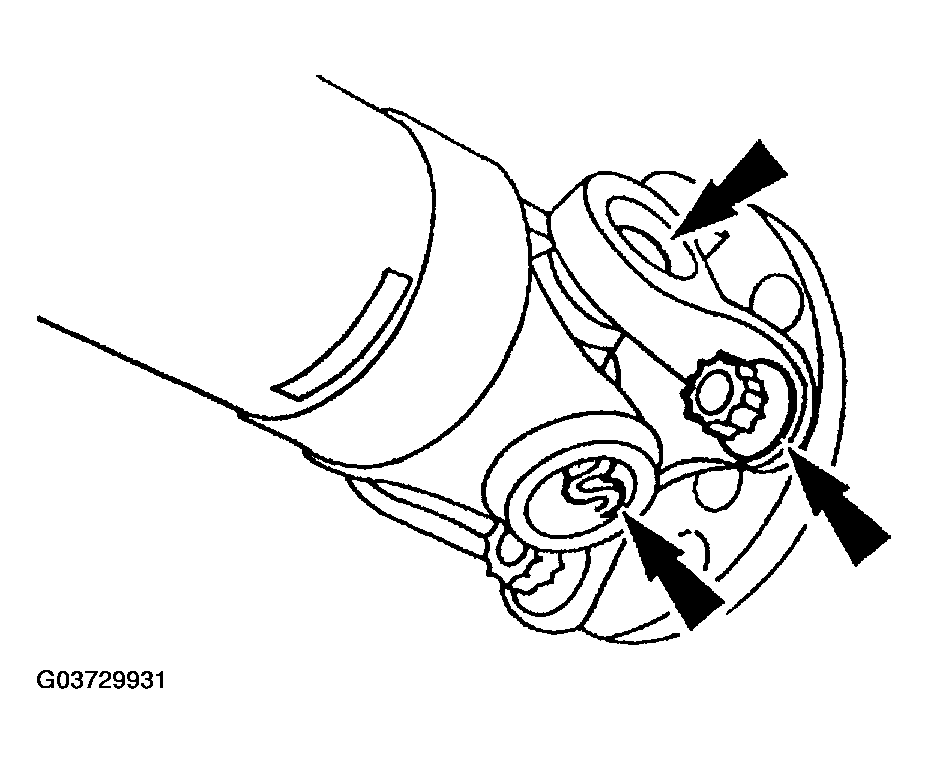 Courtesy of MAZDA MOTORS CORP.
WARNING:
- Keep hands away from the balance weights while the propeller shaft is rotating.
- Check the propeller shaft for out of balance.
- With the transmission in gear, run the vehicle with the propeller shaft rotating 64-80 km/h (40-50 mph).
- Have an assistant barely contact the propeller shaft with a marker in the rear, middle, and front end to indicate heavy spots.
- Balance the propeller shaft.
- Install two stainless steel screw-type hose clamps on the propeller shaft with the clamp screws opposite the mark.
- Tighten the hose clamps starting at the pinion yoke end of the propeller shaft.
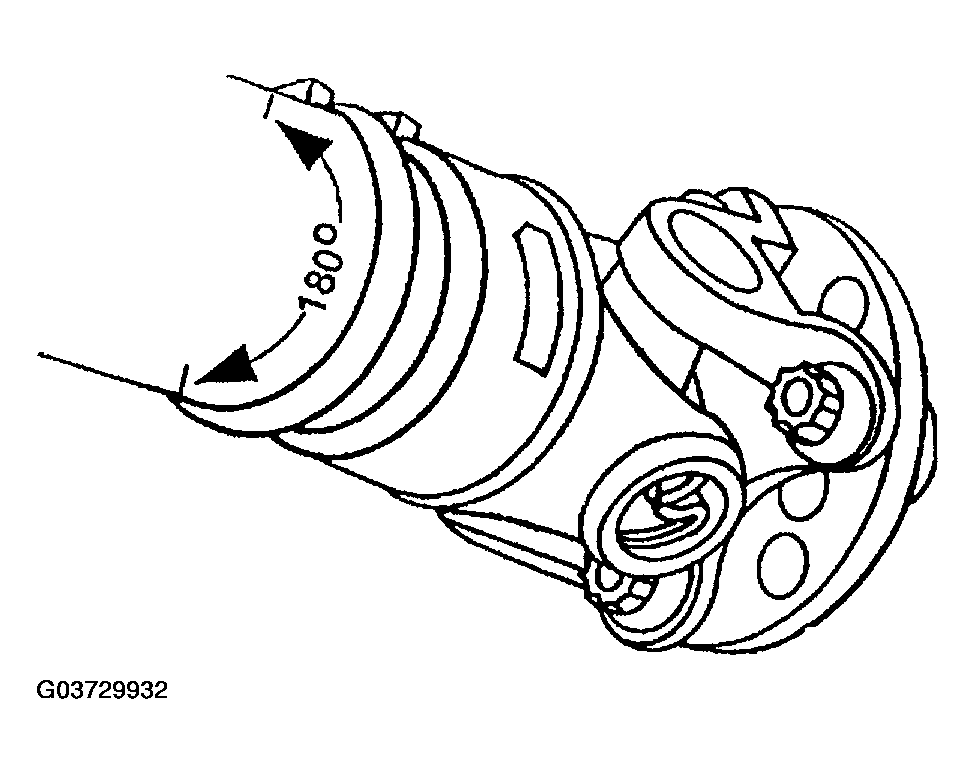 Courtesy of MAZDA MOTORS CORP.
- Run the vehicle at baseline speed.
- If vibration is still evident, rotate the clamps away from each other until balanced and test.
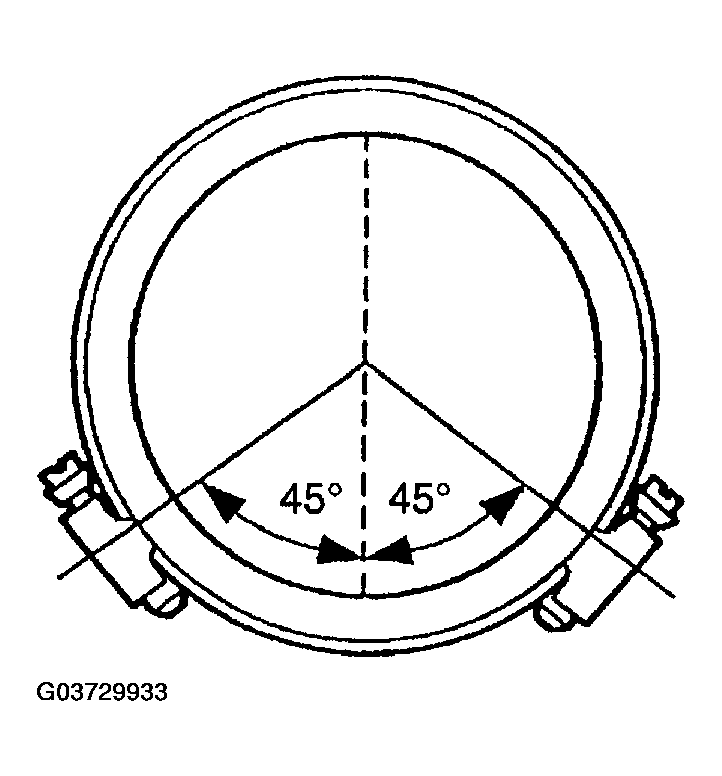 Courtesy of MAZDA MOTORS CORP.
- If necessary, continue to rotate the clamps apart in smaller increments and test. If vibration still exists, repeat the procedure at the front of the propeller shaft.
- Install the tire and wheel assembly. See WHEEL AND TIRE REMOVAL/INSTALLATION
.
- Road test the vehicle.