Driver Seat Switch
Fig.1 Six-Way Power Seat Switches - Typical:
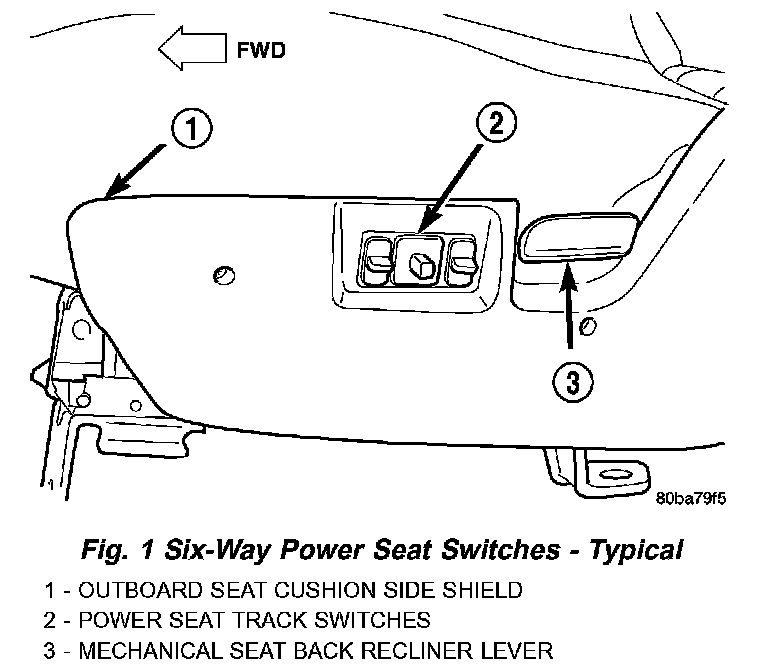
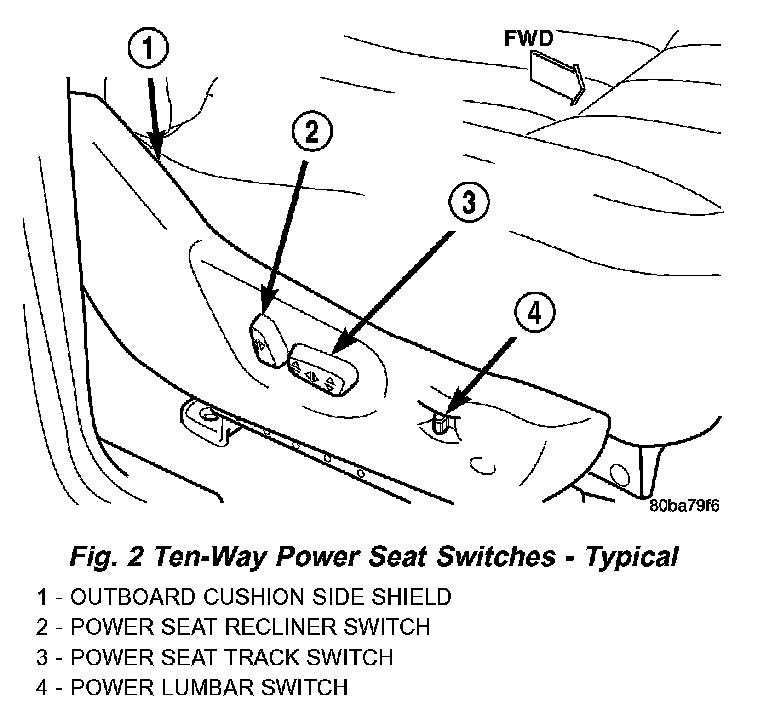
Fig.2 Ten-Way Power Seat Switches - Typical:
DRIVER SEAT SWITCH
Two different power seat switches are used on this vehicle, depending upon the optional power seat system installed in the vehicle. The six-way power seats are each equipped with a switch featuring three switch control knobs ganged together on the outboard seat cushion side shield. The ten-way power seats are each equipped with a switch featuring two knobs ganged together on the outboard seat cushion side shield.
The switch units for both power seat types are secured to the back of the seat cushion side shield with two screws. However, the control knobs for the six-way power seat switch unit remain installed during switch unit removal and installation, while both knobs for the ten-way power seat switch unit must be removed.
The individual switches in both power seat switch units cannot be repaired. If one switch is damaged or faulty, the entire power seat switch unit must be replaced.
The power seat tracks of both the six-way and the ten-way power seat systems can be adjusted in six different ways using the power seat switches. The ten-way system has the additional power seat recliner switch integral to the power seat switch and also has a separate, stand-alone switch to control the power lumbar adjuster. See the owner's manual in the vehicle glove box for more information on the power seat switch functions and the seat adjusting procedures.
When a power switch control knob or knobs are actuated, a battery feed and a ground path are applied through the switch contacts to the power seat track or recliner adjuster motor. The selected adjuster motor operates to move the seat track or recliner through its drive unit in the selected direction until the switch is released, or until the travel limit of the adjuster is reached. When the switch is moved in the opposite direction, the battery feed and ground path to the motor are reversed through the switch contacts. This causes the adjuster motor to run in the opposite direction.
No power seat switch should be held applied in any direction after the adjuster has reached its travel limit. The power seat adjuster motors each contain a self-resetting circuit breaker to protect them from overload. However, consecutive or frequent resetting of the circuit breaker must not be allowed to continue, or the motor may be damaged.