Windshield Washer Pump: Description and Operation
Fig.5 Washer Pumps (Viewed From Bottom Of Reservoir):
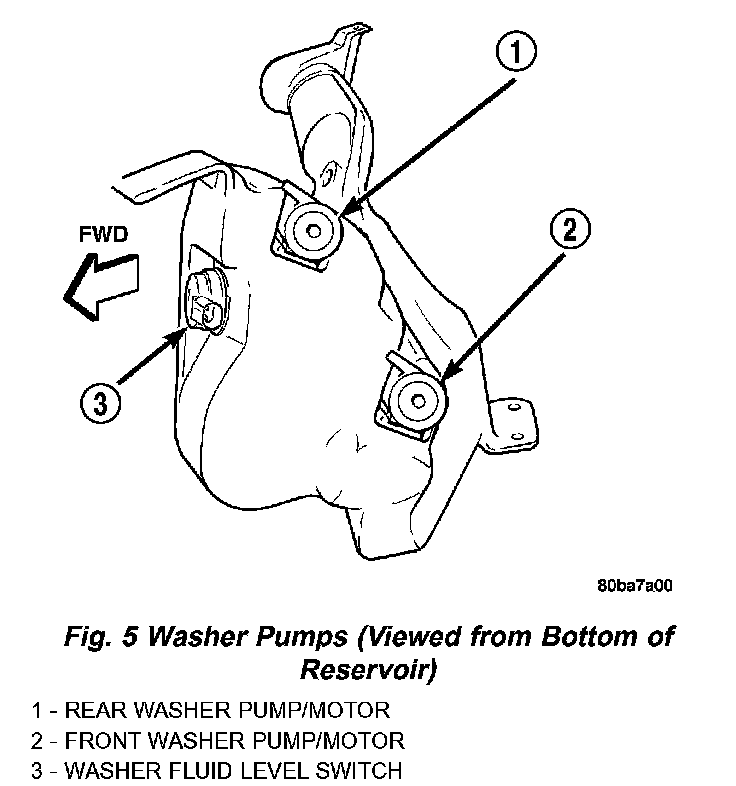
FRONT WASHER PUMP/MOTOR
The front washer pump/motor unit is located on the outboard side and near the front of the washer reservoir, between the left front inner and outer fender panels. A small permanently lubricated and sealed electric motor is coupled to the rotor-type washer pump. A seal flange with a large barbed inlet nipple on the pump housing passes through a rubber grommet seal installed in one of two dedicated mounting holes near the bottom of the washer reservoir. The front washer pump/motor unit is always mounted in the lower pump mounting hole of the reservoir. A smaller barbed outlet nipple on the pump housing connects the unit to the front washer hose. The washer pump/motor unit is retained on the reservoir by the interference fit between the barbed pump inlet nipple and the grommet seal, which is a light press fit. An integral electrical connector receptacle is located on the top of the motor housing. The front washer pump/motor unit cannot be repaired. If faulty or damaged, the entire washer pump/motor unit must be replaced.
The front washer pump/motor unit is connected to the vehicle electrical system through a single take out and two-cavity connector of the left headlamp and dash wire harness. The washer pump/motor is grounded at all times through a take out of the left headlamp and dash wire harness with a single eyelet terminal connector that is secured under a ground screw to the top of the left inner fender shield in the engine compartment. The front washer pump/motor receives battery current on a fused ignition switch output (run-acc) circuit through the closed contacts of the momentary front washer switch within the right multi-function switch only when the switch control stalk is pulled towards the steering wheel. Washer fluid is gravity-fed from the washer reservoir to the inlet side of the washer pump. When the pump motor is energized, the rotor-type pump pressurizes the washer fluid and forces it through the pump outlet nipple, the front washer plumbing, and the front washer nozzles onto the windshield glass.
Fig.5 Washer Pumps (Viewed From Bottom Of Reservoir):
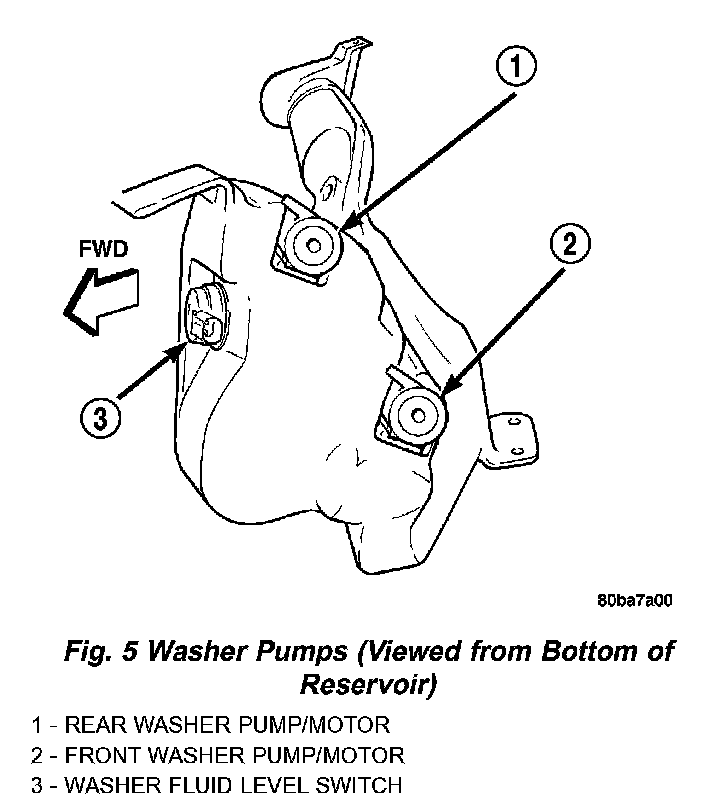
REAR WASHER PUMP/MOTOR
The rear washer pump/motor unit is located on the outboard side and near the rear of the washer reservoir, between the left front inner and outer fender panels. A small permanently lubricated and sealed electric motor is coupled to the rotor-type washer pump. A seal flange with a large barbed inlet nipple on the pump housing passes through a rubber grommet seal installed in one of two dedicated mounting holes near the bottom of the washer reservoir. The rear washer pump/motor unit is always mounted in the higher pump mounting hole of the reservoir. A smaller barbed outlet nipple on the pump housing connects the unit to the rear washer hose. The washer pump/motor unit is retained on the reservoir by the interference fit between the barbed pump inlet nipple and the grommet seal, which is a light press fit. An integral electrical connector receptacle is located on the top of the motor housing. The rear washer pump/motor unit cannot be repaired. If faulty or damaged, the entire washer pump/motor unit must be replaced.
The rear washer pump/motor unit is connected to the vehicle electrical system through a single take out and two-cavity connector of the left headlamp and dash wire harness. The washer pump/motor is grounded at all times through a take out of the left headlamp and dash wire harness with a single eyelet terminal connector that is secured under a ground screw to the top of the left inner fender shield in the engine compartment. The rear washer pump/motor receives battery current on a fused ignition switch output (run-acc) circuit through the closed contacts of the momentary rear washer switch within the right multi-function switch only when the switch control stalk is pushed towards the instrument panel. Washer fluid is gravity-fed from the washer reservoir to the inlet side of the washer pump. When the pump motor is energized, the rotor-type pump pressurizes the washer fluid and forces it through the pump outlet nipple, the rear washer plumbing, and the rear washer nozzle onto the liftgate glass.