Bench Bleeding
- If master cylinder has been overhauled or a new cylinder is to be installed, master cylinder should be bench bled before installation. Master cylinder must be bled before installation to prevent excessive amounts of air from entering hydraulic system, creating poor brake operation. Bleed master cylinder with bleeder valves (if equipped).
- Place master cylinder in soft-jawed vise. DO NOT tighten vise enough to damage master cylinder. Install bleed tubes in both outlets of master cylinder. See Fig 1
.
- On one-piece master cylinder, fill reservoirs to within 1/4 inch of rim. On two-piece master cylinder with plastic reservoir, full to FULL mark. Use only clean brake fluid. Do not reuse old brake fluid. Ensure ends of both bleed tubes are submerged in brake fluid. See Fig 1
.
- Using proper size push rod, fully apply and release master cylinder pistons until no air bubbles exist in brake fluid flow. When all air bubbles are gone from master cylinder, cap outlet ports. Install reservoir cover and seal. Install master cylinder and bleed on vehicle.
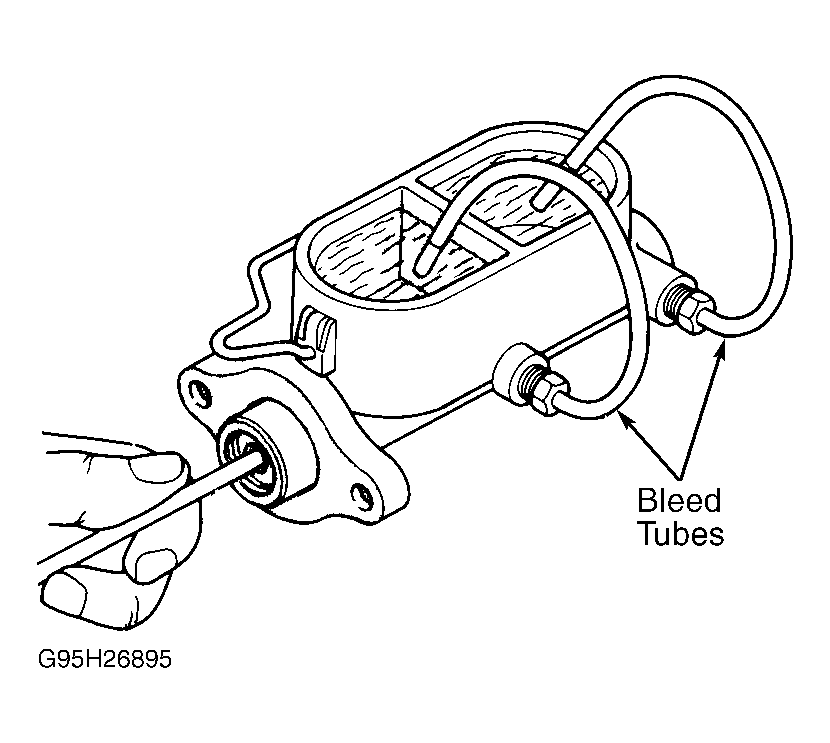 Courtesy of CHRYSLER CORP.