Shift Speeds & Governor Pressures
CLUTCH & BAND COMPONENT APPLICATION
| Lever Position |
Front Clutch |
Rear Clutch |
Overrun Clutch |
Lock-up Clutch |
Front Band |
Low-R Band |
| Drive (1st) |
..... |
X |
X |
..... |
..... |
..... |
| Drive (2nd) |
..... |
X |
..... |
..... |
X |
..... |
| Drive (3rd) |
X |
X |
..... |
X |
..... |
..... |
| 2nd (1st) |
..... |
X |
X |
..... |
..... |
..... |
| 2nd (2nd) |
..... |
X |
..... |
..... |
X |
..... |
| 1-1st Hold |
..... |
X |
..... |
..... |
..... |
X |
| Reverse |
X |
..... |
..... |
..... |
..... |
X |
NOTE:
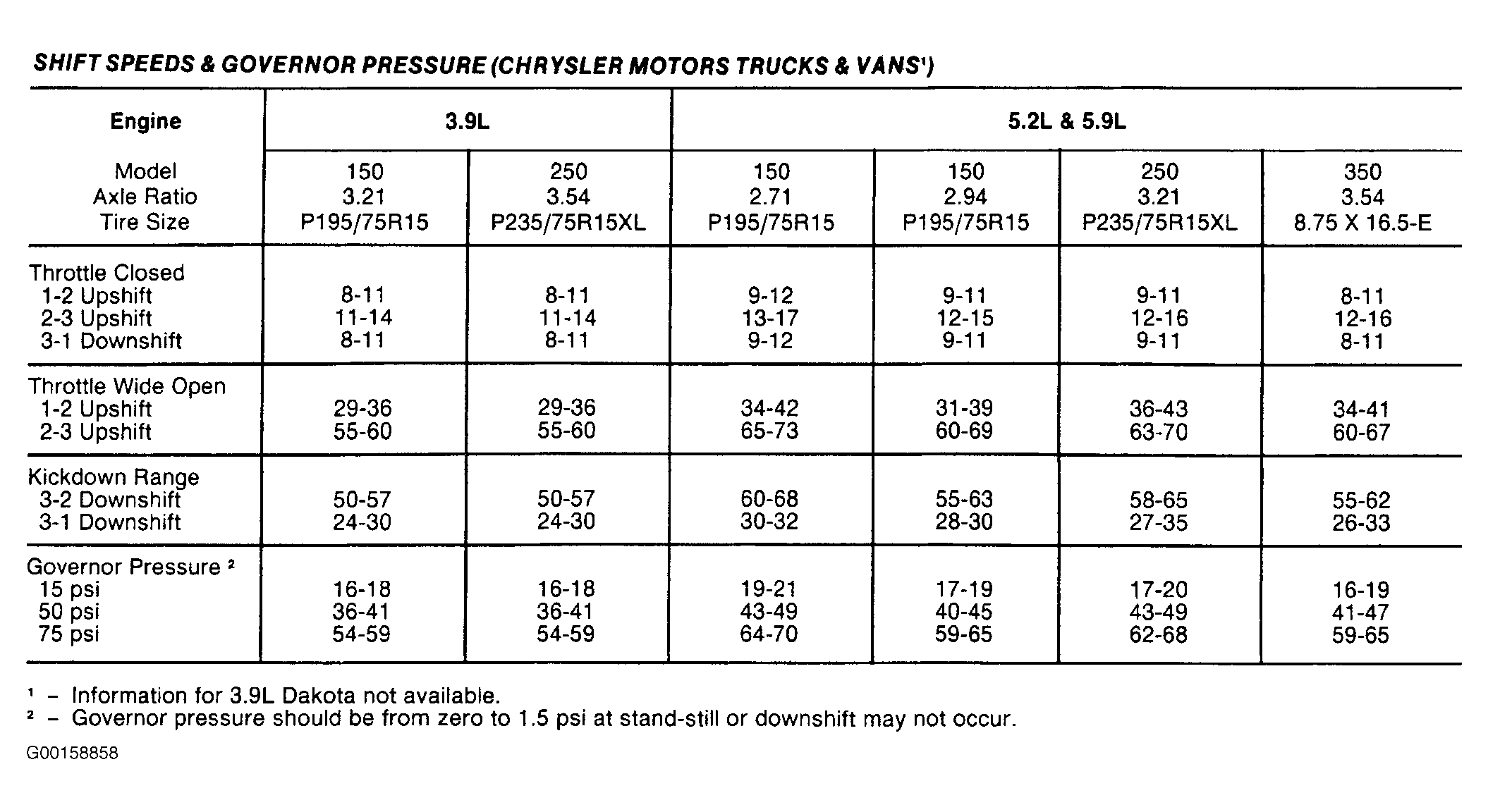
For shift speeds and governor pressures in trucks and vans, see Fig 1
. SHIFT SPEEDS & GOVERNOR PRESSURES - CHRYSLER PASSENGER CARS
| Application/Shift |
2.26 Axle Ratio (MPH) |
2.94 Axle Ratio (MPH) |
| Throttle Closed |
| 1-2 Upshift |
12-15 |
9-11 |
| 2-3 Upshift |
16-20 |
13-16 |
| Lock-Up |
38-53 |
30-41 |
| Throttle Wide Open |
| 1-2 Upshift |
37-56 |
31-43 |
| 2-3 Upshift |
75-93 |
58-72 |
| Kickdown Range |
| 3-2 Downshift |
69-87 |
54-67 |
| 3-1 Downshift |
35-40 |
27-31 |
| Governor Pressure |
| 15 psi |
23-25 |
17-20 |
| 50 psi |
51-59 |
39-45 |
| 75 psi |
78-85 |
60-66 |
 Courtesy of CHRYSLER CORP.
- Slipping or flare-up in any gear usually indicates clutch, band or overrunning clutch problems. To determine which clutch or band slipping, note transmission operation in all selector positions while comparing which internal units are applied in each position.
- If transmission slips in high gear with selector lever in "D", either front or rear clutch is slipping. By selecting another gear which uses one but not both of these assemblies, unit which is slipping can be identified. If transmission also slips in Reverse, front clutch is slipping. If transmission does not also slip in Reverse, rear clutch is slipping.
- Although this process of elimination can be used to detect any unit which slips and to confirm proper operation of good units, actual cause usually cannot be determined. Nearly any condition can be caused by leaking hydraulic circuits or sticking valves.
- Unless obvious condition exists, transmission should never be disassembled until hydraulic and air pressure tests have been performed. Using engine tachometer, determine if lock-up clutch in converter is functioning.
- Instantaneous rise in engine speed of more than 150 RPM at 45 MPH when throttle is opened just short of kickdown, indicates lock-up clutch is slipping more than normal. Slippage less than 150 RPM is normal.