EVAP Control Canister Vent Shut Valve Test
- Disconnect vacuum hose from EVAP control canister filter as illustrated. See Fig 1
. Turn ignition on and apply vacuum to hose. If EVAP control canister vent shut valve holds a vacuum, go to next step. If EVAP control canister vent shut valve does not hold a vacuum, EVAP control canister vent shut valve is okay at this time. Perform vacuum hoses and connections test. See VACUUM HOSES & CONNECTIONS TEST
.
- Turn ignition off. Disconnect EVAP control canister vent shut valve connector. Check for continuity between ground and EVAP control canister vent shut valve harness connector terminal No. 1 (Light Green/White wire). If continuity exists, go to next step. If continuity does not exist, replace EVAP control canister vent shut valve and "O" rings.
- Disconnect PCM 32-pin connector "A". Check for continuity between ground and EVAP control canister vent shut valve harness connector terminal No. 1 (Light Green/White wire). If continuity exists, repair short in Light Green/White wire between EVAP control canister vent shut valve and PCM 32-pin connector "A" terminal No. 4. If continuity does not exist, substitute a known-good PCM and recheck. See SUBSTITUTING PCM in
SELF-DIAGNOSTICS - INTRODUCTION article. If symptom or problem goes away, replace original PCM.
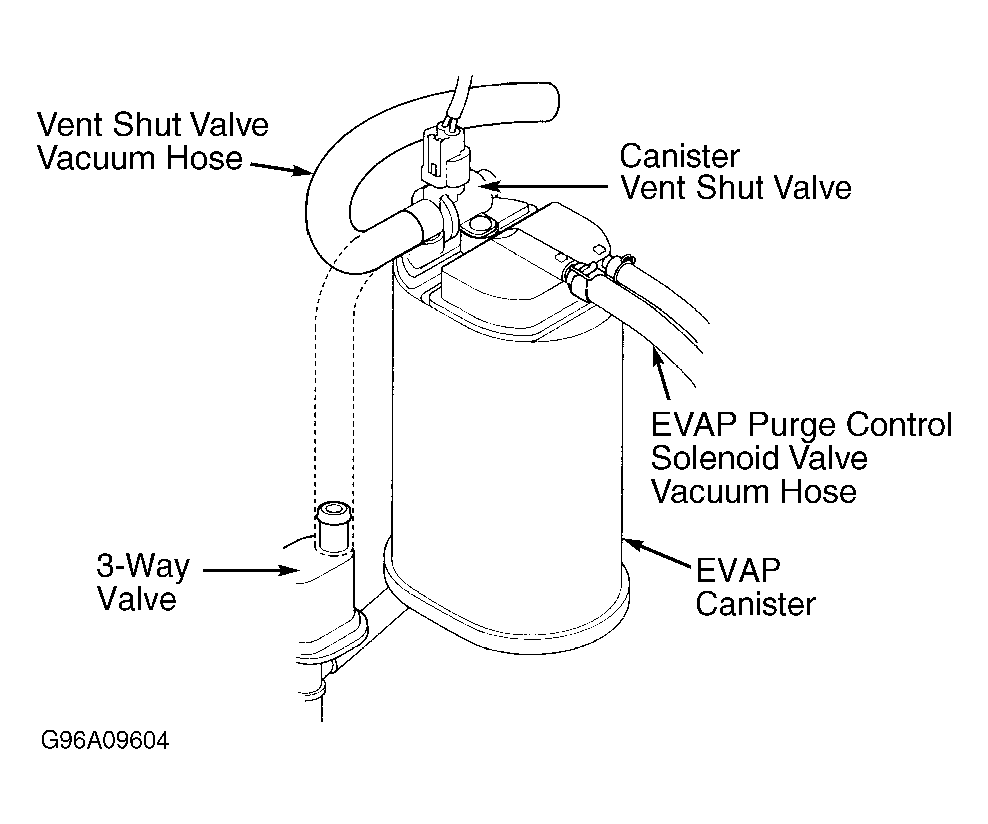 Courtesy of AMERICAN HONDA MOTOR CO., INC.