Vehicle - Trailer And RV Towing Information
INFORMATIONBulletin No.: 07-00-89-021M
Date: June 13, 2012
Subject: Supplemental Information on Trailer Towing and Recreational Vehicle Towing (Dinghy Towing)
Models:
2008-2012 Buick Enclave
2009-2012 Chevrolet Traverse
2007-2012 GMC Acadia
2007-2010 Saturn OUTLOOK
Supercede:
This bulletin is being revised to update the build date information for the 2012 model year. Please discard Corporate Bulletin Number 07-00-89-021L (Section 00 - General Information).
The purpose of this bulletin is to inform dealers of special procedures necessary when towing a trailer or when towing the vehicle behind a recreational vehicle.
Towing a Trailer
Trailer Weight Information
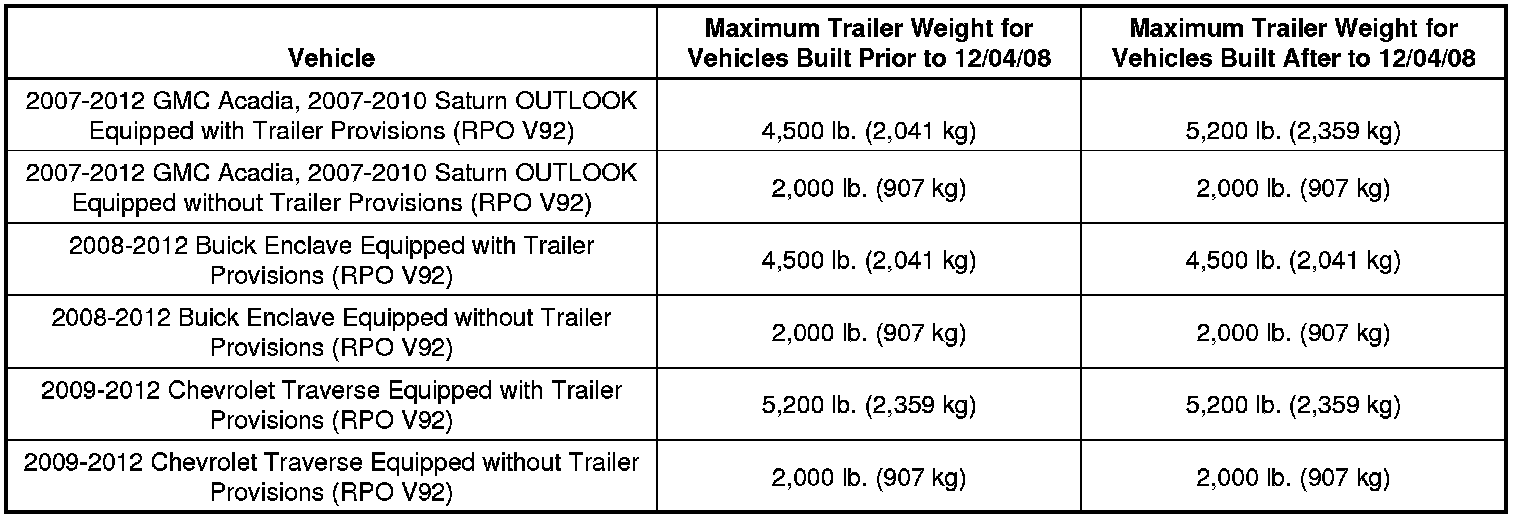
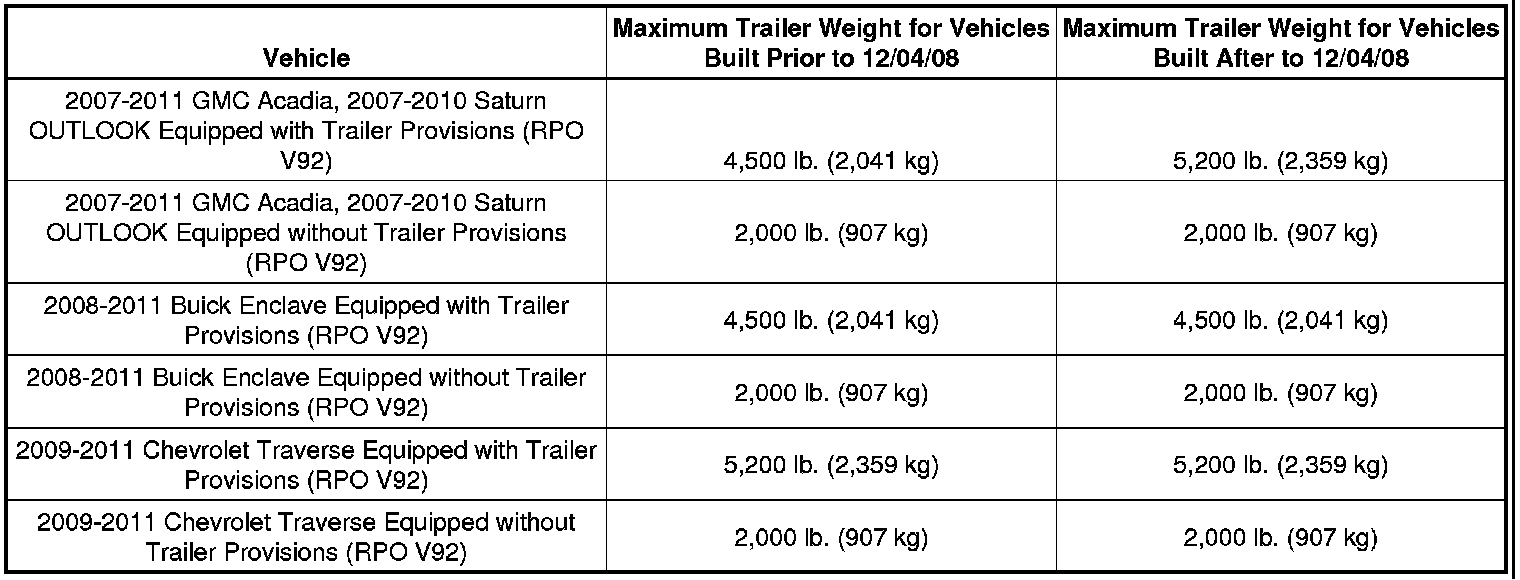
The following chart shows how much the trailer can weigh, based on the vehicle powertrain combination and whether the vehicle is equipped with Trailer Provision (RPO V92). Retailers should refer customers to the appropriate Owner Manual for important trailering tips, vehicle maintenance, and safety rules before towing a trailer.
Towing a Trailer with a Vehicle without Trailer Provisions (RPO V92) (2007 Model Year Only)
These vehicles must be modified by installing a new underhood bussed electrical center (UBEC) to provide full functionality for 4 circuits: ground, tail lamps, RH and LH stop/turn lamps. Perform this modification only if the customers will be using the vehicle to tow.
The replacement of the UBEC remains the best solution to upgrade the vehicles wiring for towing. The electrical circuitry for the tail/stop lamps is controlled by the BCM and splicing into the body harness is not recommended.
The backup lamp circuit will also need to be modified using the following procedure:
1. Disconnect the X7 connector from the Body Control Module (BCM).
2. Remove the terminal for pin 3 from the BCM X7 connector. The wire to this terminal is dark blue and is the 38 circuit.
3. Re-connect the X7 connector to the BCM.
4. Cut the terminal off the end of this wire and strip the end of the wire.
5. Splice this wire into the 24 circuit wire that goes into BCM connector X6, pin 2. The 24 circuit is light green.
Towing a Trailer with a Vehicle without Trailer Provisions (RPO V92) (2008-2012 Model Year Built Prior to May 01, 2012)
These vehicles must be modified by installing a new underhood bussed electrical center (UBEC) to provide full functionality for 4 circuits: ground, tail lamps, RH and LH stop/turn lamps. Perform this modification only if the customers will be using the vehicle to tow.
The replacement of the UBEC remains the best solution to upgrade the vehicles wiring for towing. The electrical circuitry for the tail/stop lamps is controlled by the BCM and splicing into the body harness is not recommended.
Towing a Trailer with a Vehicle without Trailer Provisions (RPO V92) (2012 Model Year Built After April 30, 2012)
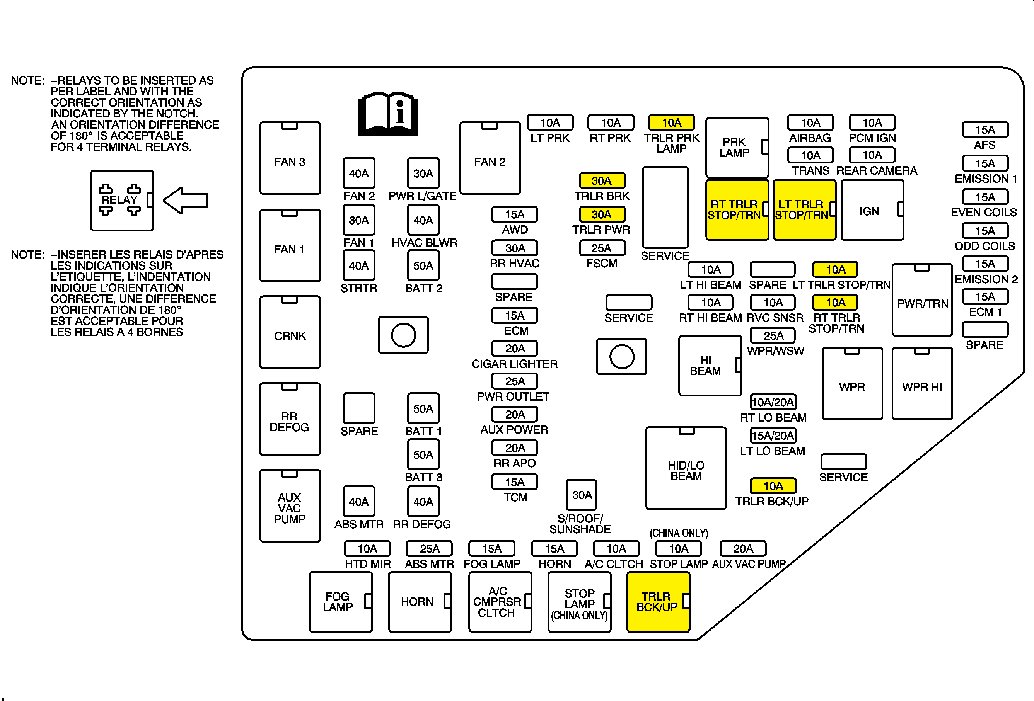
These vehicles must be modified by installing the necessary relays and fuses into the underhood bussed electrical center (UBEC) to provide full functionality for 4 circuits: ground, tail lamps, RH and LH stop/turn lamps. Refer to the illustration below for relay and fuse locations. Perform this modification only if the customers will be using the vehicle to tow.
Recreational Vehicle Towing (Dinghy Towing)
Recreational Vehicle Towing Information
Important
Vehicles that are "dinghy towed" must be started at the beginning of each day and at each fuel stop for a minimum of five minutes.
Recreational vehicle towing means towing the vehicle behind another vehicle - such as behind a motorhome. The two most common types of recreational vehicle towing are known as "dinghy towing" (towing the vehicle with all four wheels on the ground) and "dolly towing" (towing the vehicle with two wheels on the ground and two wheels up on a device known as a "dolly"). With the proper preparation and equipment, many vehicles can be towed in these ways. Refer to the appropriate model/model year Owner Manual for towing preparation guidelines and dolly and dinghy towing procedures. The Towing Chart below summarizes powertrain combination compatibility with dolly and dinghy towing methods.

*Caution
These vehicle can be dinghy towed from the front for unlimited miles at 65 mph (105 km/h). To avoid vehicle damage, never exceed 65 mph (105 km/h) while towing these vehicles. The repairs would not be covered by the warranty.
**Caution
Dolly towing an all-wheel drive vehicle may result in premature failure of the rear drive module.
Dinghy Towing Procedure (2007-2008 Model Year)
Caution
If you tow your vehicle without performing each of the steps listed under "Dinghy Towing," you could damage the automatic transmission. Be sure to follow all steps of the dinghy towing procedure prior to and after towing your vehicle.
Caution
Don't tow a vehicle with the front drive wheels on the ground if one of the front tires is a compact spare tire. Towing with two different tire sizes on the front of the vehicle can cause severe damage to the transmission.
Important
All-wheel drive vehicles may only be dinghy towed from the front, with all four wheels on the ground.
1. Position the vehicle to tow. Shift the transmission to PARK (P) and turn the ignition to OFF.
2. Securely attach the vehicle being towed to the tow vehicle.
3. Set the parking brake.
4. Turn the ignition to ACCESSORY.
5. Shift your transmission to NEUTRAL (N).
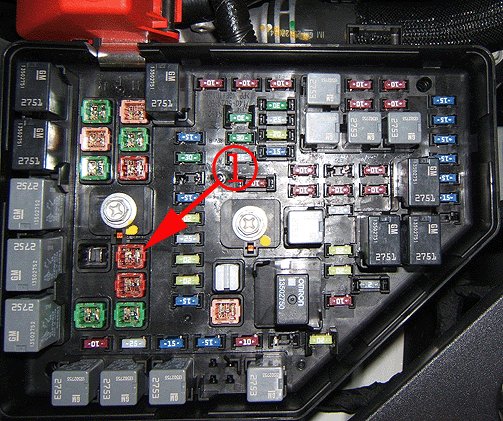
6. To prevent your battery from draining while the vehicle is being towed, remove the 50 amp BATT1 fuse (1) in the UBEC and store in a safe location.
7. Release the parking brake.
Once you have reached your destination, do the following steps:
1. Set the parking brake.
2. Reinstall the BATT1 fuse.
3. Shift the transmission to PARK (P), turn the ignition key to OFF and remove the key from the ignition.
4. Release the parking brake.
Dinghy Towing Procedure (2009-2012 Model Year Built Prior to May 01, 2012)
Caution
If you tow your vehicle without performing each of the steps listed under "Dinghy Towing," you could damage the automatic transmission. Be sure to follow all steps of the dinghy towing procedure prior to and after towing your vehicle.
Caution
Don't tow a vehicle with the front drive wheels on the ground if one of the front tires is a compact spare tire. Towing with two different tire sizes on the front of the vehicle can cause severe damage to the transmission.
Important
All-wheel drive vehicles may only be dinghy towed from the front, with all four wheels on the ground.
1. Position the vehicle to tow. Shift the transmission to PARK (P) and turn the ignition to OFF.
2. Securely attach the vehicle being towed to the tow vehicle.
3. Set the parking brake.
4. Turn the ignition to ACCESSORY.
5. Shift your transmission to NEUTRAL (N).
Important
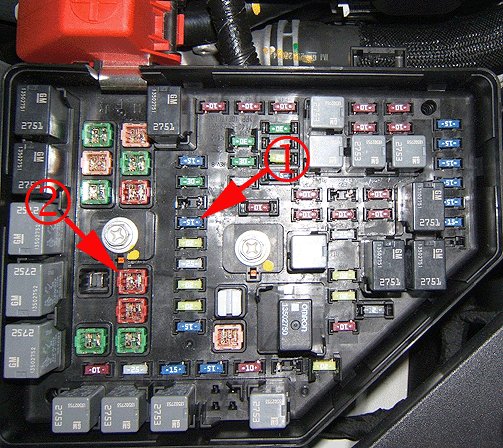
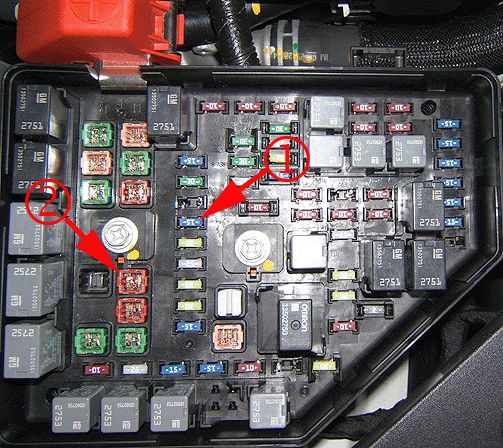
The fuses must be removed in the order specified.
6. Remove the 15 amp ECM fuse (1) in the UBEC and store in a safe location.
7. To prevent your battery from draining while the vehicle is being towed, remove the 50 amp BATT1 fuse (2) in the UBEC and store in a safe location.
8. Release the parking brake.
Once you have reached your destination, do the following steps:
1. Set the parking brake.
2. Reinstall the BATT1 fuse.
3. Reinstall the ECM fuse.
4. Shift the transmission to PARK (P), turn the ignition key to OFF and remove the key from the ignition.
5. Release the parking brake.
Dinghy Towing Procedure (2012 Model Year Built After April 30, 2012)
Caution
If you tow your vehicle without performing each of the steps listed under "Dinghy Towing," you could damage the automatic transmission. Be sure to follow all steps of the dinghy towing procedure prior to and after towing your vehicle.
Caution
Don't tow a vehicle with the front drive wheels on the ground if one of the front tires is a compact spare tire. Towing with two different tire sizes on the front of the vehicle can cause severe damage to the transmission.
Important
All-wheel drive vehicles may only be dinghy towed from the front, with all four wheels on the ground.
1. Position the vehicle to tow. Shift the transmission to PARK (P) and turn the ignition to OFF.
2. Securely attach the vehicle being towed to the tow vehicle.
3. Set the parking brake.
Note
If the ignition is turned to the RUN position during this step, the MIL will illuminate with DTCs U0100 and P0700 set in the transmission control module (TCM). To clear the DTCs, the ignition must be cycled three times.
4. Turn the ignition to ACCESSORY.
5. Shift your transmission to NEUTRAL (N).
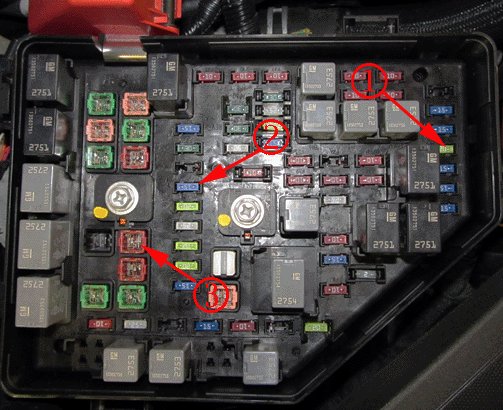
Important
The fuses must be removed in the order specified.
6. Remove the 20 amp ECM 1 fuse (1) in the UBEC and store in a safe location.
7. To prevent your battery from draining while the vehicle is being towed, remove the 50 amp BATT1 fuse (3) in the UBEC and store in a safe location.
8. Remove the 15 amp ECM fuse (2) in the UBEC and store in a safe location.
9. Release the parking brake.
Once you have reached your destination, do the following steps:
1. Set the parking brake.
2. Reinstall the ECM fuse.
3. Reinstall the BATT1 fuse.
4. Reinstall the ECM 1 fuse.
5. Shift the transmission to PARK (P), turn the ignition key to OFF and remove the key from the ignition.
6. Release the parking brake.
Parts Information (2007-2012 Model Year Built Prior to May 01, 2012)
For part numbers and usage of the UBEC, see Group 02.483 of the appropriate Parts Catalog. Saturn retailers should refer to the appropriate model year Parts & Illustration Catalog for the vehicle. Order the UBEC with the same option content including RPO V92.
Parts Information (2012 Model Year Built After April 30, 2012)

Warranty Information
Please advise the customer that the installation and cost of the new underhood bussed electrical center (UBEC) will not be covered under the vehicle's warranty.

Disclaimer
INFORMATION
Bulletin No.: 07-00-89-021L
Date: June 04, 2012
Subject: Supplemental Information on Trailer Towing and Recreational Vehicle Towing (Dinghy Towing)
Models:
2008-2012 Buick Enclave
2009-2012 Chevrolet Traverse
2007-2012 GMC Acadia
2007-2010 Saturn OUTLOOK
Built Prior to May 01, 2012
Supercede:
This bulletin is being revised to update the towing information for the 2012 model year. Please discard Corporate Bulletin Number 07-00-89-021K (Section 00 - General Information).
The purpose of this bulletin is to inform dealers of special procedures necessary when towing a trailer or when towing the vehicle behind a recreational vehicle.
Towing a Trailer
Trailer Weight Information
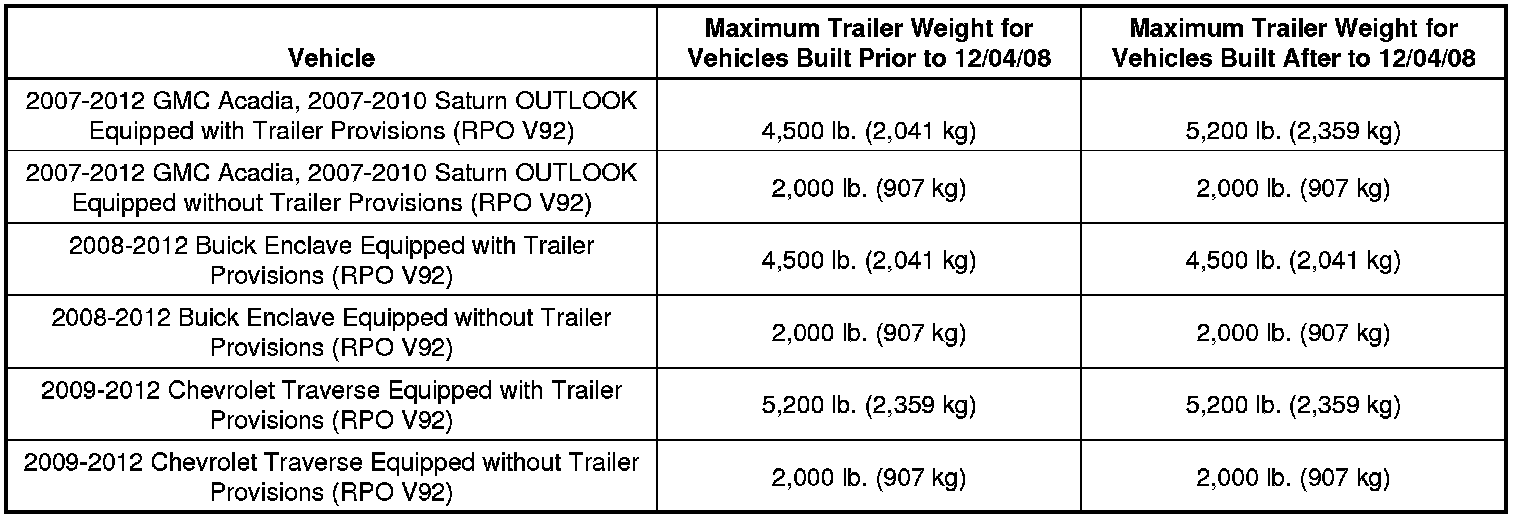
The following chart shows how much the trailer can weigh, based on the vehicle powertrain combination and whether the vehicle is equipped with Trailer Provision (RPO V92). Retailers should refer customers to the appropriate Owner Manual for important trailering tips, vehicle maintenance, and safety rules before towing a trailer.
Towing a Trailer with a Vehicle without Trailer Provisions (RPO V92) (2007 Model Year Only)
These vehicles must be modified by installing a new underhood bussed electrical center (UBEC) to provide full functionality for 4 circuits: ground, tail lamps, RH and LH stop/turn lamps. Perform this modification only if the customers will be using the vehicle to tow.
The replacement of the UBEC remains the best solution to upgrade the vehicles wiring for towing. The electrical circuitry for the tail/stop lamps is controlled by the BCM and splicing into the body harness is not recommended.
The backup lamp circuit will also need to be modified using the following procedure:
1. Disconnect the X7 connector from the Body Control Module (BCM).
2. Remove the terminal for pin 3 from the BCM X7 connector. The wire to this terminal is dark blue and is the 38 circuit.
3. Re-connect the X7 connector to the BCM.
4. Cut the terminal off the end of this wire and strip the end of the wire.
5. Splice this wire into the 24 circuit wire that goes into BCM connector X6, pin 2. The 24 circuit is light green.
Towing a Trailer with a Vehicle without Trailer Provisions (RPO V92) (2008-2011 Model Year)
These vehicles must be modified by installing a new underhood bussed electrical center (UBEC) to provide full functionality for 4 circuits: ground, tail lamps, RH and LH stop/turn lamps. Perform this modification only if the customers will be using the vehicle to tow.
The replacement of the UBEC remains the best solution to upgrade the vehicles wiring for towing. The electrical circuitry for the tail/stop lamps is controlled by the BCM and splicing into the body harness is not recommended.
Towing a Trailer with a Vehicle without Trailer Provisions (RPO V92) (2012 Model Year Only)
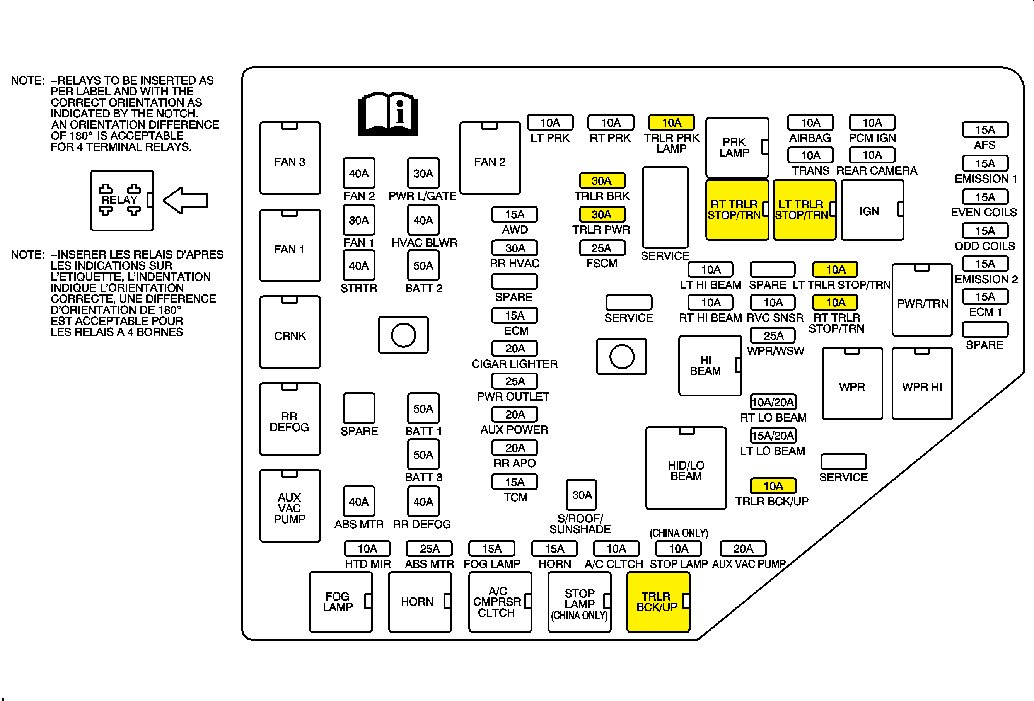
These vehicles must be modified by installing the necessary relays and fuses into the underhood bussed electrical center (UBEC) to provide full functionality for 4 circuits: ground, tail lamps, RH and LH stop/turn lamps. Refer to the illustration below for relay and fuse locations. Perform this modification only if the customers will be using the vehicle to tow.
Recreational Vehicle Towing (Dinghy Towing)
Recreational Vehicle Towing Information
Important
Vehicles that are "dinghy towed" must be started at the beginning of each day and at each fuel stop for a minimum of five minutes.
Recreational vehicle towing means towing the vehicle behind another vehicle - such as behind a motorhome. The two most common types of recreational vehicle towing are known as "dinghy towing" (towing the vehicle with all four wheels on the ground) and "dolly towing" (towing the vehicle with two wheels on the ground and two wheels up on a device known as a "dolly"). With the proper preparation and equipment, many vehicles can be towed in these ways. Refer to the appropriate model/model year Owner Manual for towing preparation guidelines and dolly and dinghy towing procedures. The Towing Chart below summarizes powertrain combination compatibility with dolly and dinghy towing methods.

*Caution
These vehicle can be dinghy towed from the front for unlimited miles at 65 mph (105 km/h). To avoid vehicle damage, never exceed 65 mph (105 km/h) while towing these vehicles. The repairs would not be covered by the warranty.
**Caution
Dolly towing an all-wheel drive vehicle may result in premature failure of the rear drive module.
Dinghy Towing Procedure (2007-2008 Model Year)
Caution
If you tow your vehicle without performing each of the steps listed under "Dinghy Towing," you could damage the automatic transmission. Be sure to follow all steps of the dinghy towing procedure prior to and after towing your vehicle.
Caution
Don't tow a vehicle with the front drive wheels on the ground if one of the front tires is a compact spare tire. Towing with two different tire sizes on the front of the vehicle can cause severe damage to the transmission.
Important
All-wheel drive vehicles may only be dinghy towed from the front, with all four wheels on the ground.
1. Position the vehicle to tow. Shift the transmission to PARK (P) and turn the ignition to OFF.
2. Securely attach the vehicle being towed to the tow vehicle.
3. Set the parking brake.
4. Turn the ignition to ACCESSORY.
5. Shift your transmission to NEUTRAL (N).
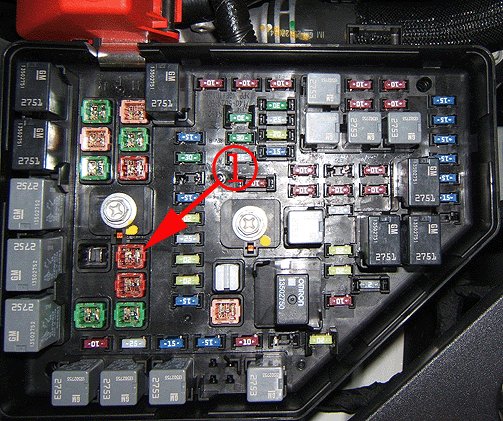
6. To prevent your battery from draining while the vehicle is being towed, remove the 50 amp BATT1 fuse (1) in the UBEC and store in a safe location.
7. Release the parking brake.
Once you have reached your destination, do the following steps:
1. Set the parking brake.
2. Reinstall the BATT1 fuse.
3. Shift the transmission to PARK (P), turn the ignition key to OFF and remove the key from the ignition.
4. Release the parking brake.
Dinghy Towing Procedure (2009-2011 Model Year)
Caution
If you tow your vehicle without performing each of the steps listed under "Dinghy Towing," you could damage the automatic transmission. Be sure to follow all steps of the dinghy towing procedure prior to and after towing your vehicle.
Caution
Don't tow a vehicle with the front drive wheels on the ground if one of the front tires is a compact spare tire. Towing with two different tire sizes on the front of the vehicle can cause severe damage to the transmission.
Important
All-wheel drive vehicles may only be dinghy towed from the front, with all four wheels on the ground.
1. Position the vehicle to tow. Shift the transmission to PARK (P) and turn the ignition to OFF.
2. Securely attach the vehicle being towed to the tow vehicle.
3. Set the parking brake.
4. Turn the ignition to ACCESSORY.
5. Shift your transmission to NEUTRAL (N).
Important
The fuses must be removed in the order specified.
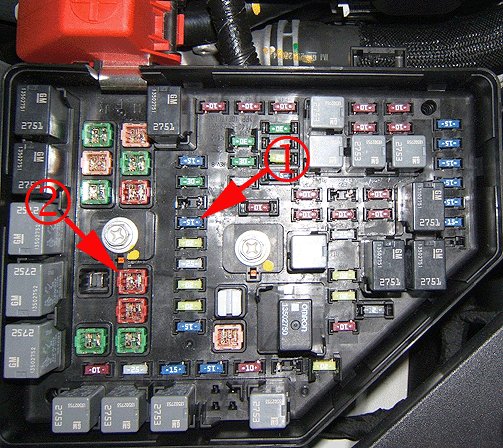
6. Remove the 15 amp ECM fuse (1) in the UBEC and store in a safe location.
7. To prevent your battery from draining while the vehicle is being towed, remove the 50 amp BATT1 fuse (2) in the UBEC and store in a safe location.
8. Release the parking brake.
Once you have reached your destination, do the following steps:
1. Set the parking brake.
2. Reinstall the BATT1 fuse.
3. Reinstall the ECM fuse.
4. Shift the transmission to PARK (P), turn the ignition key to OFF and remove the key from the ignition.
5. Release the parking brake.
Dinghy Towing Procedure (2012 Model Year Only)
Caution
If you tow your vehicle without performing each of the steps listed under "Dinghy Towing," you could damage the automatic transmission. Be sure to follow all steps of the dinghy towing procedure prior to and after towing your vehicle.
Caution
Don't tow a vehicle with the front drive wheels on the ground if one of the front tires is a compact spare tire. Towing with two different tire sizes on the front of the vehicle can cause severe damage to the transmission.
Important
All-wheel drive vehicles may only be dinghy towed from the front, with all four wheels on the ground.
1. Position the vehicle to tow. Shift the transmission to PARK (P) and turn the ignition to OFF.
2. Securely attach the vehicle being towed to the tow vehicle.
3. Set the parking brake.
Note
If the ignition is turned to the RUN position during this step, the MIL will illuminate with DTCs U0100 and P0700 set in the transmission control module (TCM). To clear the DTCs, the ignition must be cycled three times.
4. Turn the ignition to ACCESSORY.
5. Shift your transmission to NEUTRAL (N).
Important
The fuses must be removed in the order specified.
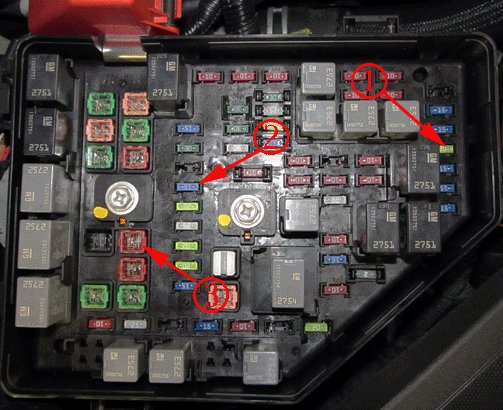
6. Remove the 20 amp ECM 1 fuse (1) in the UBEC and store in a safe location.
7. To prevent your battery from draining while the vehicle is being towed, remove the 50 amp BATT1 fuse (3) in the UBEC and store in a safe location.
8. Remove the 15 amp ECM fuse (2) in the UBEC and store in a safe location.
9. Release the parking brake.
Once you have reached your destination, do the following steps:
1. Set the parking brake.
2. Reinstall the ECM fuse.
3. Reinstall the BATT1 fuse.
4. Reinstall the ECM 1 fuse.
5. Shift the transmission to PARK (P), turn the ignition key to OFF and remove the key from the ignition.
6. Release the parking brake.
Parts Information (2007-2011 Model Year)
For part numbers and usage of the UBEC, see Group 02.483 of the appropriate Parts Catalog. Saturn retailers should refer to the appropriate model year Parts & Illustration Catalog for the vehicle. Order the UBEC with the same option content including RPO V92.
Parts Information (2012 Model Year)

Warranty Information
Please advise the customer that the installation and cost of the new underhood bussed electrical center (UBEC) will not be covered under the vehicle's warranty.
Disclaimer
INFORMATION
Bulletin No.: 07-00-89-021K
Date: March 06, 2012
Subject: Supplemental Information on Trailer Towing and Recreational Vehicle Towing (Dinghy Towing)
Models:
2008-2012 Buick Enclave
2009-2012 Chevrolet Traverse
2007-2012 GMC Acadia
2007-2010 Saturn OUTLOOK
Supercede:
This bulletin is being revised to update the towing information for the 2012 model year. Please discard Corporate Bulletin Number 07-00-89-021J (Section 00 - General Information).
The purpose of this bulletin is to inform dealers of special procedures necessary when towing a trailer or when towing the vehicle behind a recreational vehicle.
Towing a Trailer
Trailer Weight Information
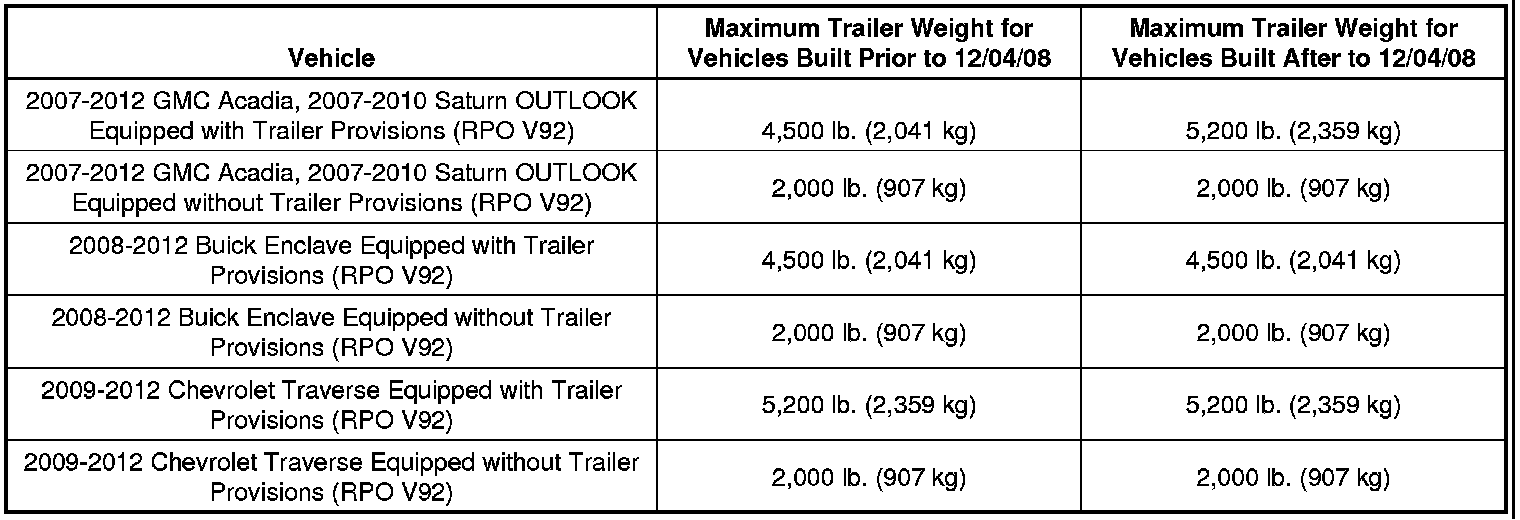
The following chart shows how much the trailer can weigh, based on the vehicle powertrain combination and whether the vehicle is equipped with Trailer Provision (RPO V92). Retailers should refer customers to the appropriate Owner Manual for important trailering tips, vehicle maintenance, and safety rules before towing a trailer.
Towing a Trailer with a Vehicle without Trailer Provisions (RPO V92) (2007 Model Year Only)
These vehicles must be modified by installing a new underhood bussed electrical center (UBEC) to provide full functionality for 4 circuits: ground, tail lamps, RH and LH stop/turn lamps. Perform this modification only if the customers will be using the vehicle to tow.
The replacement of the UBEC remains the best solution to upgrade the vehicles wiring for towing. The electrical circuitry for the tail/stop lamps is controlled by the BCM and splicing into the body harness is not recommended.
The backup lamp circuit will also need to be modified using the following procedure:
1. Disconnect the X7 connector from the Body Control Module (BCM).
2. Remove the terminal for pin 3 from the BCM X7 connector. The wire to this terminal is dark blue and is the 38 circuit.
3. Re-connect the X7 connector to the BCM.
4. Cut the terminal off the end of this wire and strip the end of the wire.
5. Splice this wire into the 24 circuit wire that goes into BCM connector X6, pin 2. The 24 circuit is light green.
Towing a Trailer with a Vehicle without Trailer Provisions (RPO V92) (2008-2012 Model Year)
These vehicles must be modified by installing a new underhood bussed electrical center (UBEC) to provide full functionality for 4 circuits: ground, tail lamps, RH and LH stop/turn lamps. Perform this modification only if the customers will be using the vehicle to tow.
The replacement of the UBEC remains the best solution to upgrade the vehicles wiring for towing. The electrical circuitry for the tail/stop lamps is controlled by the BCM and splicing into the body harness is not recommended.
Recreational Vehicle Towing (Dinghy Towing)
Recreational Vehicle Towing Information
Important
Vehicles that are "dinghy towed" must be started at the beginning of each day and at each fuel stop for a minimum of five minutes.
Recreational vehicle towing means towing the vehicle behind another vehicle - such as behind a motorhome. The two most common types of recreational vehicle towing are known as "dinghy towing" (towing the vehicle with all four wheels on the ground) and "dolly towing" (towing the vehicle with two wheels on the ground and two wheels up on a device known as a "dolly"). With the proper preparation and equipment, many vehicles can be towed in these ways. Refer to the appropriate model/model year Owner Manual for towing preparation guidelines and dolly and dinghy towing procedures. The Towing Chart below summarizes powertrain combination compatibility with dolly and dinghy towing methods.

*Caution
These vehicle can be dinghy towed from the front for unlimited miles at 65 mph (105 km/h). To avoid vehicle damage, never exceed 65 mph (105 km/h) while towing these vehicles. The repairs would not be covered by the warranty.
**Caution
Dolly towing an all-wheel drive vehicle may result in premature failure of the rear drive module.
Dinghy Towing Procedure (2007-2008 Model Year)
Caution
If you tow your vehicle without performing each of the steps listed under "Dinghy Towing," you could damage the automatic transmission. Be sure to follow all steps of the dinghy towing procedure prior to and after towing your vehicle.
Caution
Don't tow a vehicle with the front drive wheels on the ground if one of the front tires is a compact spare tire. Towing with two different tire sizes on the front of the vehicle can cause severe damage to the transmission.
Important
All-wheel drive vehicles may only be dinghy towed from the front, with all four wheels on the ground.
1. Position the vehicle to tow. Shift the transmission to PARK (P) and turn the ignition to OFF.
2. Securely attach the vehicle being towed to the tow vehicle.
3. Set the parking brake.
4. Turn the ignition to ACCESSORY.
5. Shift your transmission to NEUTRAL (N).
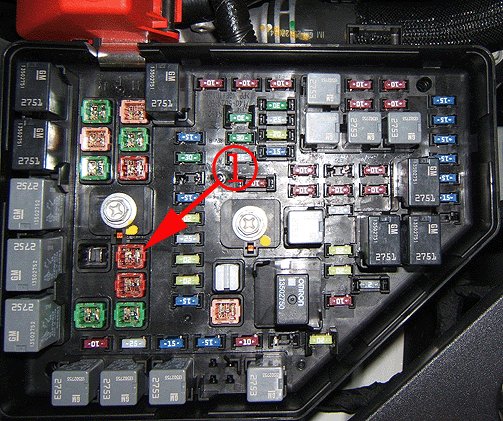
6. To prevent your battery from draining while the vehicle is being towed, remove the 50 amp BATT1 fuse (1) in the UBEC and store in a safe location.
7. Release the parking brake.
Once you have reached your destination, do the following steps:
1. Set the parking brake.
2. Reinstall the BATT1 fuse.
3. Shift the transmission to PARK (P), turn the ignition key to OFF and remove the key from the ignition.
4. Release the parking brake.
Dinghy Towing Procedure (2009-2012 Model Year)
Caution
If you tow your vehicle without performing each of the steps listed under "Dinghy Towing," you could damage the automatic transmission. Be sure to follow all steps of the dinghy towing procedure prior to and after towing your vehicle.
Caution
Don't tow a vehicle with the front drive wheels on the ground if one of the front tires is a compact spare tire. Towing with two different tire sizes on the front of the vehicle can cause severe damage to the transmission.
Important
All-wheel drive vehicles may only be dinghy towed from the front, with all four wheels on the ground.
1. Position the vehicle to tow. Shift the transmission to PARK (P) and turn the ignition to OFF.
2. Securely attach the vehicle being towed to the tow vehicle.
3. Set the parking brake.
4. Turn the ignition to ACCESSORY.
5. Shift your transmission to NEUTRAL (N).
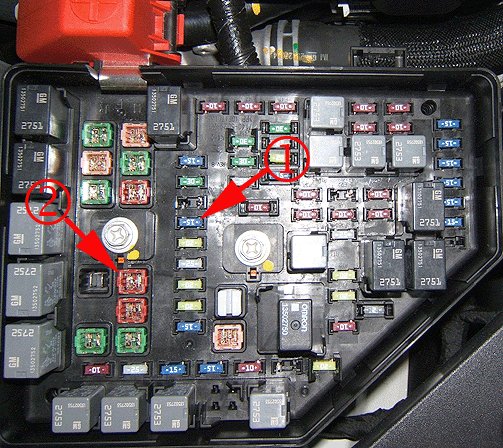
Important
The fuses must be removed in the order specified.
6. Remove the 15 amp ECM fuse (1) in the UBEC and store in a safe location.
7. To prevent your battery from draining while the vehicle is being towed, remove the 50 amp BATT1 fuse (2) in the UBEC and store in a safe location.
8. Release the parking brake.
Once you have reached your destination, do the following steps:
1. Set the parking brake.
2. Reinstall the BATT1 fuse.
3. Reinstall the ECM fuse.
4. Shift the transmission to PARK (P), turn the ignition key to OFF and remove the key from the ignition.
5. Release the parking brake.
Parts Information
For part numbers and usage of the UBEC, see Group 02.483 of the appropriate Parts Catalog. Saturn retailers should refer to the appropriate model year Parts & Illustration Catalog for the vehicle. Order the UBEC with the same option content including RPO V92.
Warranty Information
Please advise the customer that the installation and cost of the new underhood bussed electrical center (UBEC) will not be covered under the vehicle's warranty.
Disclaimer
INFORMATION
Bulletin No.: 07-00-89-021J
Date: November 02, 2011
Subject: Supplemental Information on Trailer Towing and Recreational Vehicle Towing (Dinghy Towing)
Models:
2008-2012 Buick Enclave
2009-2012 Chevrolet Traverse
2007-2012 GMC Acadia
2007-2010 Saturn OUTLOOK
Supercede:
This bulletin is being revised to update the dinghy towing procedure for the 2012 model year. Please discard Corporate Bulletin Number 07-00-89-021I (Section 00 - General Information).
The purpose of this bulletin is to inform dealers of special procedures necessary when towing a trailer or when towing the vehicle behind a recreational vehicle.
Towing a Trailer
Trailer Weight Information
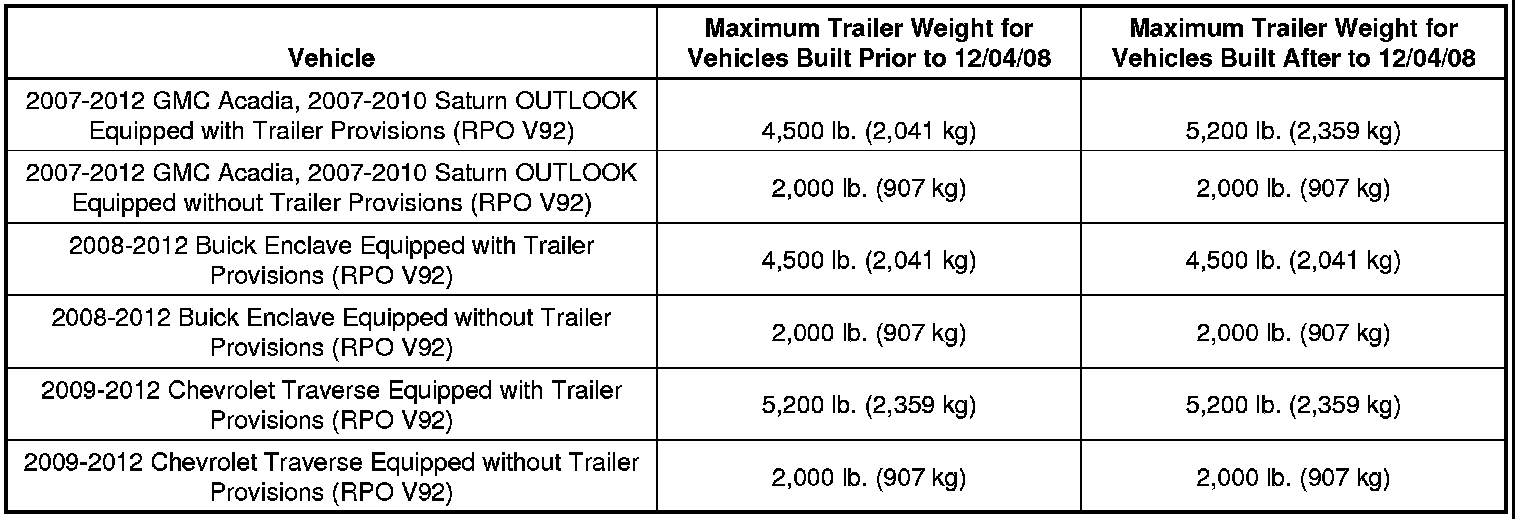
The following chart shows how much the trailer can weigh, based on the vehicle powertrain combination and whether the vehicle is equipped with Trailer Provision (RPO V92). Retailers should refer customers to the appropriate Owner Manual for important trailering tips, vehicle maintenance, and safety rules before towing a trailer.
Towing a Trailer with a Vehicle without Trailer Provisions (RPO V92) (2007 Model Year Only)
These vehicles must be modified by installing a new underhood bussed electrical center (UBEC) to provide full functionality for 4 circuits: ground, tail lamps, RH and LH stop/turn lamps. Perform this modification only if the customers will be using the vehicle to tow.
The replacement of the UBEC remains the best solution to upgrade the vehicles wiring for towing. The electrical circuitry for the tail/stop lamps is controlled by the BCM and splicing into the body harness is not recommended.
The backup lamp circuit will also need to be modified using the following procedure:
1. Disconnect the X7 connector from the Body Control Module (BCM).
2. Remove the terminal for pin 3 from the BCM X7 connector. The wire to this terminal is dark blue and is the 38 circuit.
3. Re-connect the X7 connector to the BCM.
4. Cut the terminal off the end of this wire and strip the end of the wire.
5. Splice this wire into the 24 circuit wire that goes into BCM connector X6, pin 2. The 24 circuit is light green.
Towing a Trailer with a Vehicle without Trailer Provisions (RPO V92) (2008-2011 Model Year)
These vehicles must be modified by installing a new underhood bussed electrical center (UBEC) to provide full functionality for 4 circuits: ground, tail lamps, RH and LH stop/turn lamps. Perform this modification only if the customers will be using the vehicle to tow.
The replacement of the UBEC remains the best solution to upgrade the vehicles wiring for towing. The electrical circuitry for the tail/stop lamps is controlled by the BCM and splicing into the body harness is not recommended.
Towing a Trailer with a Vehicle without Trailer Provisions (RPO V92) (2012 Model Year Only)
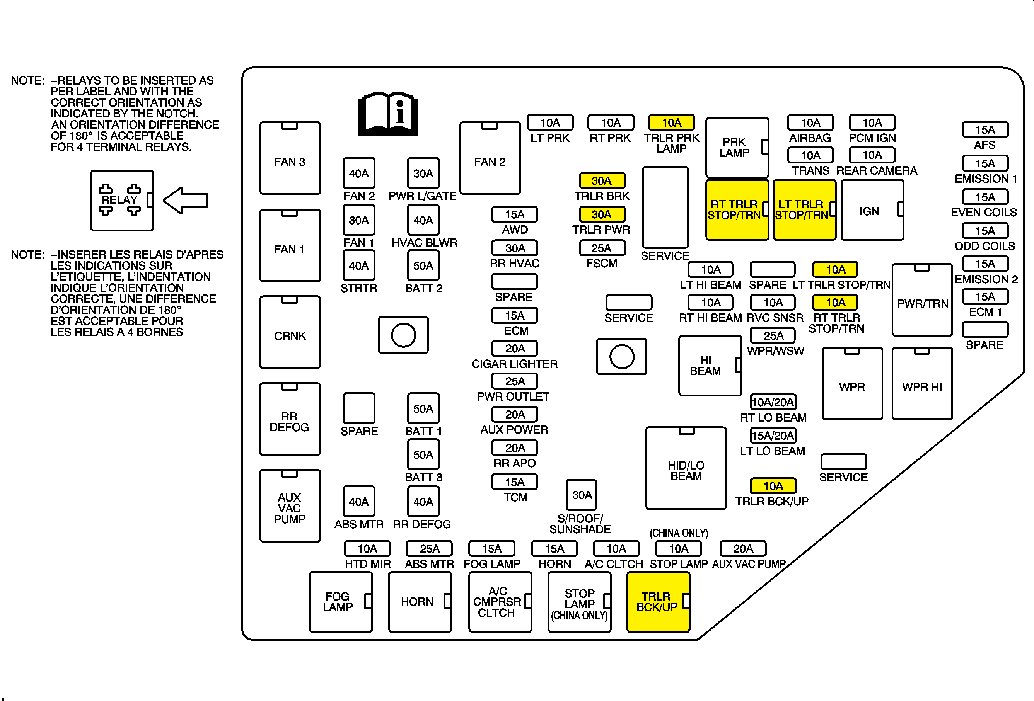
These vehicles must be modified by installing the necessary relays and fuses into the underhood bussed electrical center (UBEC) to provide full functionality for 4 circuits: ground, tail lamps, RH and LH stop/turn lamps. Refer to the illustration below for relay and fuse locations. Perform this modification only if the customers will be using the vehicle to tow.
Recreational Vehicle Towing (Dinghy Towing)
Recreational Vehicle Towing Information
Important
Vehicles that are "dinghy towed" must be started at the beginning of each day and at each fuel stop for a minimum of five minutes.
Recreational vehicle towing means towing the vehicle behind another vehicle - such as behind a motorhome. The two most common types of recreational vehicle towing are known as "dinghy towing" (towing the vehicle with all four wheels on the ground) and "dolly towing" (towing the vehicle with two wheels on the ground and two wheels up on a device known as a "dolly"). With the proper preparation and equipment, many vehicles can be towed in these ways. Refer to the appropriate model/model year Owner Manual for towing preparation guidelines and dolly and dinghy towing procedures. The Towing Chart below summarizes powertrain combination compatibility with dolly and dinghy towing methods.

*Caution
These vehicle can be dinghy towed from the front for unlimited miles at 65 mph (105 km/h). To avoid vehicle damage, never exceed 65 mph (105 km/h) while towing these vehicles. The repairs would not be covered by the warranty.
**Caution
Dolly towing an all-wheel drive vehicle may result in premature failure of the rear drive module.
Dinghy Towing Procedure (2007-2008 Model Year)
Caution
If you tow your vehicle without performing each of the steps listed under "Dinghy Towing," you could damage the automatic transmission. Be sure to follow all steps of the dinghy towing procedure prior to and after towing your vehicle.
Caution
Don't tow a vehicle with the front drive wheels on the ground if one of the front tires is a compact spare tire. Towing with two different tire sizes on the front of the vehicle can cause severe damage to the transmission.
Important
All-wheel drive vehicles may only be dinghy towed from the front, with all four wheels on the ground.
1. Position the vehicle to tow. Shift the transmission to PARK (P) and turn the ignition to OFF.
2. Securely attach the vehicle being towed to the tow vehicle.
3. Set the parking brake.
4. Turn the ignition to ACCESSORY.
5. Shift your transmission to NEUTRAL (N).
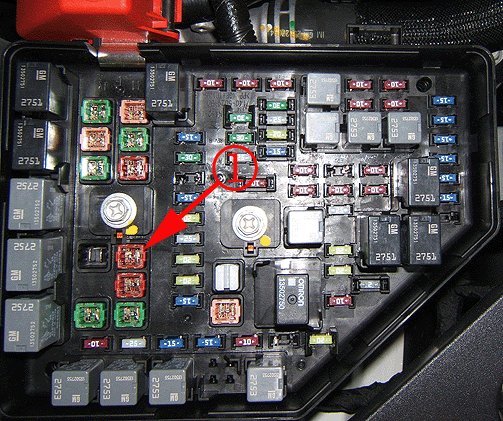
6. To prevent your battery from draining while the vehicle is being towed, remove the 50 amp BATT1 fuse (1) in the UBEC and store in a safe location.
7. Release the parking brake.
Once you have reached your destination, do the following steps:
1. Set the parking brake.
2. Reinstall the BATT1 fuse.
3. Shift the transmission to PARK (P), turn the ignition key to OFF and remove the key from the ignition.
4. Release the parking brake.
Dinghy Towing Procedure (2009-2011 Model Year)
Caution
If you tow your vehicle without performing each of the steps listed under "Dinghy Towing," you could damage the automatic transmission. Be sure to follow all steps of the dinghy towing procedure prior to and after towing your vehicle.
Caution
Don't tow a vehicle with the front drive wheels on the ground if one of the front tires is a compact spare tire. Towing with two different tire sizes on the front of the vehicle can cause severe damage to the transmission.
Important
All-wheel drive vehicles may only be dinghy towed from the front, with all four wheels on the ground.
1. Position the vehicle to tow. Shift the transmission to PARK (P) and turn the ignition to OFF.
2. Securely attach the vehicle being towed to the tow vehicle.
3. Set the parking brake.
4. Turn the ignition to ACCESSORY.
5. Shift your transmission to NEUTRAL (N).
Important
The fuses must be removed in the order specified.
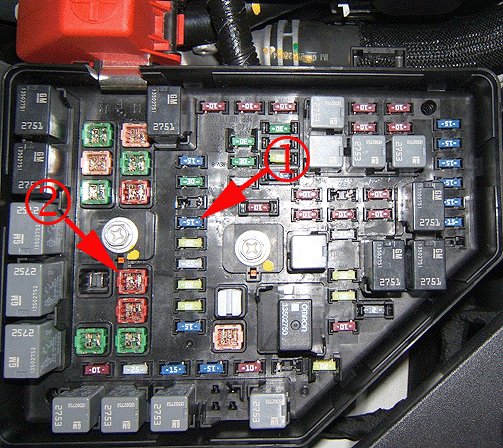
6. Remove the 15 amp ECM fuse (1) in the UBEC and store in a safe location.
7. To prevent your battery from draining while the vehicle is being towed, remove the 50 amp BATT1 fuse (2) in the UBEC and store in a safe location.
8. Release the parking brake.
Once you have reached your destination, do the following steps:
1. Set the parking brake.
2. Reinstall the BATT1 fuse.
3. Reinstall the ECM fuse.
4. Shift the transmission to PARK (P), turn the ignition key to OFF and remove the key from the ignition.
5. Release the parking brake.
Dinghy Towing Procedure (2012 Model Year Only)
Caution
If you tow your vehicle without performing each of the steps listed under "Dinghy Towing," you could damage the automatic transmission. Be sure to follow all steps of the dinghy towing procedure prior to and after towing your vehicle.
Caution
Don't tow a vehicle with the front drive wheels on the ground if one of the front tires is a compact spare tire. Towing with two different tire sizes on the front of the vehicle can cause severe damage to the transmission.
Important
All-wheel drive vehicles may only be dinghy towed from the front, with all four wheels on the ground.
1. Position the vehicle to tow. Shift the transmission to PARK (P) and turn the ignition to OFF.
2. Securely attach the vehicle being towed to the tow vehicle.
3. Set the parking brake.
Note
If the ignition is turned to the RUN position during this step, the MIL will illuminate with DTCs U0100 and P0700 set in the transmission control module (TCM). To clear the DTCs, the ignition must be cycled three times.
4. Turn the ignition to ACCESSORY.
5. Shift your transmission to NEUTRAL (N).
Important
The fuses must be removed in the order specified.
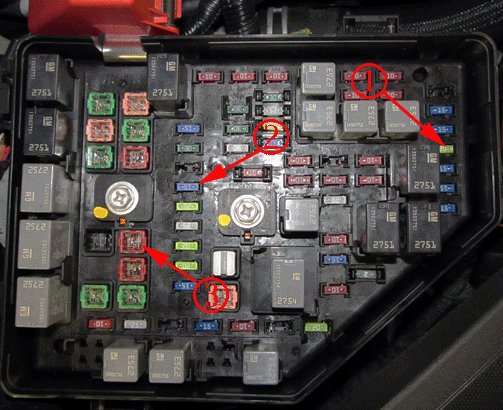
6. Remove the 20 amp ECM 1 fuse (1) in the UBEC and store in a safe location.
7. To prevent your battery from draining while the vehicle is being towed, remove the 50 amp BATT1 fuse (3) in the UBEC and store in a safe location.
8. Remove the 15 amp ECM fuse (2) in the UBEC and store in a safe location.
9. Release the parking brake.
Once you have reached your destination, do the following steps:
1. Set the parking brake.
2. Reinstall the ECM fuse.
3. Reinstall the BATT1 fuse.
4. Reinstall the ECM 1 fuse.
5. Shift the transmission to PARK (P), turn the ignition key to OFF and remove the key from the ignition.
6. Release the parking brake.
Parts Information (2007-2011 Model Year)
For part numbers and usage of the UBEC, see Group 02.483 of the appropriate Parts Catalog. Saturn retailers should refer to the appropriate model year Parts & Illustration Catalog for the vehicle. Order the UBEC with the same option content including RPO V92.
Parts Information (2012 Model Year)

Warranty Information
Please advise the customer that the installation and cost of the new underhood bussed electrical center (UBEC) will not be covered under the vehicle's warranty.
Disclaimer
INFORMATION
Bulletin No.: 07-00-89-021I
Date: August 29, 2011
Subject: Supplemental Information on Trailer Towing and Recreational Vehicle Towing (Dinghy Towing)
Models:
2008-2012 Buick Enclave
2009-2012 Chevrolet Traverse
2007-2012 GMC Acadia
2007-2010 Saturn OUTLOOK
Supercede:
This bulletin is being revised to add the 2012 model year. Please discard Corporate Bulletin Number 07-00-89-021H (Section 00 - General Information).
The purpose of this bulletin is to inform dealers of special procedures necessary when towing a trailer or when towing the vehicle behind a recreational vehicle.
Towing a Trailer
Trailer Weight Information
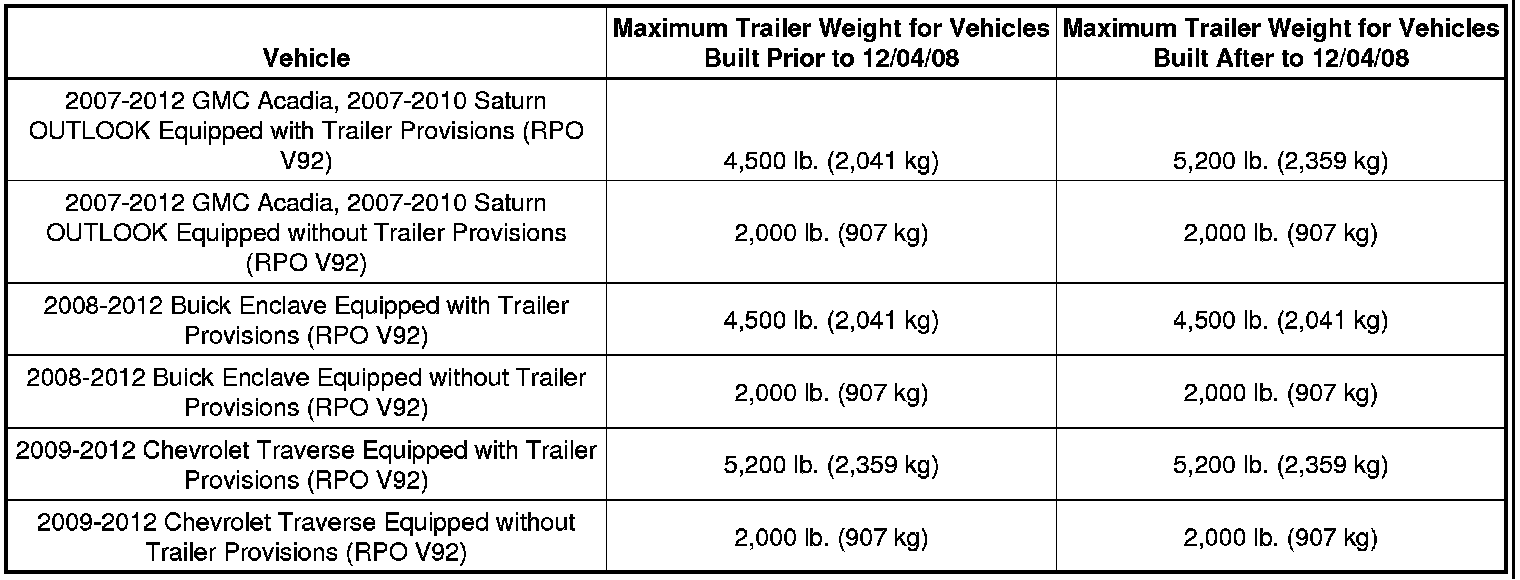
The following chart shows how much the trailer can weigh, based on the vehicle powertrain combination and whether the vehicle is equipped with Trailer Provision (RPO V92). Retailers should refer customers to the appropriate Owner Manual for important trailering tips, vehicle maintenance, and safety rules before towing a trailer.
Towing a Trailer with a Vehicle without Trailer Provisions (RPO V92) (2007 Model Year Only)
These vehicles must be modified by installing a new underhood bussed electrical center (UBEC) to provide full functionality for 4 circuits: ground, tail lamps, RH and LH stop/turn lamps. Perform this modification only if the customers will be using the vehicle to tow.
The replacement of the UBEC remains the best solution to upgrade the vehicles wiring for towing. The electrical circuitry for the tail/stop lamps is controlled by the BCM and splicing into the body harness is not recommended.
The backup lamp circuit will also need to be modified using following procedure:
1. Disconnect the X7 connector from the Body Control Module (BCM).
2. Remove the terminal for pin 3 from the BCM X7 connector. The wire to this terminal is dark blue and is the 38 circuit.
3. Re-connect the X7 connector to the BCM.
4. Cut the terminal off the end of this wire and strip the end of the wire.
5. Splice this wire into the 24 circuit wire that goes into BCM connector X6, pin 2. The 24 circuit is light green.
Towing a Trailer with a Vehicle without Trailer Provisions (RPO V92) (2008-2011 Model Year)
These vehicles must be modified by installing a new underhood bussed electrical center (UBEC) to provide full functionality for 4 circuits: ground, tail lamps, RH and LH stop/turn lamps. Perform this modification only if the customers will be using the vehicle to tow.
The replacement of the UBEC remains the best solution to upgrade the vehicles wiring for towing. The electrical circuitry for the tail/stop lamps is controlled by the BCM and splicing into the body harness is not recommended.
Towing a Trailer with a Vehicle without Trailer Provisions (RPO V92) (2012 Model Year Only)
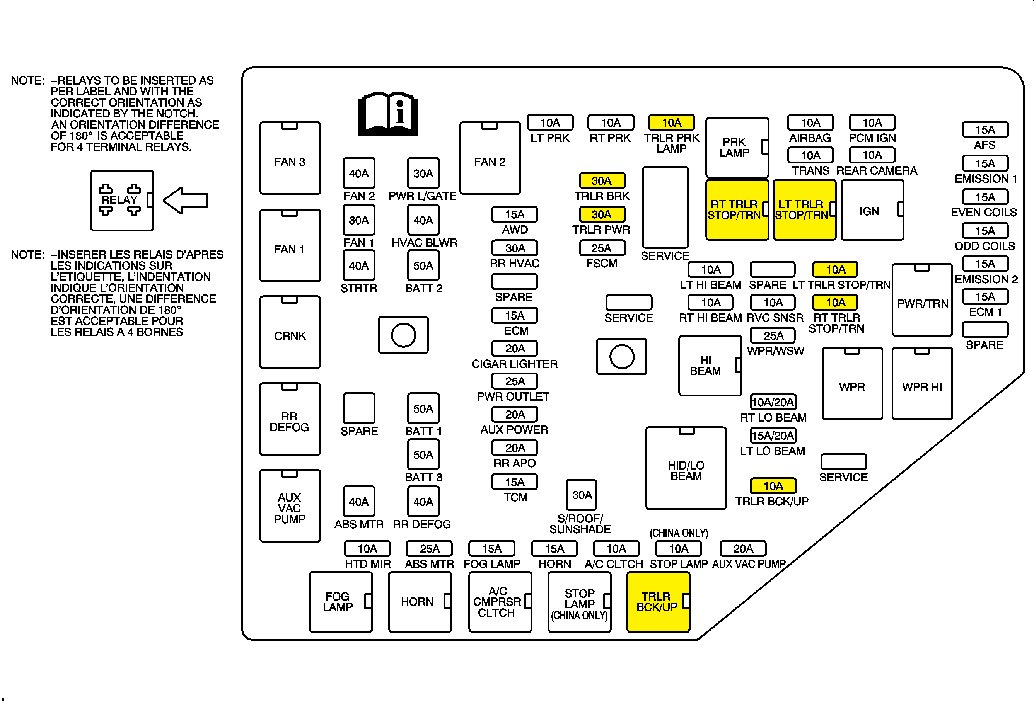
These vehicles must be modified by installing the necessary relays and fuses into the underhood bussed electrical center (UBEC) to provide full functionality for 4 circuits: ground, tail lamps, RH and LH stop/turn lamps. Refer to the illustration below for relay and fuse locations. Perform this modification only if the customers will be using the vehicle to tow.
Recreational Vehicle Towing (Dinghy Towing)
Recreational Vehicle Towing Information
Important
Vehicles that are "dinghy towed" must be started at the beginning of each day and at each fuel stop for a minimum of five minutes.
Recreational vehicle towing means towing the vehicle behind another vehicle - such as behind a motorhome. The two most common types of recreational vehicle towing are known as "dinghy towing" (towing the vehicle with all four wheels on the ground) and "dolly towing" (towing the vehicle with two wheels on the ground and two wheels up on a device known as a "dolly"). With the proper preparation and equipment, many vehicles can be towed in these ways. Refer to the appropriate model/model year Owner Manual for towing preparation guidelines and dolly and dinghy towing procedures. The Towing Chart below summarizes powertrain combination compatibility with dolly and dinghy towing methods.

*Caution
These vehicle can be dinghy towed from the front for unlimited miles at 65 mph (105 km/h). To avoid vehicle damage, never exceed 65 mph (105 km/h) while towing these vehicles. The repairs would not be covered by the warranty.
**Caution
Dolly towing an all-wheel drive vehicle may result in premature failure of the rear drive module.
Dinghy Towing Procedure (2007-2008 Model Year)
Caution
If you tow your vehicle without performing each of the steps listed under "Dinghy Towing," you could damage the automatic transmission. Be sure to follow all steps of the dinghy towing procedure prior to and after towing your vehicle.
Caution
Don't tow a vehicle with the front drive wheels on the ground if one of the front tires is a compact spare tire. Towing with two different tire sizes on the front of the vehicle can cause severe damage to the transmission.
Important
All-wheel drive vehicles may only be dinghy towed from the front, with all four wheels on the ground.
1. Position the vehicle to tow. Shift the transmission to PARK (P) and turn the ignition to OFF.
2. Securely attach the vehicle being towed to the tow vehicle.
3. Set the parking brake.
4. Turn the ignition to ACCESSORY.
5. Shift your transmission to NEUTRAL (N).
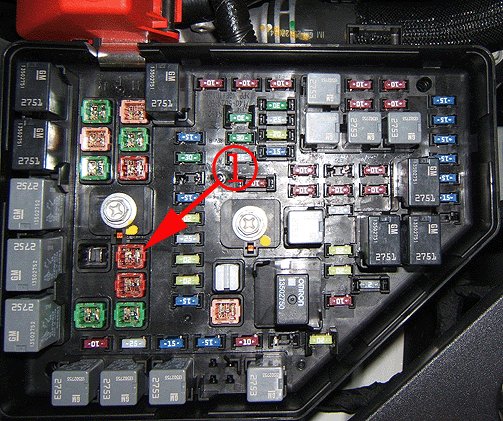
6. To prevent your battery from draining while the vehicle is being towed, remove the 50 amp BATT1 fuse (1) in the UBEC and store in a safe location.
7. Release the parking brake.
Once you have reached your destination, do the following steps:
1. Set the parking brake.
2. Reinstall the BATT1 fuse.
3. Shift the transmission to PARK (P), turn the ignition key to OFF and remove the key from the ignition.
4. Release the parking brake.
Dinghy Towing Procedure (2009-2012 Model Year)
Caution
If you tow your vehicle without performing each of the steps listed under "Dinghy Towing," you could damage the automatic transmission. Be sure to follow all steps of the dinghy towing procedure prior to and after towing your vehicle.
Caution
Don't tow a vehicle with the front drive wheels on the ground if one of the front tires is a compact spare tire. Towing with two different tire sizes on the front of the vehicle can cause severe damage to the transmission.
Important
All-wheel drive vehicles may only be dinghy towed from the front, with all four wheels on the ground.
1. Position the vehicle to tow. Shift the transmission to PARK (P) and turn the ignition to OFF.
2. Securely attach the vehicle being towed to the tow vehicle.
3. Set the parking brake.
4. Turn the ignition to ACCESSORY.
5. Shift your transmission to NEUTRAL (N).
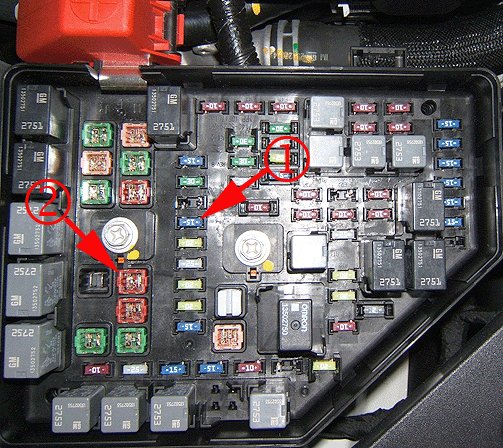
Important
The fuses must be removed in the order specified.
6. Remove the 15 amp ECM fuse (1) in the UBEC and store in a safe location.
7. To prevent your battery from draining while the vehicle is being towed, remove the 50 amp BATT1 fuse (2) in the UBEC and store in a safe location.
8. Release the parking brake.
Once you have reached your destination, do the following steps:
1. Set the parking brake.
2. Reinstall the BATT1 fuse.
3. Reinstall the ECM fuse.
4. Shift the transmission to PARK (P), turn the ignition key to OFF and remove the key from the ignition.
5. Release the parking brake.
Parts Information (2007-2011 Model Year)
For part numbers and usage of the UBEC, see Group 02.483 of the appropriate Parts Catalog. Saturn retailers should refer to the appropriate model year Parts & Illustration Catalog for the vehicle. Order the UBEC with the same option content including RPO V92.
Parts Information (2012 Model Year)

Warranty Information
Please advise the customer that the vehicle modification outlined in this bulletin will not be covered under the vehicle's warranty.
Disclaimer
INFORMATION
Bulletin No.: 07-00-89-021H
Date: August 24, 2010
Subject: Supplemental Information on Trailer Towing and Recreational Vehicle Towing (Dinghy Towing)
Models:
2008-2011 Buick Enclave
2009-2011 Chevrolet Traverse
2007-2011 GMC Acadia
2007-2010 Saturn OUTLOOK
Supercede:
This bulletin is being revised to provide two dinghy towing procedures based on the model year. Please discard Corporate Bulletin Number 07-00-89-021G (Section 00 - General Information).
The purpose of this bulletin is to inform dealers of special procedures necessary when towing a trailer or when towing the vehicle behind a recreational vehicle.
Towing a Trailer
Trailer Weight Information
The following chart shows how much the trailer can weigh, based on the vehicle powertrain combination and whether the vehicle is equipped with Trailer Provision (RPO V92). Retailers should refer customers to the appropriate Owner Manual for important trailering tips, vehicle maintenance, and safety rules before towing a trailer.
Towing a Trailer with a Vehicle without Trailer Provisions (RPO V92)
These vehicles must be modified by installing a new underhood bussed electrical center (UBEC) to provide full functionality for 4 circuits: ground, tail lamps, RH and LH stop/turn lamps. Perform this modification only if the customers will be using the vehicle to tow.
The replacement of the UBEC remains the best solution to upgrade the vehicles wiring for towing. The electrical circuitry for the tail/stop lamps is controlled by the BCM and splicing into the body harness is not recommended.
Towing a Trailer with a Vehicle with Trailer Provisions (RPO V92)
It is necessary to modify the backup lamp circuit. Perform this procedure only if the customer will be using the vehicle to tow.
1. Disconnect the X7 connector from the Body Control Module (BCM).
2. Remove the terminal for pin 3 from the BCM X7 connector. The wire to this terminal is dark blue and is the 38 circuit.
3. Re-connect the X7 connector to the BCM.
4. Cut the terminal off the end of this wire and strip the end of the wire.
5. Splice this wire into the 24 circuit wire that goes into BCM connector X6, pin 2. The 24 circuit is light green.
Recreational Vehicle Towing (Dinghy Towing)
Recreational Vehicle Towing Information
Important
Vehicles that are "dinghy towed" must be started at the beginning of each day and at each fuel stop for a minimum of five minutes.
Recreational vehicle towing means towing the vehicle behind another vehicle - such as behind a motorhome. The two most common types of recreational vehicle towing are known as "dinghy towing" (towing the vehicle with all four wheels on the ground) and "dolly towing" (towing the vehicle with two wheels on the ground and two wheels up on a device known as a "dolly"). With the proper preparation and equipment, many vehicles can be towed in these ways. Refer to the appropriate model/model year Owner Manual for towing preparation guidelines and dolly and dinghy towing procedures. The Towing Chart below summarizes powertrain combination compatibility with dolly and dinghy towing methods.

*Caution
These vehicle can be dinghy towed from the front for unlimited miles at 65 mph (105 km/h). To avoid vehicle damage, never exceed 65 mph (105 km/h) while towing these vehicles. The repairs would not be covered by the warranty.
**Caution
Dolly towing an all-wheel drive vehicle may result in premature failure of the rear drive module.
Dinghy Towing Procedure (2007-2008 Model Year)
Caution
If you tow your vehicle without performing each of the steps listed under "Dinghy Towing," you could damage the automatic transmission. Be sure to follow all steps of the dinghy towing procedure prior to and after towing your vehicle.
Caution
Don't tow a vehicle with the front drive wheels on the ground if one of the front tires is a compact spare tire. Towing with two different tire sizes on the front of the vehicle can cause severe damage to the transmission.
Important
All-wheel drive vehicles may only be dinghy towed from the front, with all four wheels on the ground.
1. Position the vehicle to tow. Shift the transmission to PARK (P) and turn the ignition to OFF.
2. Securely attach the vehicle being towed to the tow vehicle.
3. Set the parking brake.
4. Turn the ignition to ACCESSORY.
5. Shift your transmission to NEUTRAL (N).
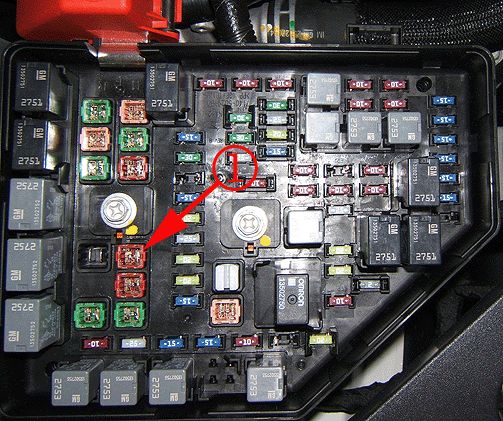
6. To prevent your battery from draining while the vehicle is being towed, remove the 50 amp BATT1 fuse (1) in the UBEC and store in a safe location.
7. Release the parking brake.
Once you have reached your destination, do the following steps:
1. Set the parking brake.
2. Reinstall the BATT1 fuse.
3. Shift the transmission to PARK (P), turn the ignition key to OFF and remove the key from the ignition.
4. Release the parking brake.
Dinghy Towing Procedure (2009-2011 Model Year)
Caution
If you tow your vehicle without performing each of the steps listed under "Dinghy Towing," you could damage the automatic transmission. Be sure to follow all steps of the dinghy towing procedure prior to and after towing your vehicle.
Caution
Don't tow a vehicle with the front drive wheels on the ground if one of the front tires is a compact spare tire. Towing with two different tire sizes on the front of the vehicle can cause severe damage to the transmission.
Important
All-wheel drive vehicles may only be dinghy towed from the front, with all four wheels on the ground.
1. Position the vehicle to tow. Shift the transmission to PARK (P) and turn the ignition to OFF.
2. Securely attach the vehicle being towed to the tow vehicle.
3. Set the parking brake.
4. Turn the ignition to ACCESSORY.
5. Shift your transmission to NEUTRAL (N).
Important
The fuses must be removed in the order specified.
6. Remove the 15 amp ECM fuse (1) in the UBEC and store in a safe location.
7. To prevent your battery from draining while the vehicle is being towed, remove the 50 amp BATT1 fuse (2) in the UBEC and store in a safe location.
8. Release the parking brake.
Once you have reached your destination, do the following steps:
1. Set the parking brake.
2. Reinstall the BATT1 fuse.
3. Reinstall the ECM fuse.
4. Shift the transmission to PARK (P), turn the ignition key to OFF and remove the key from the ignition.
5. Release the parking brake.
Parts Information
For part numbers and usage of the UBEC, see Group 02.483 of the appropriate Parts Catalog. Saturn retailers should refer to the appropriate model year Parts & Illustration Catalog for the vehicle. Order the UBEC with the same option content including RPO V92.
Warranty Information
Please advise the customer that the installation and cost of the new underhood bussed electrical center (UBEC) will not be covered under the vehicle's warranty.
Disclaimer
INFORMATION
Bulletin No.: 07-00-89-021F
Date: July 28, 2010
Subject: Supplemental Information on Trailer Towing and Recreational Vehicle Towing (Dinghy Towing)
Models:
2008-2011 Buick Enclave
2009-2011 Chevrolet Traverse
2007-2011 GMC Acadia
2007-2010 Saturn OUTLOOK
Supercede:
This bulletin is being revised to update the models to 2011 and update the Warranty Information. Please discard Corporate Bulletin Number 07-00-89-021E (Section 00 - General Information).
The purpose of this bulletin is to inform dealers of special procedures necessary when towing a trailer or when towing the vehicle behind a recreational vehicle.
Towing a Trailer
Trailer Weight Information
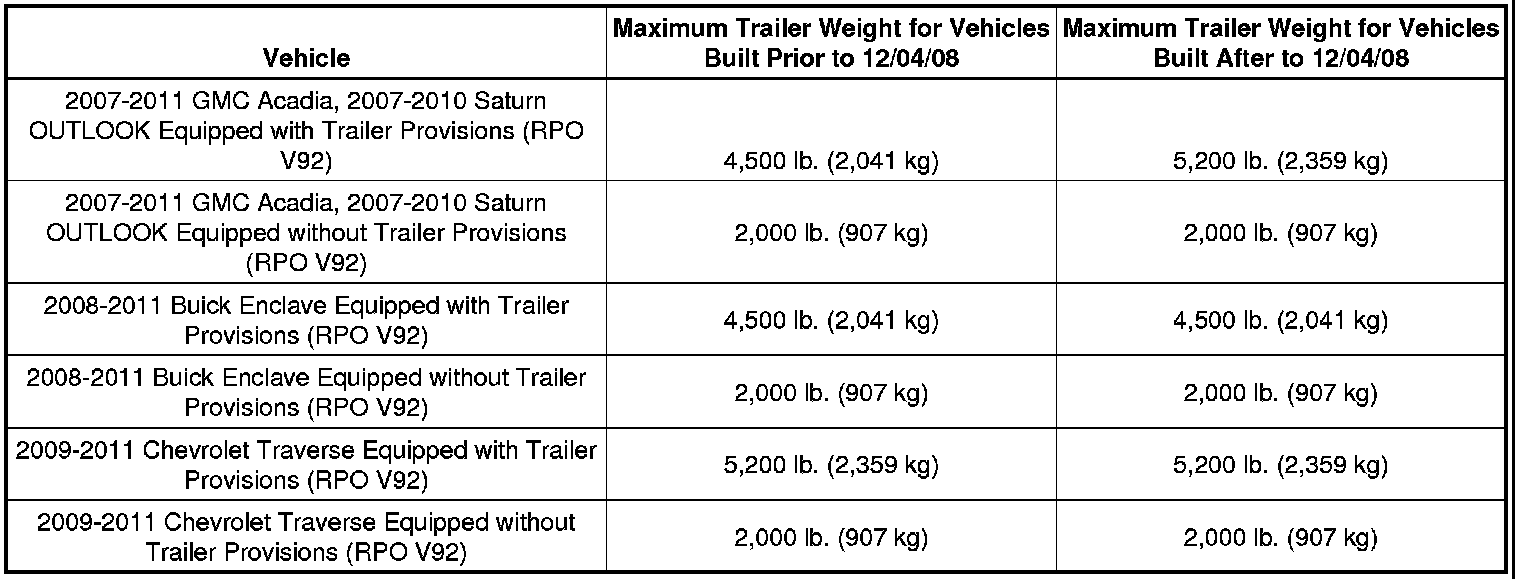
The following chart shows how much the trailer can weigh, based on the vehicle powertrain combination and whether the vehicle is equipped with Trailer Provision (RPO V92). Retailers should refer customers to the appropriate Owner Manual for important trailering tips, vehicle maintenance, and safety rules before towing a trailer.
Towing a Trailer with a Vehicle without Trailer Provisions (RPO V92)
These vehicles must be modified by installing a new underhood bussed electrical center (UBEC) to provide full functionality for 4 circuits: ground, tail lamps, RH and LH stop/turn lamps. Perform this modification only if the customers will be using the vehicle to tow.
The replacement of the UBEC remains the best solution to upgrade the vehicles wiring for towing. The electrical circuitry for the tail/stop lamps are controlled by the BCM and splicing into the body harness is not recommended.
Towing a Trailer with a Vehicle with Trailer Provisions (RPO V92)
It is necessary to modify the backup lamp circuit. Perform this procedure only if the customer will be using the vehicle to tow.
1. Disconnect the X7 connector from the Body Control Module (BCM).
2. Remove the terminal for pin 3 from the BCM X7 connector. The wire to this terminal is dark blue and is the 38 circuit.
3. Re-connect the X7 connector to the BCM.
4. Cut the terminal off the end of this wire and strip the end of the wire.
5. Splice this wire into the 24 circuit wire that goes into BCM connector X6, pin 2. The 24 circuit is light green.
Recreational Vehicle Towing (Dinghy Towing)
Important
To avoid battery rundown while towing, remove the 50 amp BATT1 fuse in the UBEC. Refer to the dinghy towing procedure in this bulletin.
Recreational Vehicle Towing Information
Important
Vehicles that are "dinghy towed" must be started at the beginning of each day and at each fuel stop for a minimum of five minutes.
Recreational vehicle towing means towing the vehicle behind another vehicle - such as behind a motorhome. The two most common types of recreational vehicle towing are known as "dinghy towing" (towing the vehicle with all four wheels on the ground) and "dolly towing" (towing the vehicle with two wheels on the ground and two wheels up on a device known as a "dolly"). With the proper preparation and equipment, many vehicles can be towed in these ways. Refer to the appropriate model/model year Owner Manual for towing preparation guidelines and dolly and dinghy towing procedures. The Towing Chart below summarizes powertrain combination compatibility with dolly and dinghy towing methods.

*Caution
These vehicle can be dinghy towed from the front for unlimited miles at 65 mph (105 km/h). To avoid vehicle damage, never exceed 65 mph (105 km/h) while towing these vehicles. The repairs would not be covered by the warranty.
**Caution
Dolly towing an all-wheel drive vehicle may result in premature failure of the rear drive module.
Dinghy Towing Procedure
Caution
If you tow your vehicle without performing each of the steps listed under "Dinghy Towing," you could damage the automatic transmission. Be sure to follow all steps of the dinghy towing procedure prior to and after towing your vehicle.
Caution
Don't tow a vehicle with the front drive wheels on the ground if one of the front tires is a compact spare tire. Towing with two different tire sizes on the front of the vehicle can cause severe damage to the transmission.
Important
All-wheel drive vehicles may only be dinghy towed from the front, with all four wheels on the ground.
1. Position the vehicle to tow. Shift the transmission to PARK (P) and turn the ignition to OFF.
2. Secure the towed vehicle to the dinghy.
3. Set the parking brake.
4. Turn the ignition to ACCESSORY.
5. Shift your transmission to NEUTRAL (N).
6. To prevent your battery from draining while the vehicle is being towed, remove the 50 amp BATT1 fuse in the UBEC, and store in a safe location.
7. Release the parking brake.
Once you have reached your destination, do the following steps:
1. Set the parking brake.
2. Reinstall the BATT1 fuse.
3. Shift the transmission to PARK (P), turn the ignition key to OFF and remove the key from the ignition.
4. Release the parking brake.
Parts Information
For part numbers and usage of the UBEC, see Group 02.483 of the appropriate Parts Catalog. Saturn retailers should refer to the appropriate model year Parts & Illustration Catalog for the vehicle. Order the UBEC with the same option content including RPO V92.
Warranty Information
Please advise the customer that the installation and cost of the new underhood bussed electrical center (UBEC) will not be covered under the vehicle's warranty.
Disclaimer
INFORMATION
Bulletin No.: 07-00-89-021E
Date: August 25, 2009
Subject: Supplemental Information on Trailer Towing and Recreational Vehicle Towing (Dinghy Towing)
Models:
2008-2010 Buick Enclave
2009-2010 Chevrolet Traverse
2007-2010 GMC Acadia
2007-2010 Saturn OUTLOOK
Supercede:
This bulletin is being revised to update the models to 2010, add a Caution statement under Recreational Vehicle Towing Chart and change the labor operation to a unique bulletin only number. Please discard Corporate Bulletin Number 07-00-89-021D (Section 00 - General Information).
The purpose of this bulletin is to inform dealers of special procedures necessary when towing a trailer or when towing the vehicle behind a recreational vehicle.
Towing a Trailer
Trailer Weight Information
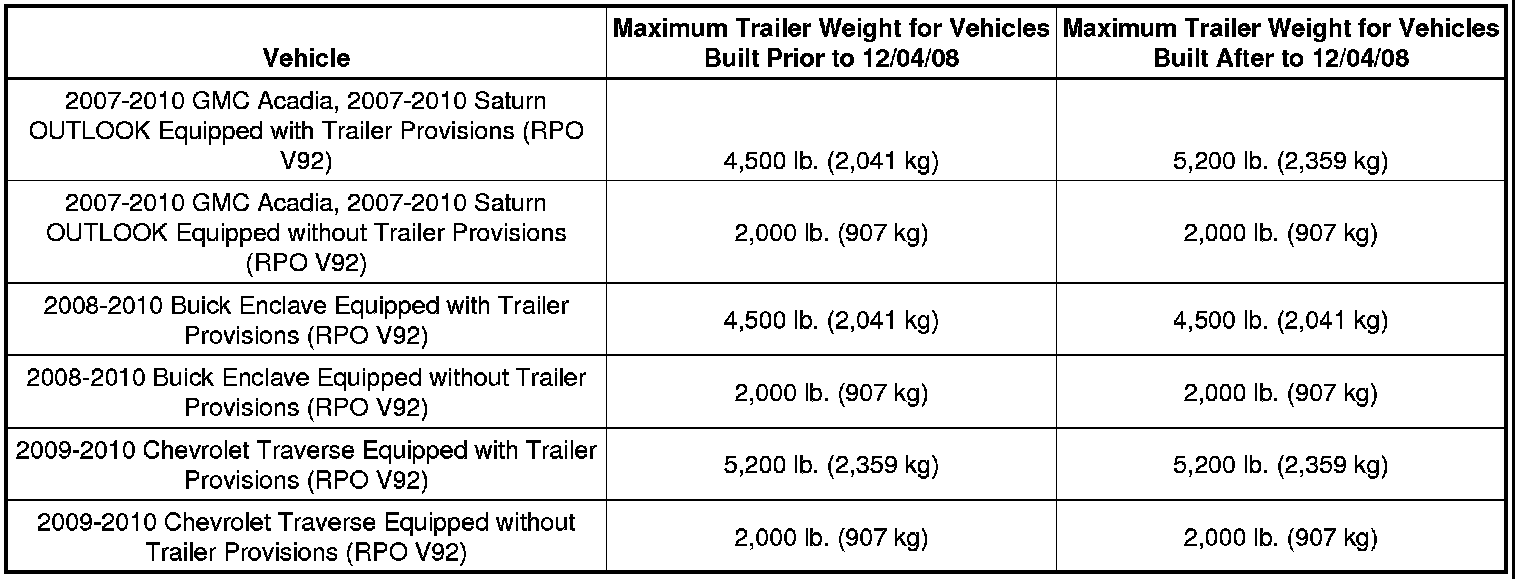
The following chart shows how much the trailer can weigh, based on the vehicle powertrain combination and whether the vehicle is equipped with Trailer Provision (RPO V92). Retailers should refer customers to the appropriate Owner Manual for important trailering tips, vehicle maintenance, and safety rules before towing a trailer.
Towing a Trailer with a Vehicle without Trailer Provisions (RPO V92)
These vehicles can tow a maximum trailer weight of 2,000 lb. (907 kg).
These vehicles must be modified by installing a new underhood bussed electrical center (UBEC) to provide full functionality for 4 circuits: ground, tail lamps, RH and LH stop/turn lamps. Perform this modification only if the customers will be using the vehicle to tow.
Due to the omission of information about trailer towing for vehicles without the Trailer Provision (RPO V92) in the Owner's Manual, this modification will only be covered under warranty for the 2007 GMC Acadia, 2007 Saturn OUTLOOK and the 2008 Buick Enclave (built prior to July 2, 2007).
The Owner's Manual for the 2008-2010 GMC Acadia, 2008-2010 Saturn OUTLOOK, 2008-2010 Buick Enclave and 2009-2010 Chevrolet Traverse (built after July 1, 2007) have been corrected and the policy to cover the UBEC replacement as an approved warranty repair for these vehicles has been rescinded. This modification has changed to a customer pay upgrade.
The replacement of the UBEC remains the best solution to upgrade the vehicles wiring for towing. The electrical circuitry for the tail/stop lamps are controlled by the BCM and splicing into the body harness is not recommended.
Towing a Trailer with a Vehicle with Trailer Provisions (RPO V92)
These vehicles can tow a maximum trailer weight of 4,500 lb. (2,041 kg).
It is necessary to modify the backup lamp circuit. Perform this procedure only if the customer will be using the vehicle to tow.
1. Disconnect the X7 connector from the Body Control Module (BCM).
2. Remove the terminal for pin 3 from the BCM X7 connector. The wire to this terminal is dark blue and is the 38 circuit.
3. Re-connect the X7 connector to the BCM.
4. Cut the terminal off the end of this wire and strip the end of the wire.
5. Splice this wire into the 24 circuit wire that goes into BCM connector X6, pin 2. The 24 circuit is light green.
Recreational Vehicle Towing (Dinghy Towing)
Important
To avoid battery rundown while towing, remove the 50 amp BATT1 fuse in the UBEC. Refer to the dinghy towing procedure in this bulletin.
Recreational Vehicle Towing Information
Important
Vehicles that are "dinghy towed" must be started at the beginning of each day and at each fuel stop for a minimum of five minutes.
Recreational vehicle towing means towing the vehicle behind another vehicle - such as behind a motorhome. The two most common types of recreational vehicle towing are known as "dinghy towing" (towing the vehicle with all four wheels on the ground) and "dolly towing" (towing the vehicle with two wheels on the ground and two wheels up on a device known as a "dolly"). With the proper preparation and equipment, many vehicles can be towed in these ways. Refer to the appropriate model/model year Owner Manual for towing preparation guidelines and dolly and dinghy towing procedures. The Towing Chart below summarizes powertrain combination compatibility with dolly and dinghy towing methods.

*Caution
These vehicle can be dinghy towed from the front for unlimited miles at 65 mph (105 km/h). To avoid vehicle damage, never exceed 65 mph (105 km/h) while towing these vehicles. The repairs would not be covered by the warranty.
**Caution
Dolly towing an all-wheel drive vehicle may result in premature failure of the rear drive module.
Dinghy Towing Procedure
Caution
If you tow your vehicle without performing each of the steps listed under "Dinghy Towing," you could damage the automatic transmission. Be sure to follow all steps of the dinghy towing procedure prior to and after towing your vehicle.
Caution
Don't tow a vehicle with the front drive wheels on the ground if one of the front tires is a compact spare tire. Towing with two different tire sizes on the front of the vehicle can cause severe damage to the transmission.
Important
All-wheel drive vehicles may only be dinghy towed from the front, with all four wheels on the ground.
1. Position the vehicle to tow. Shift the transmission to PARK (P) and turn the ignition to OFF.
2. Secure the towed vehicle to the dinghy.
3. Set the parking brake.
4. Turn the ignition to ACCESSORY.
5. Shift your transmission to NEUTRAL (N).
6. To prevent your battery from draining while the vehicle is being towed, remove the 50 amp BATT1 fuse in the UBEC, and store in a safe location.
7. Release the parking brake.
Once you have reached your destination, do the following steps:
1. Set the parking brake.
2. Reinstall the BATT1 fuse.
3. Shift the transmission to PARK (P), turn the ignition key to OFF and remove the key from the ignition.
4. Release the parking brake.
Parts Information
For part numbers and usage of the UBEC, see Group 02.483 of the appropriate Parts Catalog. Saturn retailers should refer to the appropriate model year Parts & Illustration Catalog for the vehicle. Order the UBEC with the same option content including RPO V92.
Warranty Information

For vehicles repaired under warranty as outlined above, use the table above.
Disclaimer