Tire Inflation Precautions
WARNING: This page is about a different car, the 2019 Ford F-550 Super Duty, 2019 Ford F-450 Super Duty, 2019 Ford F-350 Super Duty, and 2019 Ford F-250 Super Duty. However, it is still accessible from the selected car via links, so may be relevant.
WARNING:
Inflating tires to pressures that exceed maximum tire inflation rating on tire sidewall may result in tire failure and serious personal injury to the technician or vehicle occupant(s).
WARNING:
Never inflate a tire that has been run flat without first removing the tire from the wheel to inspect for damage. A damaged tire can fail during inflation. Failure to follow this instruction may result in serious personal injury.
WARNING:
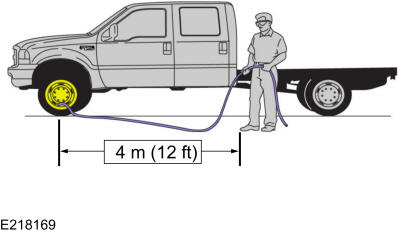
Always inflate steel carcass tires and/or split rim wheels using an Occupational Safety and Health Administration (OSHA) approved tire safety cage. Use a clip-on air chuck with remote valve and pressure gauge for inflation. Stand as far away as possible while using the remote valve. Split rims can come apart under great force if not correctly assembled. Failure to follow these instructions may result in serious personal injury.
NOTE:
Tire load and inflation pressures may vary depending on the tire manufacturer. Industry load and inflation standards are in a constant state of change. Contact the tire manufacturer for the latest applicable load and inflation information.
Overinflated or underinflated tires will reduce the service life of the tire.
Never "bleed" (remove) air from hot tires. The pressure will be reduced, but an increase in temperature will result as soon as driving continues.
 Courtesy of FORD MOTOR COMPANY Courtesy of FORD MOTOR COMPANY
|
Tire service, including adjusting tire pressure, must be performed by personnel trained, supervised and equipped according to Federal OSHA regulations. For example, during any procedure involving tire inflation, the technician or individual must utilize a remote inflation device and make sure that all persons are at a safe distance.
Place the wheel and tire assembly in the safety cage and inflate to a maximum of 10 psi. Check to see that the beads are correctly seated. Continue to inflate to recommended pressure.
Use only accurate, tested gauges to make sure of correct air pressure. Check all gauges regularly with a master gauge.
Tire pressures should be checked at regular and frequent intervals and the pressures maintained to specifications. Use an accurate tire pressure gauge and check when tires are cool.
Never attempt to short-cut the above procedures.