2.3L OHC, 3.0L, 4.0L & 7.5L W/Sludge Tolerant Throttle Body
- With engine off, disconnect negative battery cable for at least 5 minutes then reconnect it. Start engine and allow idle speed to stabilize for 2 minutes. Snap throttle open and return to idle. Lightly depress and release accelerator and allow engine to idle. If engine idles properly, idle speed adjustment is not required.
- If engine does not idle properly, disconnect the SPOUT in-line connector and verify base ignition timing is correct (2.3L only). With ignition off, disconnect idle speed control air by-pass solenoid. Start engine and run at 2500 RPM for 30 seconds. Place A/T in Park (Neutral on M/T) and apply parking brake. Check idle speed. If idle speed is less than 475-575 RPM (2.3L), 550-675 RPM (3.0L), 555-725 RPM (4.0L) or 500-800 RPM (7.5L), go to next step. If idle speed is greater than specified, go to step 5.
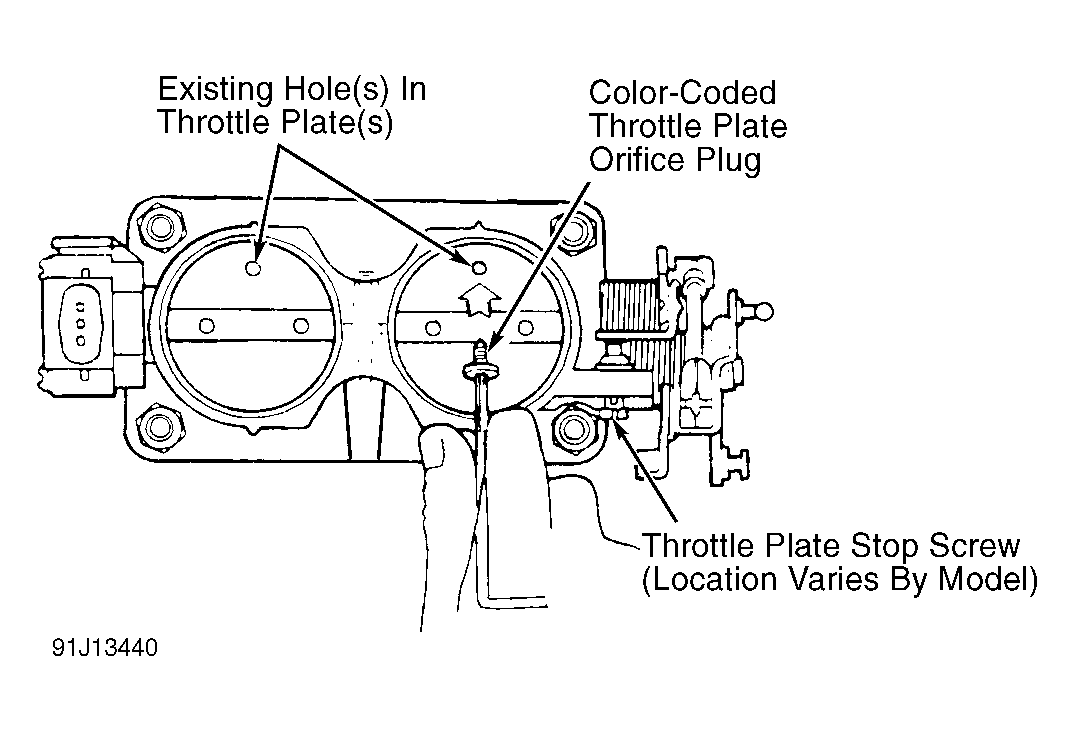
- If idle speed is too low, check throttle body for presence of throttle plate orifice plug. See Fig 1. If there is no plug, turn idle adjusting screw CLOCKWISE only to adjust idle speed. If there is a plug from previous service, remove it and turn screw to obtain correct idle speed. After adjustment, idle adjusting screw MUST be in contact with throttle lever pad.
- Turn engine off and disconnect battery for 5 minutes. Reconnect SPOUT in-line connector and ISC by-pass solenoid power lead. Move throttle plate to ensure it is not stuck in bore. Start engine and stabilize for 2 minutes. Snap throttle open and let it return to idle. With engine idling, lightly depress and release accelerator to exercise the ISC solenoid.
 Courtesy of FORD MOTOR CO.
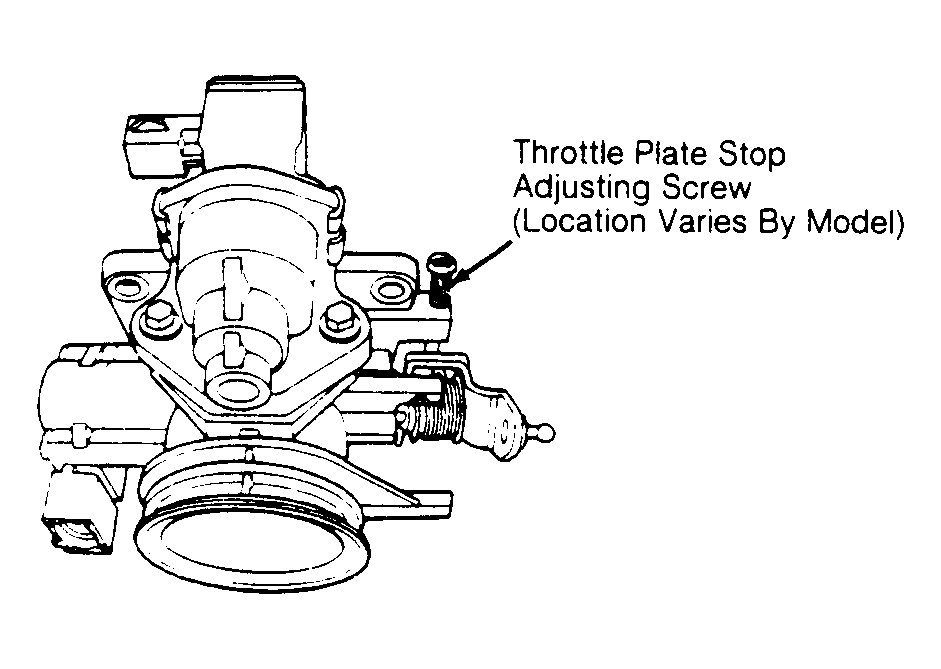
- If idle speed is too high, turn ignition off. Disconnect air cleaner hose. Using tape, block off orifice in throttle plate. See Fig 1. If orifice is already plugged, go to next step. On mass airflow engines, reconnect air cleaner hose. On all models, restart engine and check idle speed. If engine stalls, crack throttle plate open using throttle plate stop screw. See Fig 2. If idle speed is still too high, go next step. If idle speed drops to specification, drops lower than specification, or engine stalls, go to step 7.
- Perform a KOEO self-test. Check for fault codes, especially TPS fault code. If fault codes are present, repair as necessary. See appropriate TESTS W/CODES
article in the ENGINE PERFORMANCE section. If TPS fault code is present, check for proper TPS output. See THROTTLE POSITION SENSOR (TPS) . If no fault codes are present, remove tape. Exit this procedure and refer to TESTS W/O CODES
article in the ENGINE PERFORMANCE section.
- Turn ignition off. Remove air cleaner hose. Remove tape covering the throttle plate orifice. See Fig 1. Select correct plug for the orifice. Plugs are available in Throttle Plate Plug Kit (FOPE-9F652-AA).
- Reconnect air cleaner hose and start engine. Recheck idle speed. If idle speed is not within specification, turn adjusting screw CLOCKWISE to obtain correct idle speed. Turn ignition off. Connect SPOUT in-line connector (2.3L only) and ISC by-pass solenoid power lead.
- Move throttle plate to ensure it is not stuck in bore and linkage is not keeping throttle from closing. Start engine and stabilize for 2 minutes. Snap throttle open and return to idle. With engine idling, lightly depress and release accelerator to exercise ISC solenoid. If idle problem is still present, refer to TESTS W/O CODES
article in the ENGINE PERFORMANCE section to locate other possible causes of high idle.
 Courtesy of FORD MOTOR CO.