General Description
By design, all air flow through the heater A/C module must pass through the evaporator. Thus, the system discharge air temperature is regulated by varying the amount of ambient non-RECIRC or in-vehicle RECIRC mode air that passes through the heater core. A vacuum regulates the control of air through the system. Various positions on the control assembly cause the mode valves to mix and direct the following types of air through the air ducts.^ Cooled air
^ Heated air
^ Outside air
Air flows through the HVAC system as described for each of the following modes:
^ OFF
Only forced air flows from the heater system.
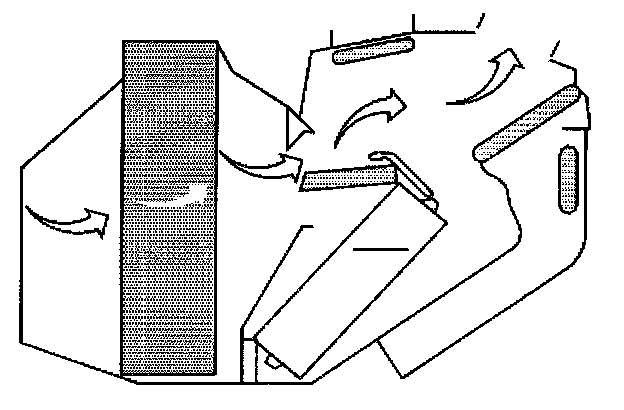
^ MAX
Recirculated air flows through the instrument panel outlets.
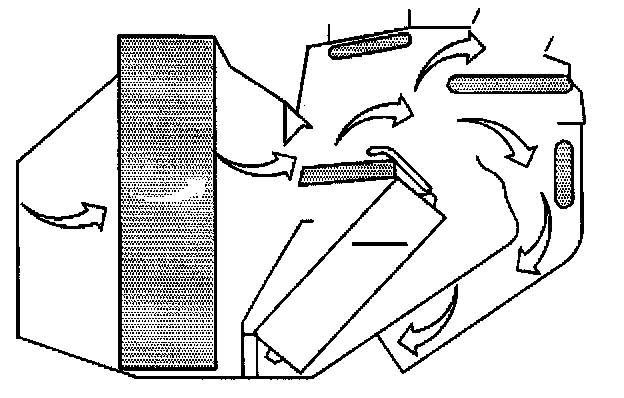
^ BI-LEVEL
Outside air flows through the following outlets:
^ The instrument panel outlets
^ The floor outlets
^ VENT
Outside air flows through the instrument panel outlets.
The compressor does not operate.
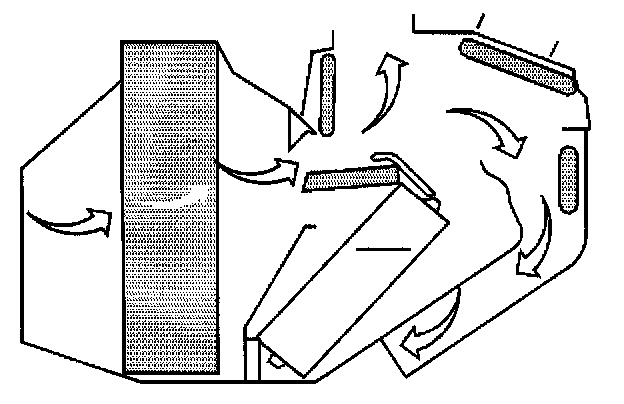
^ HEATER
Most of the air flows through the floor outlets. A small amount of air flows through the defroster duct.
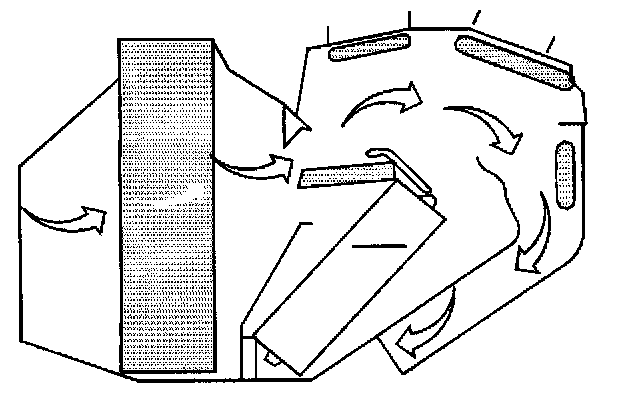
^ MIX/BLEND
Equal amounts of air flow from the floor vents and the defrost.
^ LOWER
Outside air is directed to the floor vents.
^ RECIRC
Inlet air to the heater A/C module is drawn from the vehicle's interior rather than from outside of the vehicle. This mode is used for maximum air cooling/dehumidification.
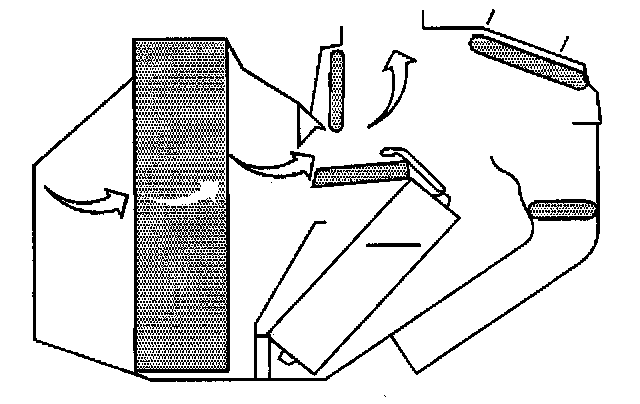
^ DEFROST
Air flows from the defroster outlets. A small amount of air flows from the floor outlets.
The PCM controls the operation of the cooling fan through the cooling fan relay. Complete wiring diagrams and diagnosis for the A/C electrical system is in the HVAC Controls in Electrical Diagnosis. This section also contains additional diagnostic information regarding air flows and vacuum logic.