Fuel Tank Unit: Description and Operation
Fuel Sender Assembly:
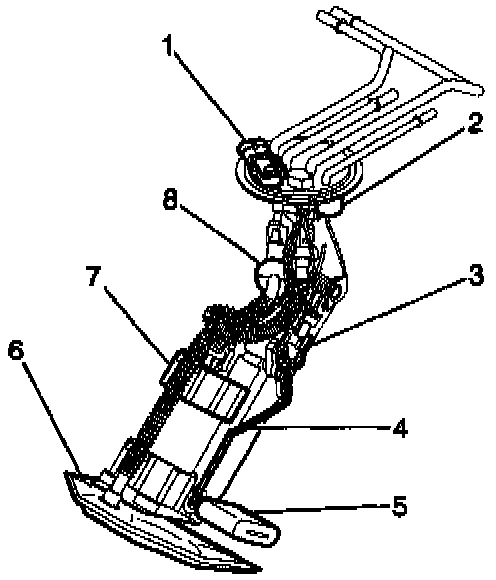
DESCRIPTION
The fuel sender assembly is inside the fuel tank attached to the top of the fuel tank. The fuel sender assembly consists of the following major components:
^ The fuel level sensor (3).
^ The fuel tank pressure sensor (1).
^ The fuel pump (7).
^ The fuel pressure regulator (8).
^ The fuel pump strainer (6).
FUEL PUMP
The fuel pump (7) attaches to the fuel sender assembly inside the fuel tank. The fuel pump is an electric high pressure gear rotor pump. The fuel pump pumps fuel to the fuel rail assembly at a specified flow and pressure. Excess fuel returns to the fuel tank by the return pipe. The fuel pump delivers a constant flow of fuel to the engine even during low fuel conditions and aggressive vehicle maneuvers. The PCM controls the electric fuel pump operation through a fuel pump relay. The fuel pump flex pipe has a quick-connect fitting. The fuel return hose attaches to the fuel pressure regulator (8). The fuel pump flex pipe acts to dampen the fuel pulses and noise generated by the fuel pump.
FUEL PRESSURE REGULATOR ASSEMBLY
The fuel pressure regulator is a part of the fuel sender assembly fuel return pipe. The fuel pressure regulator is a diaphragm operated relief valve. A software bias compensates the injector on-time because the fuel pressure regulator is not referenced to manifold vacuum. The pressure across the injectors varies with the signal from the MAP sensor. With the ignition ON and the engine OFF, system fuel pressure at the fuel pressure test port should be 380 - 410 kPa (55-60 psi). If the pressure is too low, poor performance could result. If the pressure is too high, excessive odor and a Diagnostic Trouble Code (DTC) P0132, P0152, P0172 or P0175 may result.
FUEL PUMP STRAINER
The fuel pump strainer attaches to the lower end of the fuel pump and the lower end of the fuel return pipe. The fuel pump strainer is made of woven plastic. The functions of the fuel pump strainer are to filter contaminants and to wick fuel. The fuel pump strainer is self-cleaning and normally requires no maintenance. Fuel stoppage at this point indicates that the fuel tank contains an abnormal amount of sediment or water. Clean the fuel tank and replace a plugged fuel pump strainer with a new one.