Refrigeration System
Refrigerant-134a
CAUTION: Avoid breathing A/C Refrigerant-134a (R-134a) and the lubricant vapor or the mist. Exposure may irritate the eyes, nose, and throat. Work in a well ventilated area. In order to remove R-134a from the A/C system, use service equipment that is certified to meet the requirement of SAE J2210 (R-134a recycling equipment). If an accidental system discharge occurs, ventilate the work area before continuing service. Additional health and safety -information may be obtained from the refrigerant and lubricant manufacturers.
NOTICE: R-134a is the only approved refrigerant for use in this vehicle. The use of any other refrigerant may result in poor system performance or component failure.
NOTICE: R-12 refrigerant and R-134a refrigerant must never be mixed, even in the smallest of amounts, as they are incompatible with each other. if the refrigerants are mixed, compressor failure is likely to occur. Refer to the manufacturer instruction included with the service equipment before servicing.
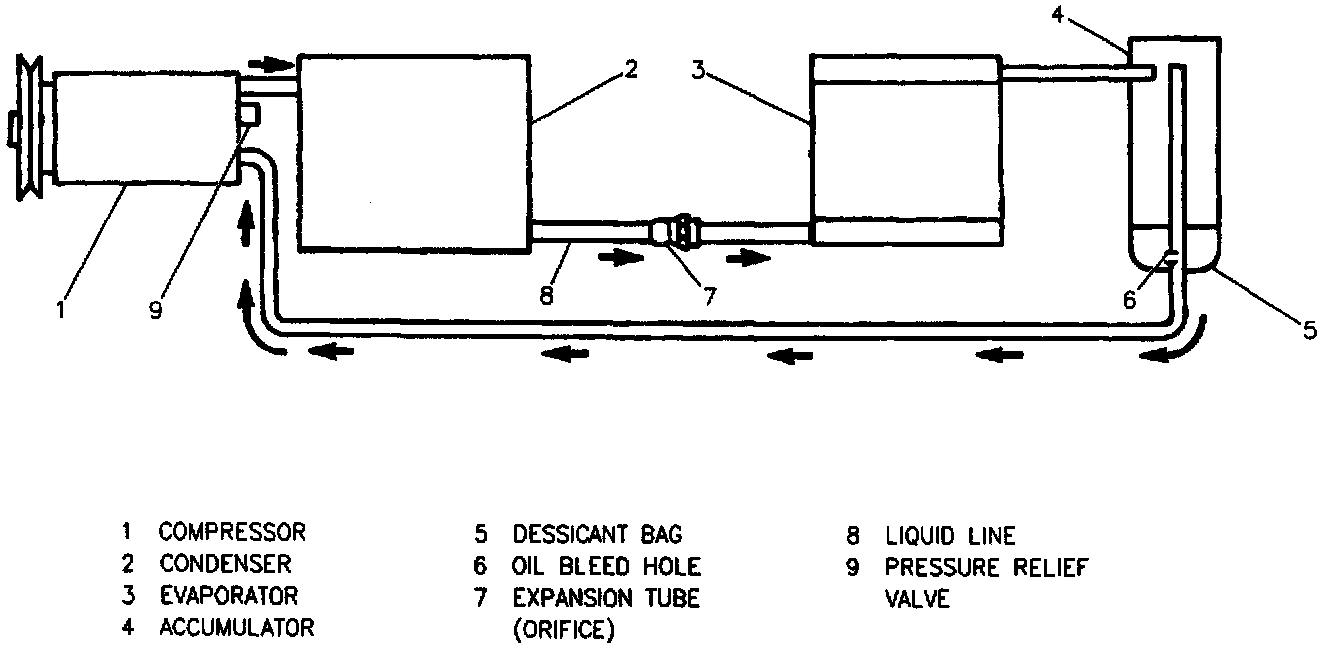
During A/C operation, the refrigerant circulates through the refrigerant system in order to absorb heat from the air being cooled and to send the beat to the outside. The refrigerant also carries a lubricant to parts of the compressor. Like the coolant in the engine coolant system, the refrigerant absorbs, carries and releases the HVAC system heat. Although various substances are used as refrigerants, past automotive A/C systems used a type called R-12. This A/C system uses R-134a, a non-toxic, non-flammable, clear and liquid gas. The following are the major components of the refrigeration system:
^ The refrigerant
^ The compressor
^ The condenser
^ The expansion (orifice) tube
^ The evaporator core
^ The accumulator
^ The A/C lines
^ A refrigerant pressure sensor
This vehicle uses Refrigerant-134a (R-134a), a non-toxic, non-flammable, clear, liquid gas. While very similar to the R-12 system, the R-134a system refrigerant, lubricants, and service equipment differ.
Air Conditioning Accumulator
The sealed accumulator is connected to the evaporator outlet pipe. The accumulator stores the refrigerant (vapor and liquid) and the oil from the evaporator. A desiccant at the accumulator bottom dries any moisture in the system. An oil bleed hole at the accumulator outlet pipe end provides the oil return path to the compressor. The accumulator is not serviceable and should only be replaced when leaking due to the following conditions:
^ Perforation
^ A damaged seal
^ Damaged threads
^ Outside air has entered the system for extended periods of time
Air Conditioning Compressor
The compressor is belt driven from the engine crankshaft through the compressor clutch pulley. The pulley rotates without driving the compressor shaft until an electromagnetic clutch coil is energized. When voltage is applied to energize the coil, the clutch plate and hub is drawn rearward toward the pulley. The magnetic force locks the clutch plate and the pulley together in order to drive the compressor shaft.
Air Conditioning Condenser
The condenser is located in front of the radiator. The condenser carries the refrigerant through the coils with cooling fins in order to provide rapid heat transfer. The air passing through the condenser cools the high-pressure refrigerant vapor, causing the vapor to condense into a high pressure liquid.
Engine Electric Coolant Fans
Coolant fan operation is crucial to the proper operation of the air conditioning system. The coolant fans ensures the proper amount of air flow across the condenser throughout the vehicle operating range.
Fan operation should be checked during any air conditioning diagnosis procedure. Special attention should be given to the fan whenever excessive high side pressures are encountered.
Air Conditioning Evaporator Tube Orifice
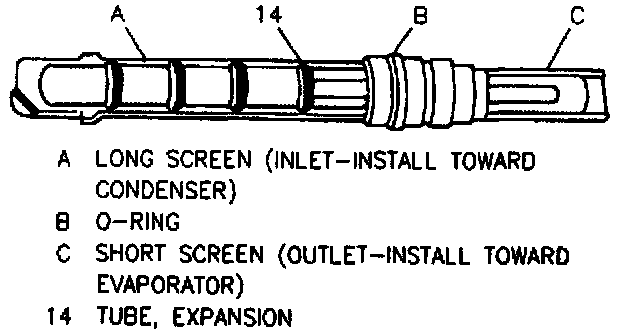
The plastic expansion (orifice) tube (2) is made of a mesh-screen (1) and orifice (3). The expansion (orifice) tube is located in the evaporator inlet pipe at the liquid line connection. The tube restricts the high pressure liquid refrigerant in the liquid line, metering the refrigerant flow to the evaporator as a low pressure liquid. The expansion tube and orifice have filter screens which protect from contamination on both the inlet and outlet sides of the tube. When the engine is OFF and the A/C is running, the refrigerant in the system flows from the high pressure side of the tube to the low pressure side until the pressure is equalized. This may be detected as a faint hissing sound for 30-60 seconds and is a normal condition.
Air Conditioning Evaporator
The evaporator is a device which cools and dehumidifies the air before it enters the vehicle. High-pressure refrigerant flows through the orifice tube and becomes low-pressure refrigerant before entering the evaporator. The heat in the air passing through the evaporator core is lost to the cooler surface of the core, thereby cooling the air. As the process of heat loss from the air to the evaporator core surface is taking place, any moisture (humidity) in the air condenses on the outside of the evaporator core and is drained off as water.
Air Conditioning Compressor Pressure Relief Valve
The compressor is equipped with a pressure relief valve which is placed in the system as a safety factor. Under certain conditions, the refrigerant on the discharge side may exceed the designed operating pressure. To prevent system damage, the valve is designed to open automatically at approximately 3036 kPa (440 psi). Any condition that causes this valve to open should be corrected, and the refrigerant oil should be replaced as necessary. The air conditioning refrigerant pressure sensor should also be checked for proper calibration.