P0452
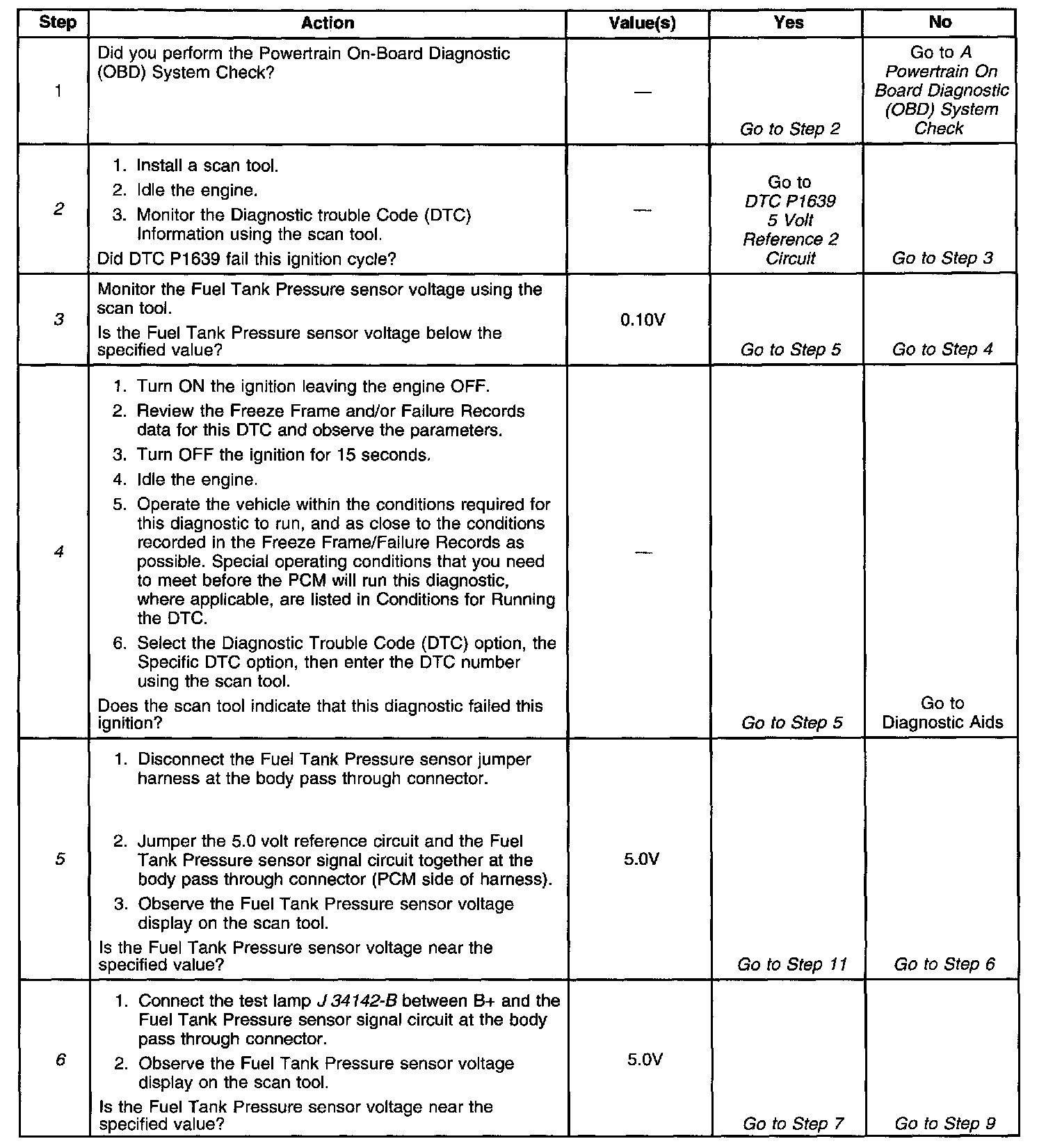
1 Of 4:
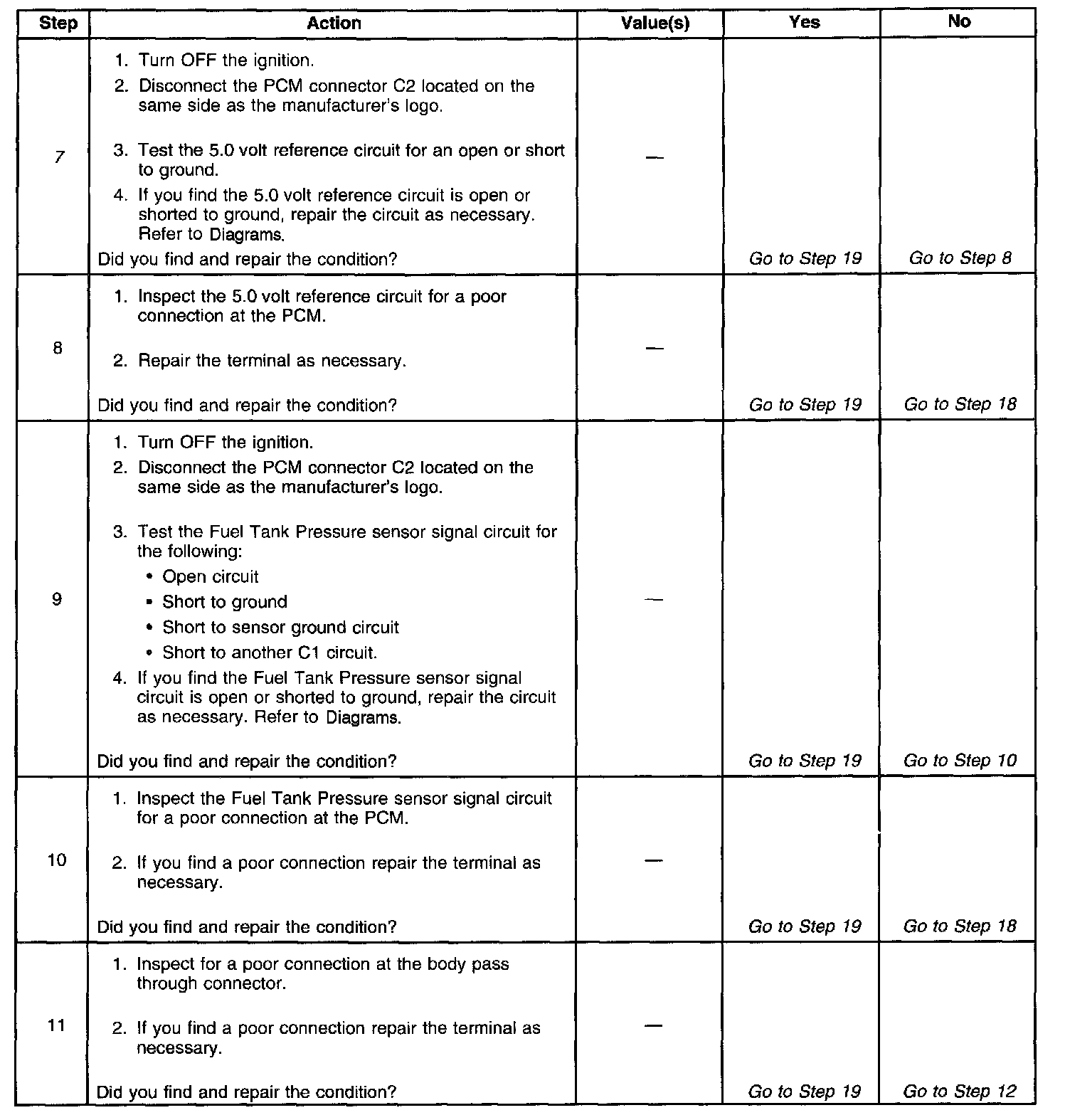
2 Of 4:
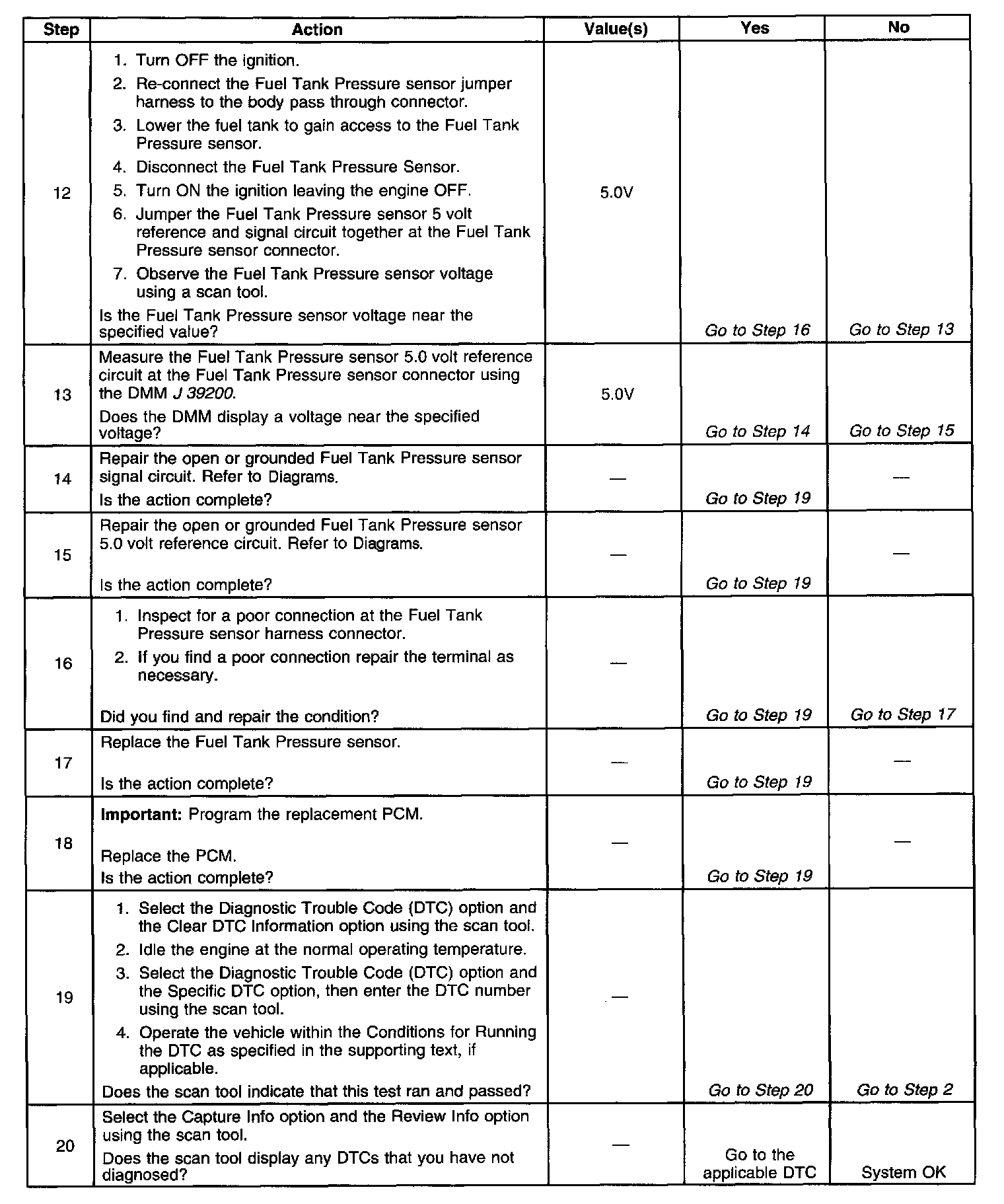
3 Of 4:
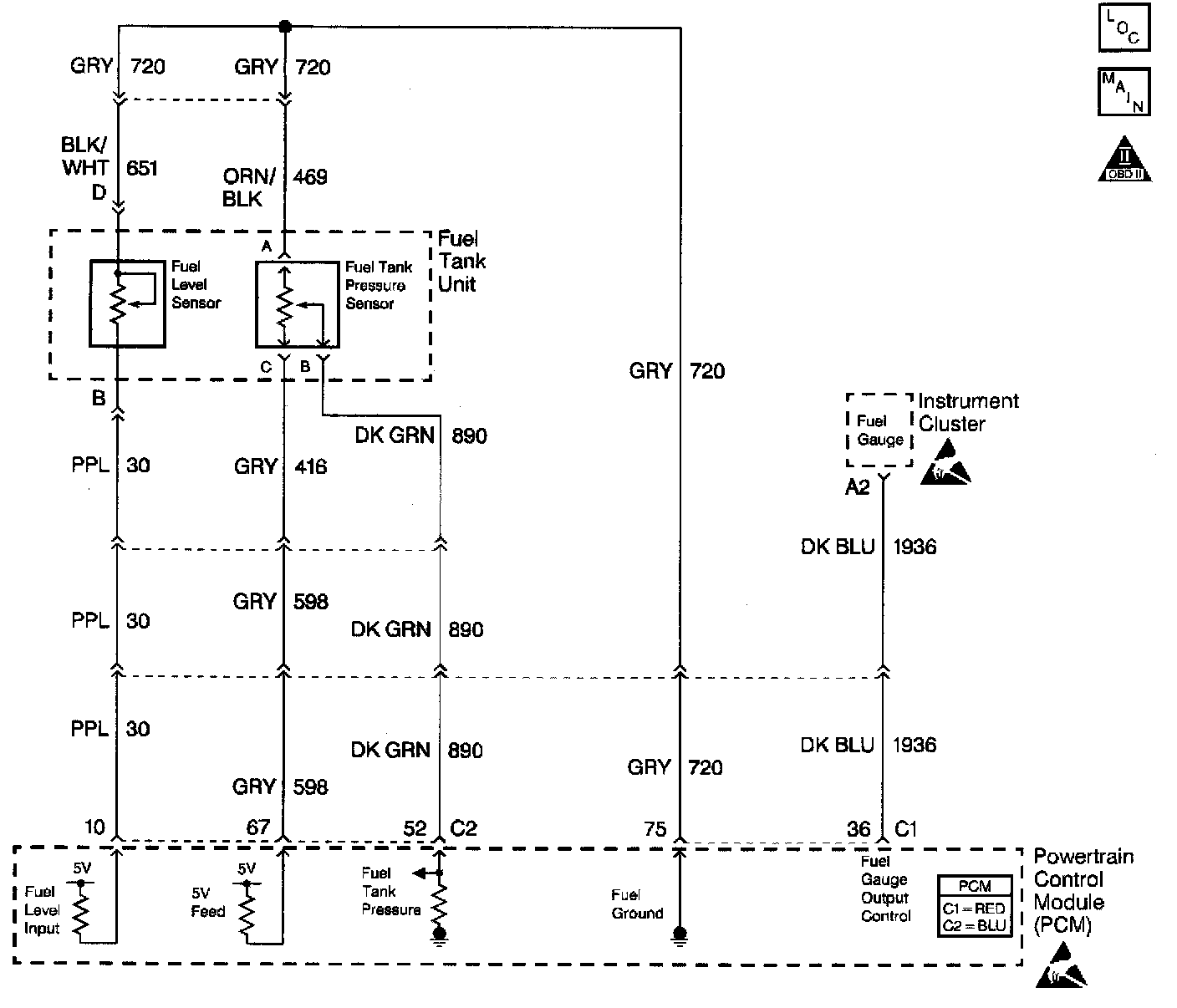
Circuit Description
The Fuel Tank Pressure sensor changes resistance based on the fuel tank pressure (or vacuum). A vacuum is considered negative pressure.
The PCM provides a 5.0 volt reference and a ground. The Fuel Tank Pressure sensor signal varies between ground and 5.0 volts as fuel tank pressure varies. The Fuel Tank Pressure sensor voltage increases as the fuel tank pressure decreases (negative pressure, or vacuum). The Fuel Tank Pressure sensor voltage decreases (positive pressure, low voltage) as the fuel tank pressure increases. The PCM uses the Fuel Tank Pressure sensor voltage for EVAP system leak detection. This DTC sets when the Fuel Tank Pressure sensor signal goes below a predetermined value.
Conditions for Running the DTC
The ignition switch is in the RUN position.
Conditions for Setting the DTC
- The Fuel Tank Pressure sensor voltage is less 0.1 volts.
- All conditions present for greater than 5.0 seconds.
Action Taken When the DTC Sets
- The PCM illuminates the Malfunction Indicator Lamp on the second consecutive ignition cycle that the diagnostic runs and fails.
- The PCM records the operating conditions at the time the diagnostic fails. The first time the diagnostic fails, the PCM stores this information in the Failure Records. If the diagnostic reports a failure on the second consecutive ignition cycle, the PCM records the operating conditions at the time of the failure. The PCM writes the conditions to the Freeze Frame and updates the Failure records.
Conditions for Clearing the MIL/DTC
- The PCM turns the MIL OFF after three consecutive ignition cycles that the diagnostic runs and does not fail.
- A last test failed (current DTC) clears when the diagnostic runs and does not fail.
- A History DTC clears after forty consecutive warm-up cycles, if this or any other emission related diagnostic does not report any failures.
- Use a scan tool in order to clear the MIL/DTC.
Diagnostic Aids
The EVAP Pressure Sensor monitors a range from 7.5 in. H2O of pressure to -17.5 in. H2O of pressure (vacuum).
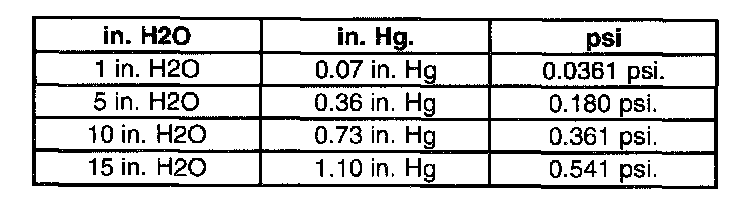
The vacuum and pressure in the EVAP system is measured in inches of H2O (water). Most gauges measure vacuum in inches of Hg (mercury) and pressure in psi (pounds per square inch). The illustration shows how the values compare.
Test Description
The numbers below refer to the step numbers on the diagnostic table.
2. If DTC P1639 sets at the same time, this indicates that the 5.0 volt reference circuit is either shorted to ground or shorted to a voltage. The 5.0 volt reference circuit is internally connected within the PCM. The A/C Refrigerant Pressure sensor may be causing this DTC to set.
3. This step determines if the malfunction is present.
4. Using the Freeze Frame and/or Failure Records data may aid in locating an intermittent condition. If you cannot duplicate the DTC, the information included in the Freeze Frame and/or Failure Records data can help determine how many miles since the DTC set. The Fail Counter and Pass Counter can also help determine how many ignition cycles the diagnostic reported a pass and/or a fail. Operate the vehicle within the same freeze frame conditions (RPM, load, vehicle speed, temperature etc.) that you observed. This will isolate when the DTC failed.
5. If the scan tool displays 5.0 volts, the Fuel Tank Pressure sensor signal, 5.0 volt reference circuit, and the PCM are OK.
6. If the scan tool displays 5.0 volts, the Fuel Tank Pressure sensor signal circuit and the PCM are OK.
7. Disconnecting the PCM allows using the DMM in order to test the continuity of the circuits. This aids in locating an open or a shorted circuit.