P0446
Diagnostic Chart:
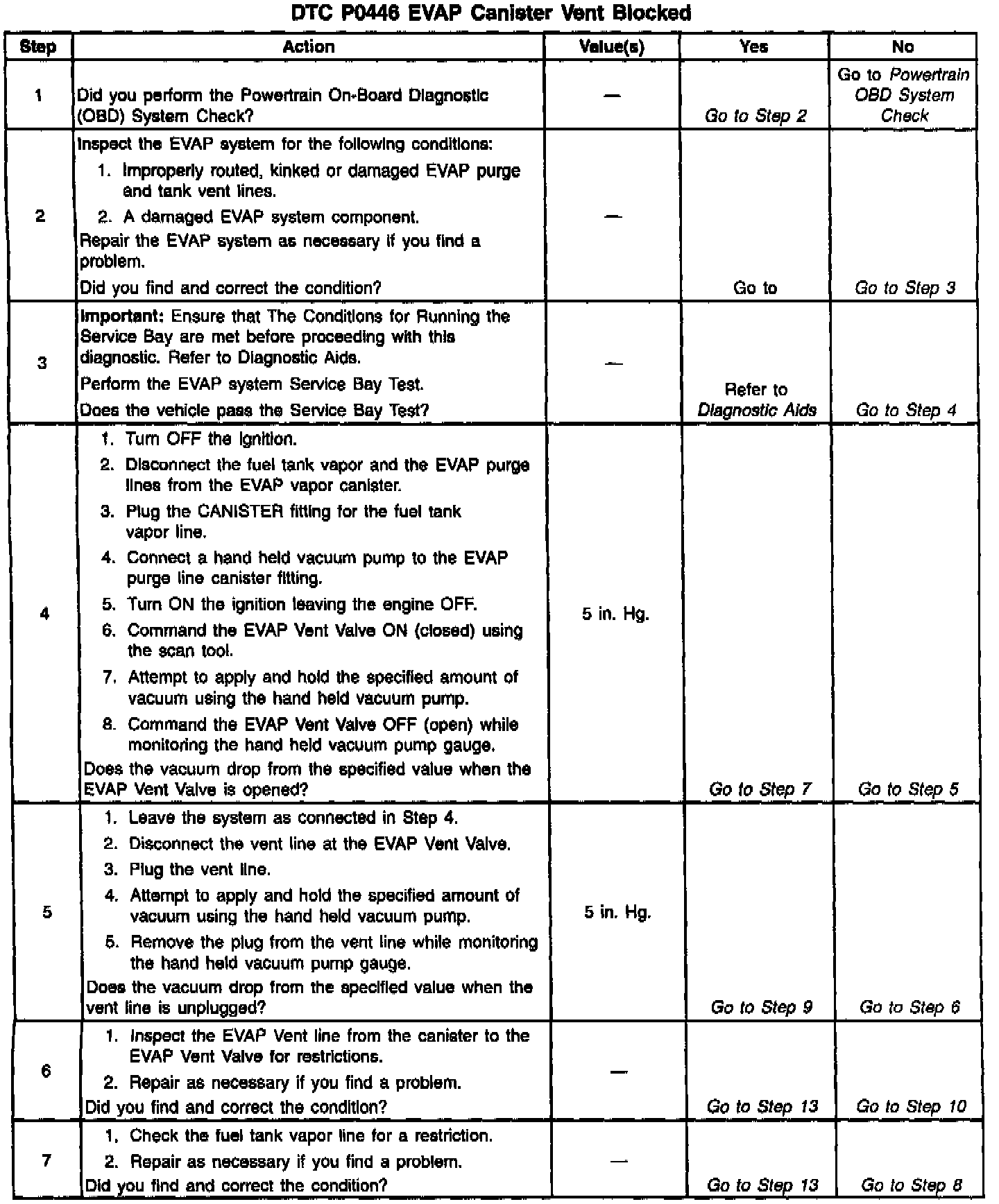
Diagnostic Chart:
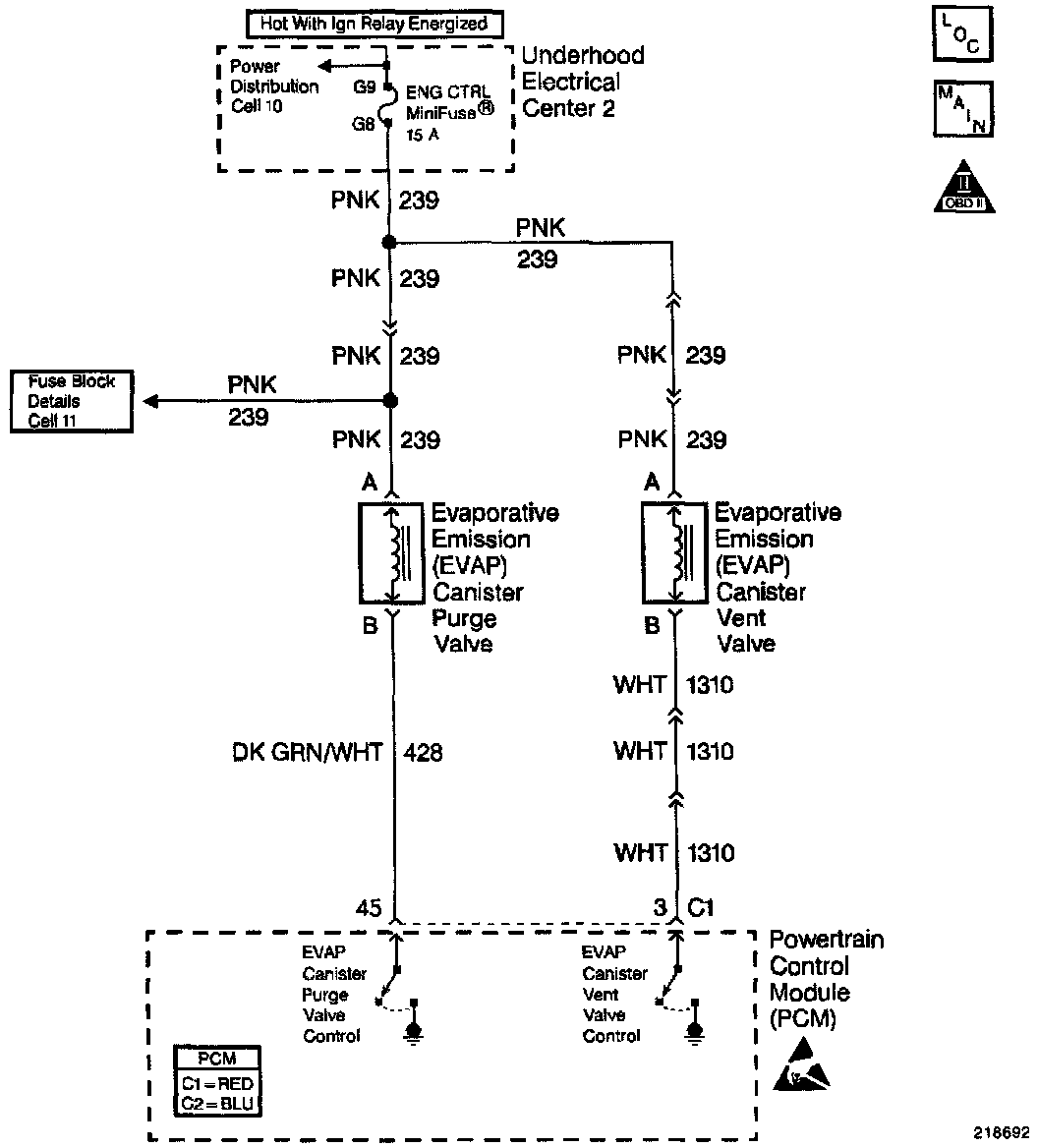
Wiring Diagram:
CIRCUIT DESCRIPTION
The PCM monitors the performance of the EVAP system by applying a predetermined level of vacuum to the EVAP system then monitors the vacuum decay rate. The PCM sets this DTC if the vacuum decay rate is greater than a predetermined value.
CONDITIONS FOR RUNNING THE DTC
- DTCs P0107, P0108, P0112, P0113, P0117, P0118, P0121, P0122, P0123, P0125, P0420, P0430, P0452, P0453, P0500, P0502, P0503, P1111, P1112, P1114, P1115 or HO2S DTCs are not set.
- The ignition voltage is between 10 and 17 volts.
- The barometric pressure is more than 75 kPa.
- The fuel level is between 15% and 85% of full capacity.
- The engine coolant temperature is between 4°C (39°F) and 30°C (86°F).
- The intake air temperature is between 4°C (39°F) and 30°C (86°F).
- The start up engine coolant temperature and the intake air temperature are within 9°C (16°F) of each other.
CONDITIONS FOR SETTING THE DTC
- The EVAP vacuum decay rate is greater than a predetermined value.
- The conditions are present for greater than 2 seconds.
OR
- The vacuum present in the EVAP system is greater than a predetermined value.
- The conditions are present for greater than 4 seconds.
IMPORTANT: This DTC does not report a first failed test. A first fail of this DTC will have a scan tool status as Not Run.
ACTION TAKEN WHEN THE DTC SETS
- The PCM will illuminate the Malfunction Indicator Lamp (MIL) after two consecutive drive trips that the diagnostic runs and fails.
- The PCM will record operating conditions at the time the DTC sets. This information will be stored in the Freeze Frame and Failure Records.
- A first failure of this DTC will NOT store in Last Test Failed or History.
CONDITIONS FOR CLEARING THE MIL/DTC
- The PCM turns the MIL OFF after three consecutive drive trips that the diagnostic runs and does not fail.
- A last test failed (current DTC) clears when the diagnostic runs and does not fail.
- A History DTC clears after forty consecutive warm.up cycles, it this or any other emission related diagnostic does not report any failures.
- The PCM battery voltage is interrupted.
- Use a scan tool in order to clear the MIL/DTC.
DIAGNOSTIC AIDS
IMPORTANT: An accurate indication of fuel level is required for the PCM to properly Pass or Fail this DTC. Always diagnose the fuel level sensor DTC's before performing this DTC's diagnostic table. Always check for fuel level sensor DTC's stored as History.
CONDITIONS FOR RUNNING THE SERVICE BAY TEST
- The battery voltage is between 10.5 and 17.5 volts.
- The fuel level is between 15% and 85% of the full capacity.
- The engine temperature is between 3.5°C (38°F) and 35°C (95°F).
Perform a physical inspection of the EVAP system. Check for the following conditions:
- A loose, missing, defective, or incorrect fuel tank cap.
- Incorrectly routed or defective EVAP system vacuum and vapor lines.
- A stuck closed EVAP Vent Valve.
- A restricted or blocked EVAP system hose.
- A restricted or stuck closed fuel tank rollover valves.
- A malfunctioning or damaged vapor canister.
Check for charcoal release from the vapor canister. Refer to the EVAP System Cleaning procedure.
The vacuum and pressure in the EVAP system is measured in inches of H2O (water). Most gauges measure vacuum in inches of Hg (mercury) and pressure in psi (pounds per square inch). The following shows how the values compare:
TEST DESCRIPTION
The numbers below refer to the step numbers on the Diagnostic Table.
3. An intermittent leak or restriction is indicated if the vehicle passes the Service Bay Test. A fuel tank cap that is loose or off causes this DTC to set.
If the Service Bay Test can not be run, proceed to Step 5. If a fault is not currently present the diagnostic table steps will return you to Step 3.
4. Checking the vapor canister and the EVAP Vent Valve for restriction.
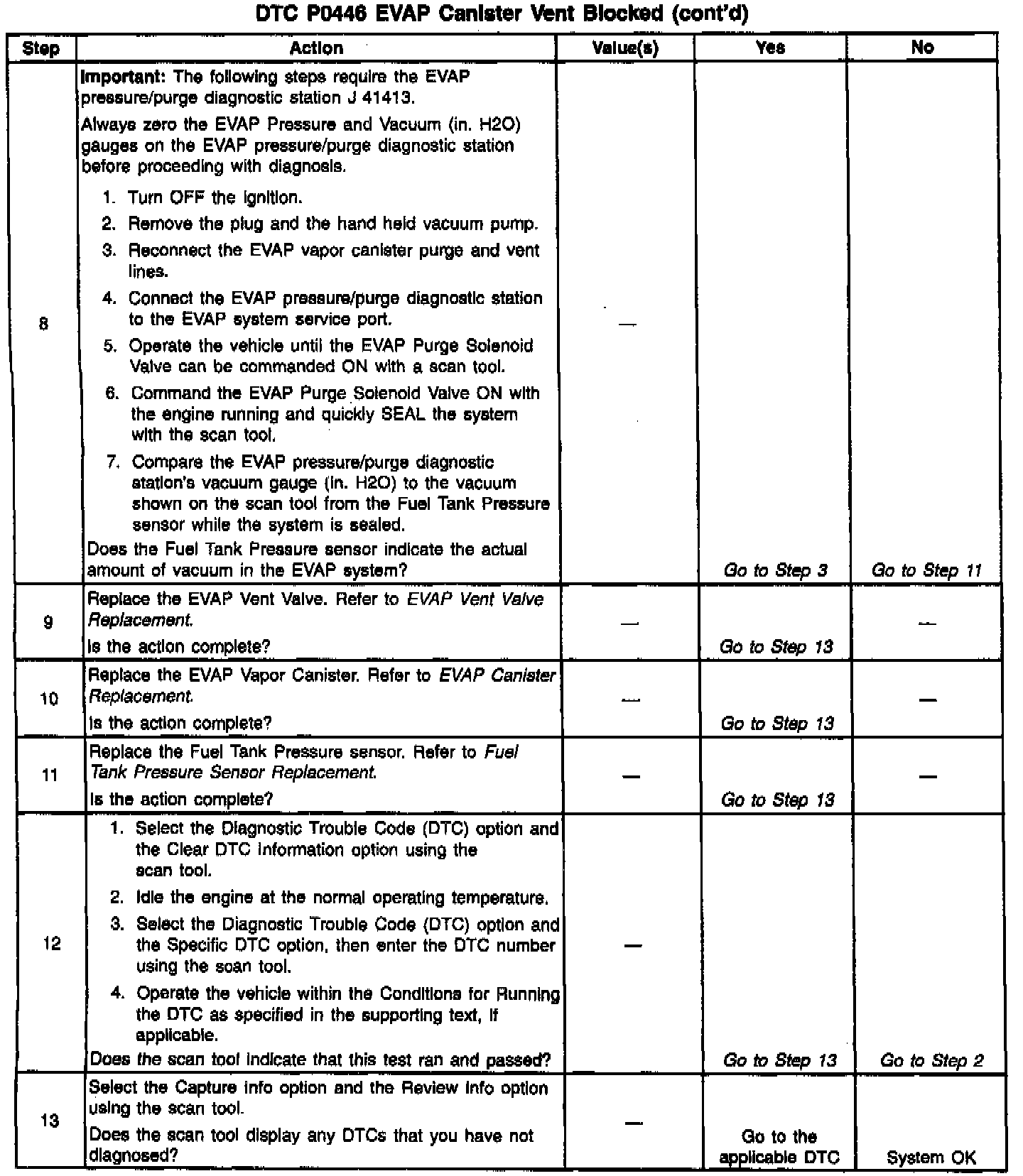
8. An Fuel Tank Pressure sensor that does not correctly respond to pressure (or vacuum) causes this DTC to set.
The Fuel Tank Pressure sensor monitors a range from 7.5 in. H2O of pressure to -17.5 in. H2O of pressure (vacuum).
In order to test the Fuel Tank Pressure sensor for vacuum response, command the EVAP Purge Solenoid Valve ON with the engine running and quickly SEAL the system. Leaving the EVAP Purge Solenoid Valve ON for a longer period of time allows a greater level of vacuum to develop.