Replacement Tires
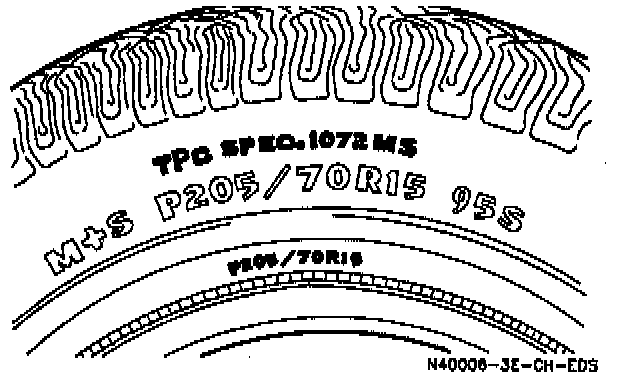
A tire performance criteria (TPC) specification number is molded in the sidewall near the tire size of all original equipment tires. This specification number assures that the tire meets performance standards for traction, endurance, dimension, noise, handling, rolling resistance, and others. Usually, a specific TPC number is assigned to each tire size.
CAUTION: Do not mix different types of tires on the same vehicle, such as radial, bias, and bias-belted tires, except in emergencies because vehicle handling may be seriously affected and may result in loss of control. This caution does not apply to the compact spare furnished with the vehicle.
Replacement tires should be the same size, load range, speed rating, and construction as the original tires. Replace the original tires with tires of the same TPC specification number. Use of any other tire size or type may seriously affect ride, handling, speedometer/odometer calibration, antilock brake system, vehicle ground clearance, and tire clearance to the body and chassis. It is recommended that new tires be installed in pairs on the same axle. If it is necessary to replace only one tire, it should be paired with the tire having the most tread, to equalize braking traction.
Tires should be replaced when:
^ They are worn to a point where 1.6 mm (1/16 inch) or less tread remains, or cord or fabric is showing. To help detect this condition, tires have built-in tread wear indicators that appear between tread grooves when tread is worn to 1.6 mm (1/16 inch) or less. Replace tire when indicators appear in two or more adjacent grooves at three spots around tire.
^ Tread or sidewall is cracked, cut or snagged deeply enough to expose cord or fabric. Tire has a bump, bulge or split. Slight sidewall indentations are normal and should not affect ride.
^ Tire has a puncture, cut or other damage that cannot be correctly repaired because of size or location of damage.