Trim Height
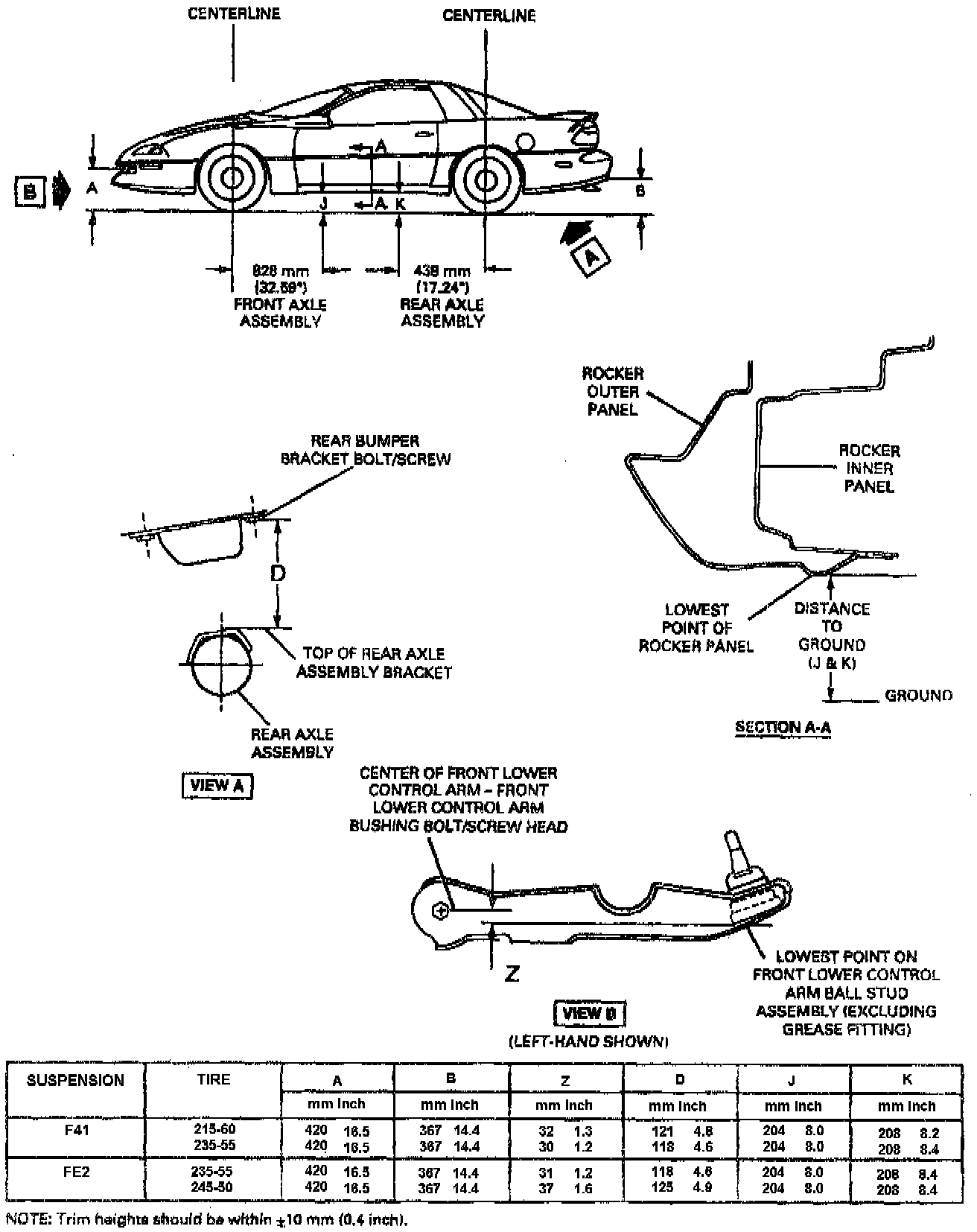
GENERAL INFORMATION
Incorrect trim heights can produce symptoms similar to those produced when there is a problem with the tire and wheel alignment. Trim heights should be checked when diagnosing steering and vibration complaints. In order to measure trim height accurately, make sure:
^ Tires are at correct pressure as shown on tire placard "up to vehicle capacity."
^ Fuel tank is full.
^ Vehicle has no additional weight or passengers.
^ Seats are in full back position.
^ Rear compartment is empty except for spare tire and jack and simulated fuel load if required.
^ Vehicle is on a known level floor.
^ All doors, hood and rear compartment lid are closed.
NOTE: All dimensions shown are measured vertical to the ground. Trim heights should be within +/- 10 mm (0.4 inch) to be considered correct.
MEASURING; "Z," "J" AND A" DIMENSIONS
1. Lift front bumper of vehicle up approximately 38 mm (1 1/2 inches). Gently remove hands and let vehicle settle.
A. Repeat operation for a total of 2 times.
B. After second time, measure "Z," "J" and "A" dimensions.
2. Push front bumper down approximately 38 mm (1 1/2 inches). Gently remove hands and let vehicle rise on its own.
A. Repeat operation for a total of 2 times.
B. Measure "Z," "J" and "A" dimensions.
3. Calculate trim heights.
^ Trim heights are average of high and low measurements.
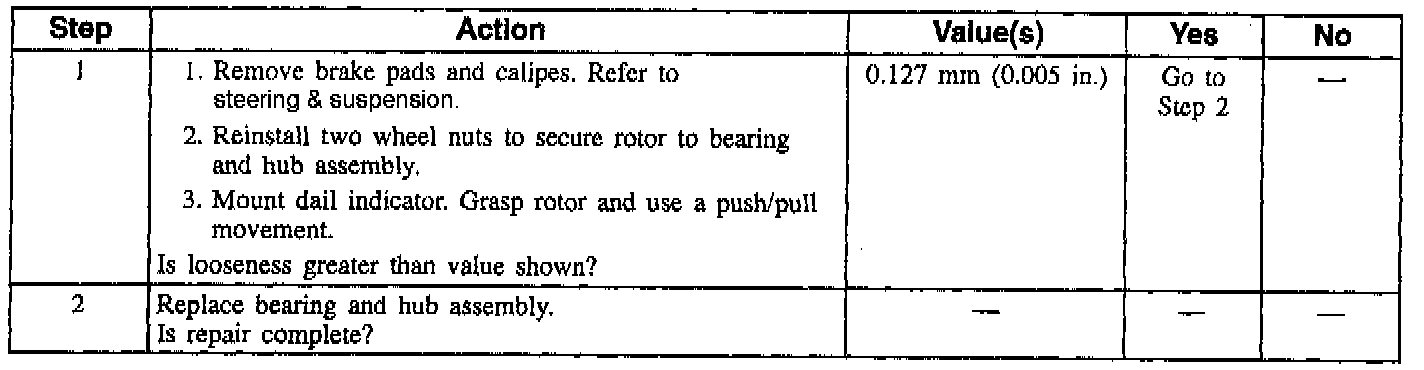
4. Verify trim heights.
5. Correct trim heights as necessary.
MEASURING "D," "K" AND "B" DIMENSIONS
Repeat procedure as described for "Measuring "Z," "J" and "A" Dimensions using the rear bumper and measuring "D," "K" and "B" at the appropriate times.