Tire Inflation
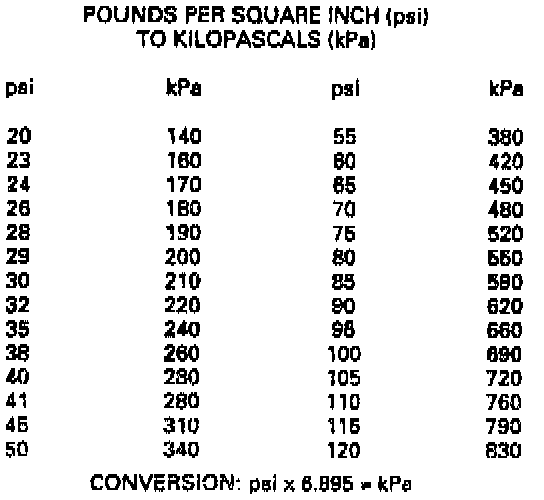
The pressure recommended for all models is carefully calculated to give a comfortable ride, responsive steering, and maximum tread wear, tire life and resistance to bruises. Valve stem caps or extensions should be installed on the valve stems to keep out dust and water. Tire pressure, with tires cold (after vehicle has sat for three hours or more, or driven less than one mile), should be checked monthly or before any extended trip. Set tire pressure to the specifications on the tire placard located on the rear face of driver's door or in "Tire Pressures". Tire pressure will increase about 6.9 kPa (1 psi) for every 5.5°C (10°F) temperature increase. For sustained high-speed driving, tires should be set at the pressures recommended. Sustained driving at high speeds, where permitted by law, is not advised unless vehicle has special high-speed tires.
Tire pressure which is higher than that recommended can cause:
^ Hard ride.
^ Reduced handling.
^ Tire bruising or carcass damage.
^ Rapid tread wear at center of tire.
Tire pressure which is lower than that recommended can cause:
^ Tire squeal on turns.
^ Hard steering.
^ Rapid and uneven wear on edge of tread.
^ Tire rim bruises and rupture.
^ Tire cord breakage.
^ High tire temperatures.
^ Reduced handling.
^ High fuel consumption.
Unequal tire pressure on same axle can cause:
^ Uneven braking.
^ Steering lead.
^ Reduced handling.
^ Swerve on acceleration.