Brake Master Cylinder: Description and Operation
Exploded View Of Master Cylinder Assembly:
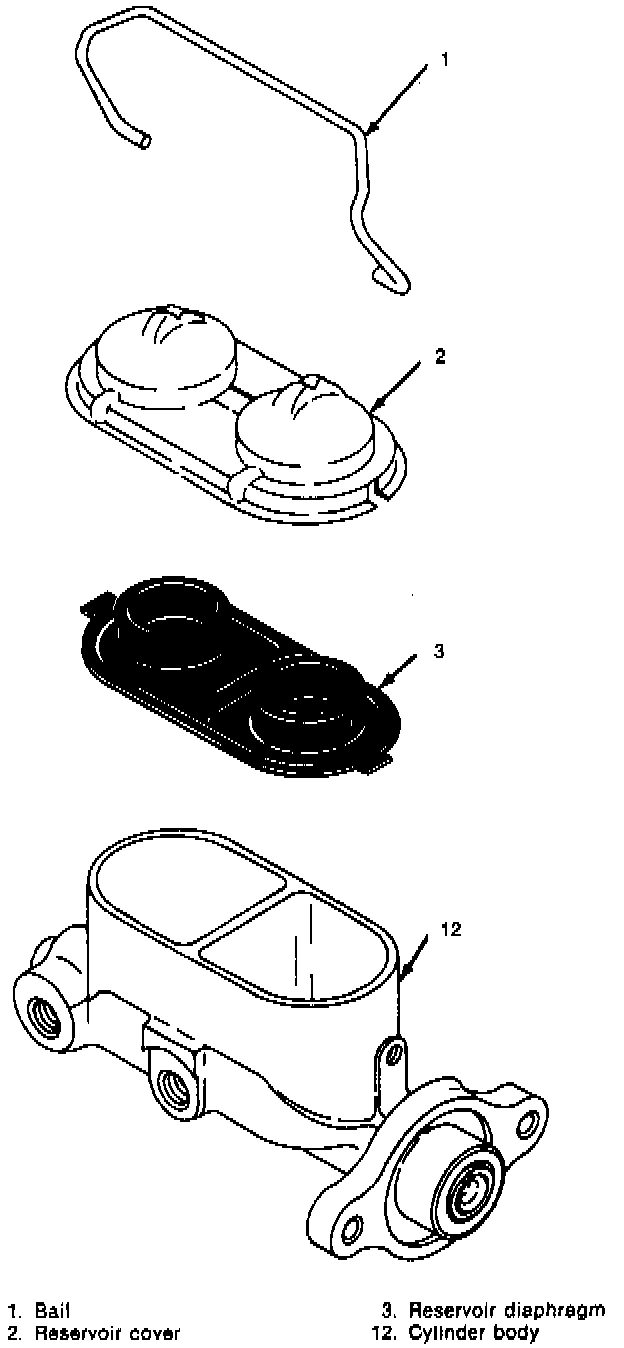
When the brake pedal is depressed, force is transferred through the push rod to the master cylinder primary piston, which moves forward. Under normal conditions, the combination of hydraulic pressure and the force of the primary piston spring move the secondary piston forward at the same time. When the pistons have moved forward so that their primary cups cover the bypass holes, hydraulic pressure begins to build up and is transmitted to the front and rear brake assemblies. Hydraulic pressure behind the front caliper pistons and rear wheel cylinder cups forces the pistons outward, causing the brakes to be applied.
As brake pedal force is reduced, brake fluid pressure in the master cylinder is also reduced. This allows the drum brake retractor springs to retract the shoe and lining assemblies from contact with the drum which forces brake fluid out of the wheel cylinder assemblies and back into the master cylinder assembly. The reduction in fluid pressure also allows the caliper pistons to retract slightly by action of the piston seal.