Fuel Hose/Pipes Replacement - Chassis
WARNING: This page is about a different car, the 2006 Pontiac Montana SV6, 2006 Chevrolet Uplander, and 2006 Buick Terraza. However, it is still accessible from the selected car via links, so may be relevant.
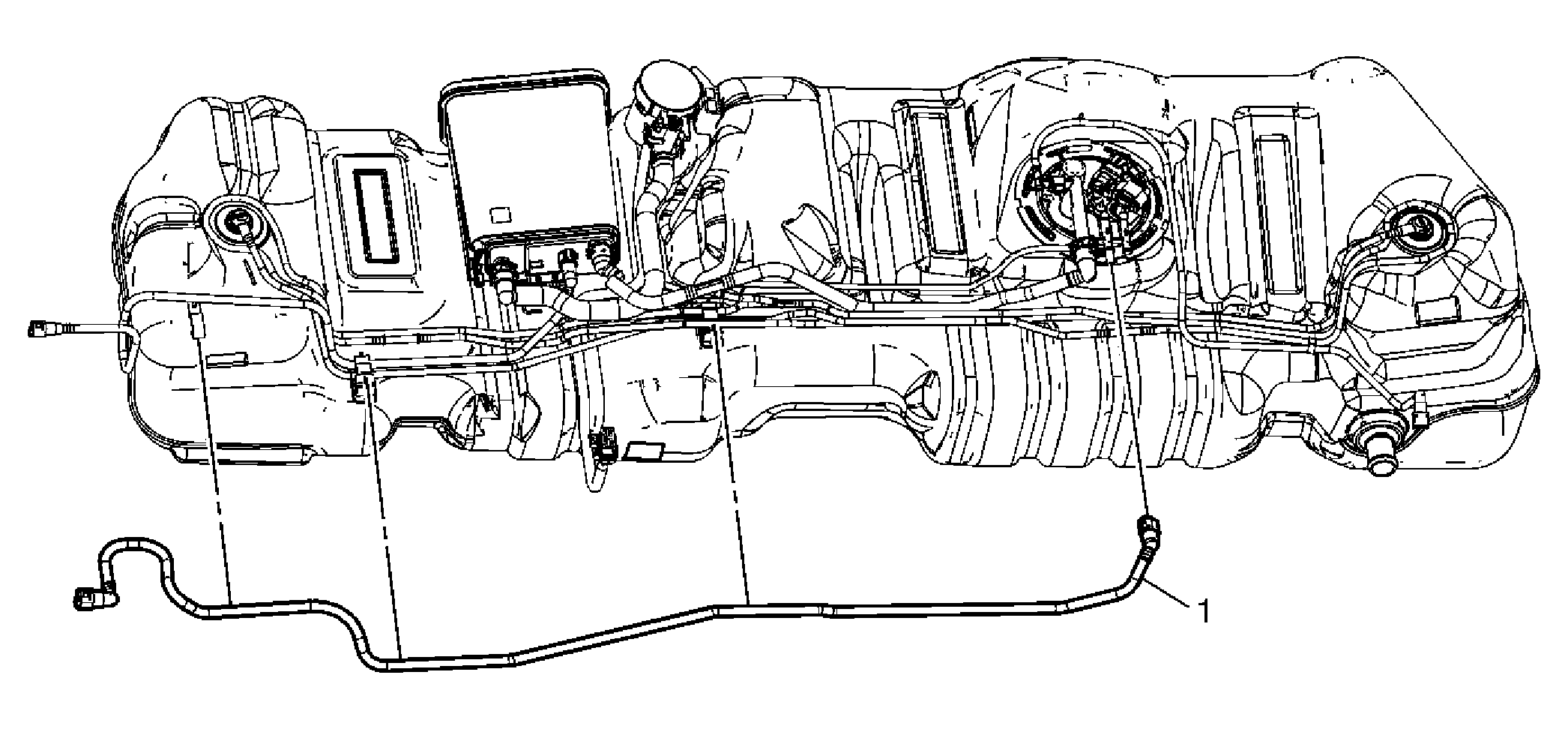 Courtesy of GENERAL MOTORS CORP.
 Fuel Hose/Pipes Replacement - Chassis
| Callout |
Component Name |
Fastener Tightening Specifications:
Refer to Fastener Tightening Specifications .
Preliminary Procedure:
Remove the fuel tank. Refer to Fuel Tank Replacement (Long Wheel Base) or Fuel Tank Replacement (Short Wheel Base) . |
| 1 |
Pipe, Fuel
CAUTION:
In order to Reduce the Risk of Fire and Personal Injury:
- If nylon fuel pipes are nicked, scratched or damaged during installation, Do Not attempt to repair the sections of the nylon fuel pipes. Replace them.
- When installing new fuel pipes, Do Not hammer directly on the fuel harness body clips as it may damage the nylon pipes resulting in a possible fuel leak.
- Always cover nylon vapor pipes with a wet towel before using a torch near them. Also, never expose the vehicle to temperatures higher than 115°C (239°F) for more than one hour or more than 90°C (194°F) for any extended period.
- Before connecting fuel pipe fittings, always apply a few drops of clean engine oil to the male pipe ends. This will ensure proper reconnection and prevent a possible fuel leak. (During normal operation, the O-rings located in the female connector will swell and may prevent proper reconnection if not lubricated.)
|