How TPMS Works
How TPMS Works ('08 Model)
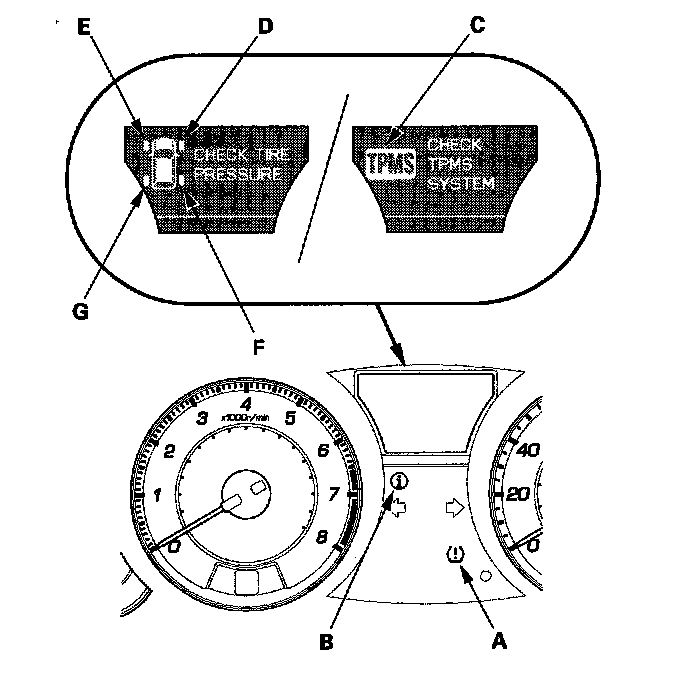
The TPMS (tire pressure monitoring system) has seven indicators: four tire indicators (on the multi-information display), a low tire pressure indicator (LED indicator), a message indicator (LED indicator), and a TPMS indicator (on the multi-information display). When the TPMS control unit detects low pressure in a tire, or a problem in the system, it turns on, or blinks the appropriate indicator(s), as well as the message indicator.
- If low tire pressure is detected, the low tire pressure indicator and the appropriate tire indicator(s) come on, as well as the message indicator.
- If a problem in the system is detected, the TPMS indicator comes on, as well as the message indicator, and the low tire pressure indicator comes on after blinking for about 75 seconds.
- If low tire pressure and a problem in the system are detected, the TPMS indicator comes on, as well as the message indicator, and the low tire pressure indicator comes on after blinking for about 75 seconds. In this case the low tire pressure indicator will be warning of a system failure.
If the system is OK, the low tire pressure indicator should come on when you turn the ignition switch to ON (II), and then go off 2 seconds later. If it doesn't, there is a problem with the system.
If the system detects low tire pressure in any of the four tires, the low tire pressure indicator and the appropriate tire indicator(s) with the message indicator will come on, and the control unit will set one or more of these codes:
DTC 11, 13, 15, 17. When the tire pressure returns to normal, the control unit will turn off the indicators and store the DTC(s). However, if the control unit detects a problem in the system during an indication of low tire pressure, it will turn off the tire indicator, store the DTC(s), and turn on the TPMS indicator and the low tire pressure indicator after blinking.
NOTE: Tire pressures will increase slightly as the temperature in the tires rises during driving at highway speeds. Pressures will also increase or decrease slightly with changes in outside air temperature. A temperature change of about 18 °F (10 °C) will change tire pressure by about 10 kPa (0.1 kgs/cm2, 1.5 psi). If the temperature drops, tire pressure could decrease just enough to turn on the low tire pressure indicator and tire indicator(s), but later as tire temperature increases, the tire pressure could increase enough to turn them off. To resolve a complaint of such intermittent indications, confirm and clear the stored DTC(s) and check the tire pressures. then explain to the client how temperature changes can affect the system especially when tire pressures are near the low end of the TPMS normal range - 168 to 220 kPa (1.7 to 2.2 kgf/cm2, 24 to 32 psi).
If a problem is detected in the system, most DTCs will cause the TPMS indicator and the low tire pressure indicator (starts blinking) to come on and stay on until the system returns to normal. If DTC 45, 61, 63, 65, 67, 81, 83, or 85 is set, the TPMS indicator with the message indicator and the low tire pressure indicator will go off only when the ignition switch is turned to LOCK (0).
If a flat tire is replaced with the spare tire, and the flat tire is stored in the trunk area or the cabin, the low tire pressure indicator will stay on, but the appropriate tire indicator will go off. this prevents the client from thinking there is a problem with the spare tire. When the flat tire is taken out of the vehicle for repair, the TPMS indicator and the low tire pressure indicator (starts blinking) will come on (DTC 32, 34, 36, or 38) because the system is no longer receiving the signal from the tire's transmitter.